Shrimp Pad Thai, Protein Edition (34g Protein)
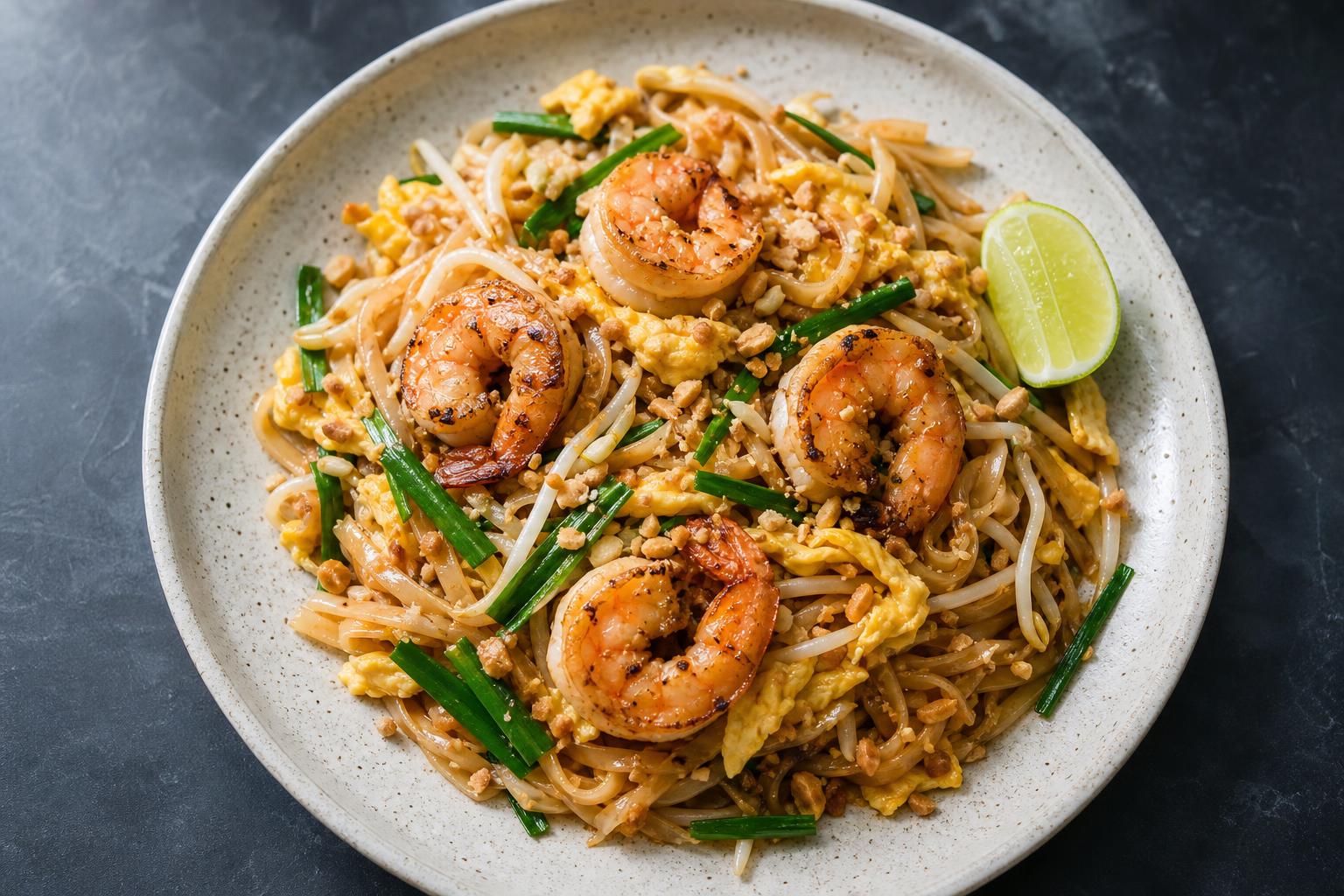
Most homemade pad thai fails because of two lies: that you can cook four servings at once on a home stove, and that ketchup is an acceptable substitute for tamarind. This version fixes both, then turns up the shrimp and egg so each plate carries 34g of protein.
That protein number is the quiet advantage of pad thai. The noodles get the attention, but a proper plate is really shrimp and egg held together by noodles, and leaning into that makes it a legitimate post-workout dinner.
Why this works
A restaurant wok burner puts out heat a home stove cannot dream of. Cook all four servings at once and the pan temperature crashes, the noodles stew in the sauce, and everything clumps. Two batches keeps the pan screaming hot, which is why batch two takes only five extra minutes and both come out with chew and char instead of mush. The other rule is soaking the noodles instead of boiling them. Soaked noodles are pliable but undercooked, so they drink up the sauce in the pan and still hold their shape.
Ingredient notes
Tamarind is the entire personality of pad thai and brands are confusingly different. Thai tamarind concentrate in jars is thick, dark, and ready to use, and 3 tablespoons is right. If you buy wet tamarind block, soak 60g in hot water and push it through a sieve. If a recipe tells you ketchup works, close the tab. Palm sugar is more caramel-like than brown sugar but brown sugar gets you 95 percent of the way. Garlic chives are traditional and worth grabbing at an Asian market; scallions are the everyday stand-in. Same shrimp logic as my garlic butter prawns: buy frozen, thaw in cold water, dry well.
Shrimp Pad Thai, Protein Edition
Ingredients
Method
- Soak the noodles in warm tap water for 20 to 30 minutes until pliable but still firm, then drain. Do not boil them. They finish cooking in the pan, and boiled noodles turn to mush the second they hit the sauce.
- Stir the tamarind, fish sauce, and sugar in a small pan over low heat until the sugar dissolves. Taste it. It should be sour first, then salty, then sweet. Adjust until it is.
- Pat the shrimp dry. Heat 1 tablespoon of oil in a wok or your largest skillet over high heat until smoking, sear the shrimp about 90 seconds per side, and remove.
- Now cook in two batches, and this is the part that matters. Heat 1 tablespoon of oil, add half the garlic and shallot for 30 seconds, then half the noodles and half the sauce. Toss for about 2 minutes until the noodles absorb the sauce.
- Push the noodles to one side, crack in 2 eggs, scramble until half set, then toss through the noodles. Add half the shrimp, sprouts, and chives, toss 30 seconds, and plate.
- Repeat with the second batch. It takes 5 extra minutes and is the difference between pad thai and noodle soup.
- Top with crushed peanuts and serve with lime wedges and raw sprouts.
Tips and storage
Pad thai is best the moment it leaves the pan, and I will not pretend leftovers are equal. They are still decent for 2 days; reheat in a hot pan with a splash of water rather than the microwave, which rubberizes the shrimp. The sauce keeps 2 weeks in the fridge, so tripling it makes the next round a 20 minute job. If you want a noodle dinner that reheats brilliantly instead, the broth-based weeknight chicken pho is the better meal prep bet.