Bo Kho (Vietnamese Beef Stew, 38g Protein)
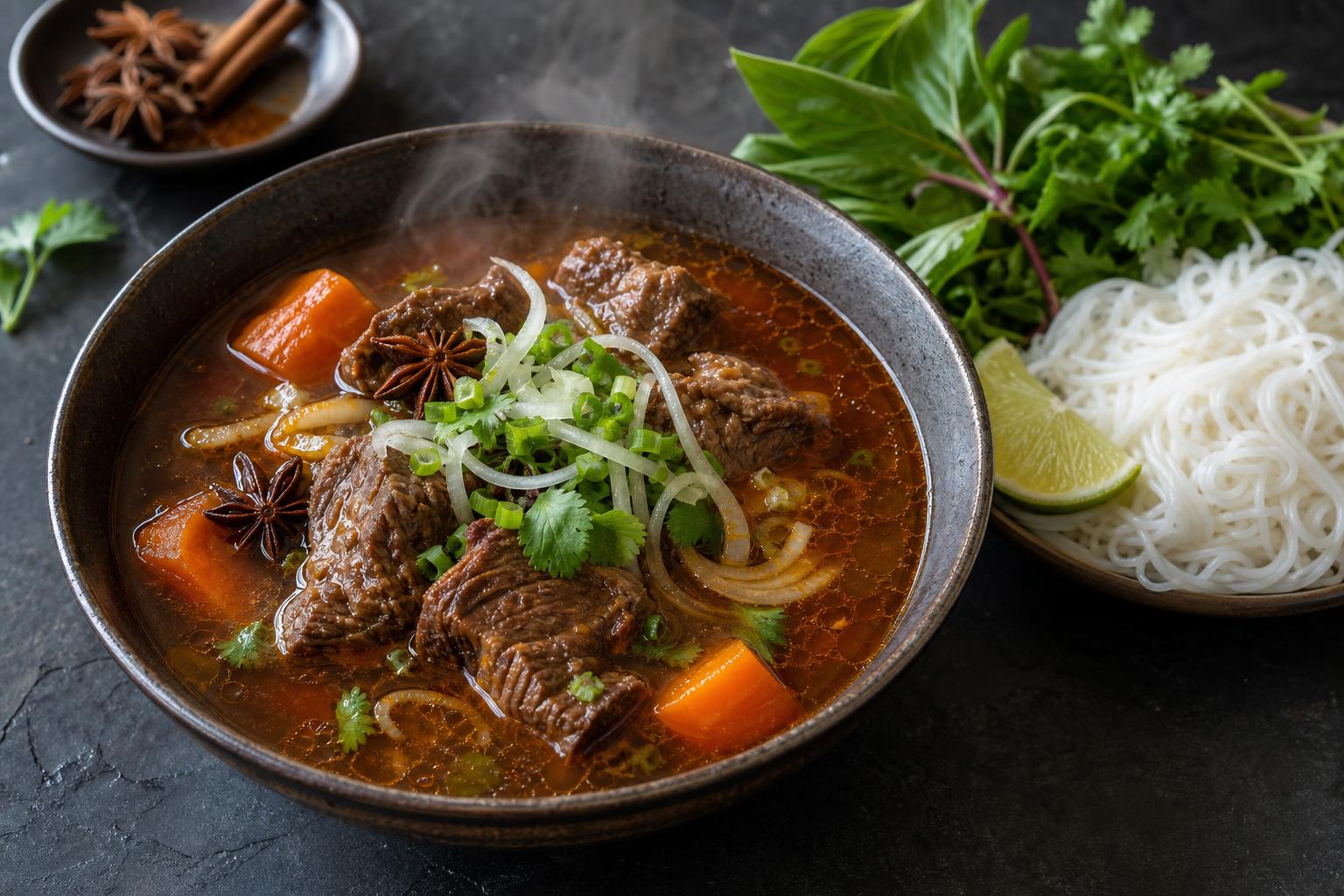
Bo kho is the Vietnamese beef stew you smell before you see it, all lemongrass and star anise and a little warmth from five spice. This version carries 38g of protein per serving, most of it from a pound and three quarters of beef chuck simmered down into four generous bowls. It is the kind of dish that costs you twenty minutes of real work and then looks after itself for two hours on the stove.
I make a big pot of this on a Sunday and eat it across the week, because a stew like this only gets better after a night in the fridge. The broth is deep and lightly spiced rather than fiery, and it is just as happy poured over rice noodles as it is with a torn baguette for dunking. Either way you are looking at close to 40g of protein per serving before you add anything on the side.
The one thing bo kho asks of you is patience. Chuck is a lean, hard-working cut, and it needs a long low simmer to go from chewy to fork-tender. Rush it and the beef stays tight, so give it the full time.
Why this works
Two moves do the heavy lifting. First, you brown the beef hard before it ever touches liquid. That seared crust is where a lot of the stew’s savory depth comes from, so resist crowding the pot and let each batch color properly. Second, you cook the tomato paste for a minute in the aromatics before adding broth. Raw tomato paste tastes sharp and tinny, but a quick fry turns it sweet and deepens the broth to that classic rust red. After that it is just time. A bare simmer, barely bubbling, breaks down the collagen in the chuck into gelatin, which is what gives the broth its body and the beef its softness.
Ingredient notes
Beef chuck is my default here for the balance of protein, flavor and price, but beef shank with its collagen-rich connective tissue is arguably even better if you can find it, and brisket works too. Lemongrass is not optional, it is the backbone of the dish, so bruise the stalks with the flat of your knife to release the oils before they go in. If you want the deep red color that Vietnamese cooks are after, steep a teaspoon of annatto (achiote) seeds in the warm oil for a minute and fish them out, otherwise a teaspoon of paprika gets you most of the way. Swapping half the broth for coconut water is a common trick that rounds out the broth with a gentle sweetness without making it taste of coconut.
If you like this style of slow Vietnamese cooking, it sits right next to my bo luc lac (shaking beef) for a faster beef fix, and the weeknight chicken pho if you are after another fragrant, brothy bowl. For a grilled option with the same herb-and-lime finish, the bun cha is worth a look.
Bo Kho (Vietnamese Beef Stew)
Ingredients
Method
- Toss the beef with 2 tbsp of the fish sauce, the five spice, half the garlic, the ginger and the brown sugar. Let it sit for at least 30 minutes at room temperature, or cover and refrigerate overnight if you are planning ahead.
- Heat the oil in a heavy pot or Dutch oven over medium-high. Stir in the paprika, then add the beef in a single layer and brown it hard on two sides, about 6 to 8 minutes total, working in two batches so the pieces sear instead of steam. Move the browned beef to a plate.
- Lower the heat to medium. Add the shallots, lemongrass and remaining garlic and cook until soft and fragrant, about 3 minutes. Stir in the tomato paste and let it darken for a minute, this cooks off the raw edge and deepens the color.
- Return the beef and any juices to the pot. Add the star anise, cinnamon, bay leaves, the last tablespoon of fish sauce and the broth. The liquid should just cover the beef, top up with water if needed.
- Bring to a boil, then drop to a bare simmer, cover, and cook for 90 minutes. Stir once or twice and skim any heavy fat off the top. Chuck holds a lot of connective tissue, and it needs this slow stretch to turn silky rather than chewy.
- Add the carrots and simmer uncovered for a final 30 minutes, until the beef pulls apart with a fork and the carrots are tender and the broth has reduced slightly. Fish out the lemongrass, cinnamon and star anise.
- Taste and adjust with the salt or a splash more fish sauce. Serve over rice vermicelli or with a torn baguette, and finish each bowl with Thai basil, cilantro and a squeeze of lime.
Tips and storage
This is a meal-prep dream. Bo kho keeps in the fridge for up to 4 days and genuinely improves by day two as the spices settle into the broth. Store the stew separately from any noodles so they do not go mushy, and cook or soften fresh noodles when you reheat. It freezes well too, up to 3 months, so I often portion half the batch into containers before it ever hits the table. Reheat gently on the stove or in the microwave until the beef is hot through, adding a splash of water if the broth has thickened too much in the cold. If you own a pressure cooker, you can shortcut the simmer: brown and build the base as written, then cook on high pressure for 35 minutes with a natural release, adding the carrots for a final 5 minute pressure cycle so they do not turn to mush.