Lean Pork Adobo (36g Protein)
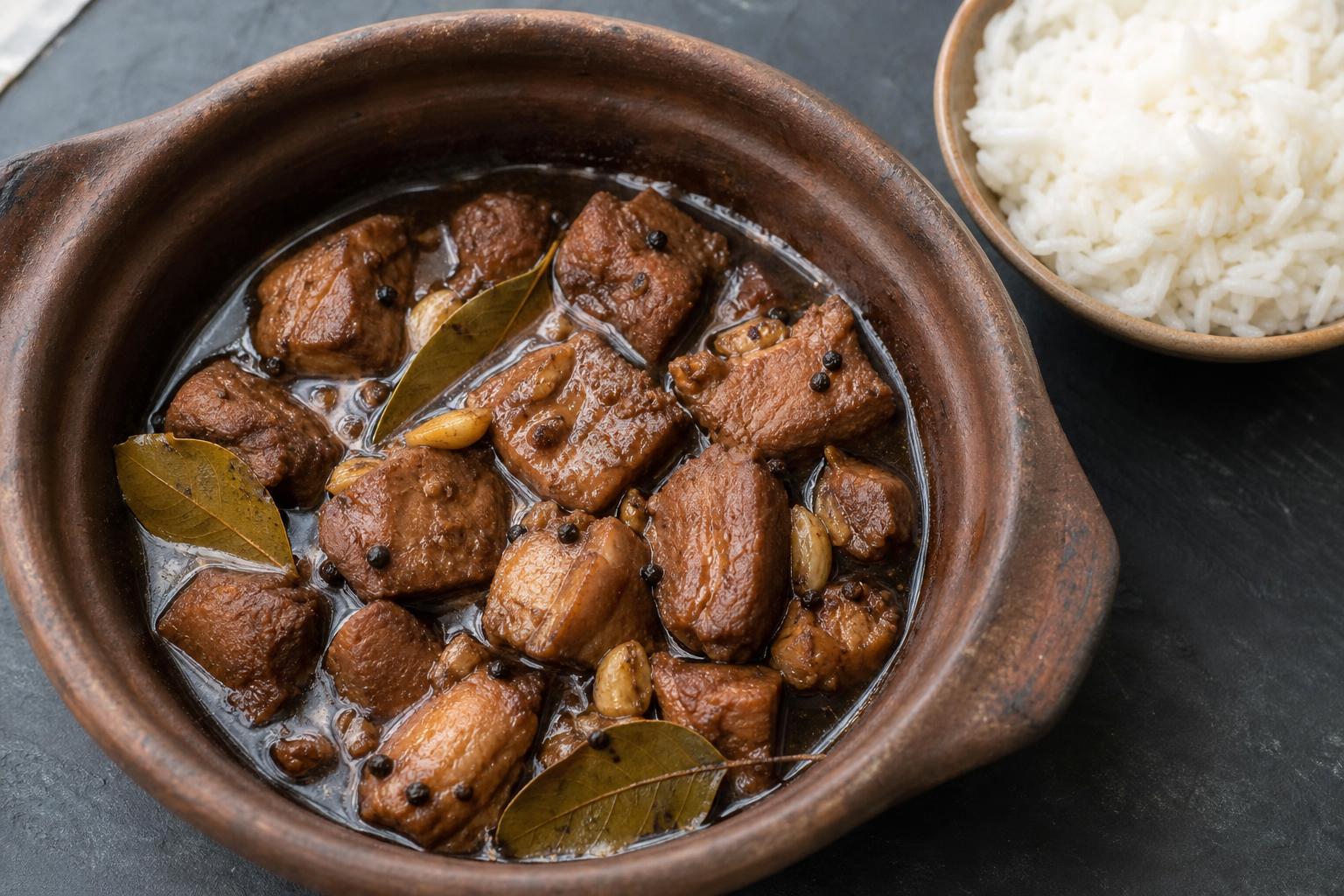
Adobo is the dish that proves a short ingredient list can outcook a long one. Soy sauce, vinegar, garlic, bay, and black pepper, simmered until the pork gives in. Made the usual way with belly it is glorious and heavy; made with pork loin it lands at 36g of protein and 13g of fat per serving, and the sauce loses none of its punch.
One pot, under an hour, and the leftovers are famously better than the first night.
Why this works
Two rules carry this version. First, do not stir for the first 5 minutes after the vinegar goes in. Letting it simmer untouched cooks off the raw sharpness, and skipping this step is the most common reason homemade adobo tastes harsh. Second, lean loin cannot take the long rolling boil that belly shrugs off. Keep the simmer barely moving and 30 minutes is enough; the chunks turn tender instead of stringy. The browning step is not traditional in every household, but with a lean cut it buys you flavor the missing fat would have provided.
Ingredient notes
Cane vinegar (Datu Puti is the common brand in Asian groceries) is the authentic choice and the gentlest. Rice vinegar is the closest substitute, white vinegar works but is sharper, so add the sugar if you use it. Eight cloves of garlic is not a typo. Adobo without aggressive garlic is just soy-braised pork. The sugar is optional and some Filipino cooks would leave it out; taste the sauce at the end and decide.
Lean Pork Adobo
Ingredients
Method
- Heat the oil in a heavy pot over medium-high. Brown the pork in two batches until the pieces have color on a couple of sides, about 3 minutes per batch. Set aside.
- Drop the heat to medium, add the garlic, and cook for about a minute until fragrant and just starting to color.
- Return the pork with the vinegar, soy sauce, water, bay leaves, peppercorns, and sugar. Bring it to a simmer and do not stir for the first 5 minutes. This is the old adobo rule, and it is real: stirring early keeps the vinegar tasting raw and sharp.
- Cover and keep it at the gentlest possible simmer for 30 minutes, until the pork is tender. A rolling boil will wring a lean cut dry, so check the heat once or twice.
- Uncover, raise the heat, and reduce the sauce for 8 to 10 minutes, turning the pork in it, until it is glossy and just coats the meat.
- Rest 5 minutes and serve over rice with plenty of the sauce.
Tips and storage
Adobo was originally a preservation method, and it still keeps better than almost anything else I cook, 5 days refrigerated and the flavor deepens every day. It reheats gently on the stove with a splash of water. For meal prep portions over rice, the same idea drives my lemongrass pork meal prep bowls. And if you want lean pork going in a sweeter direction, the char siu pork tenderloin is the other end of the spectrum.