Malaysian Assam Fish (Spicy Tamarind Stew, 38g Protein)
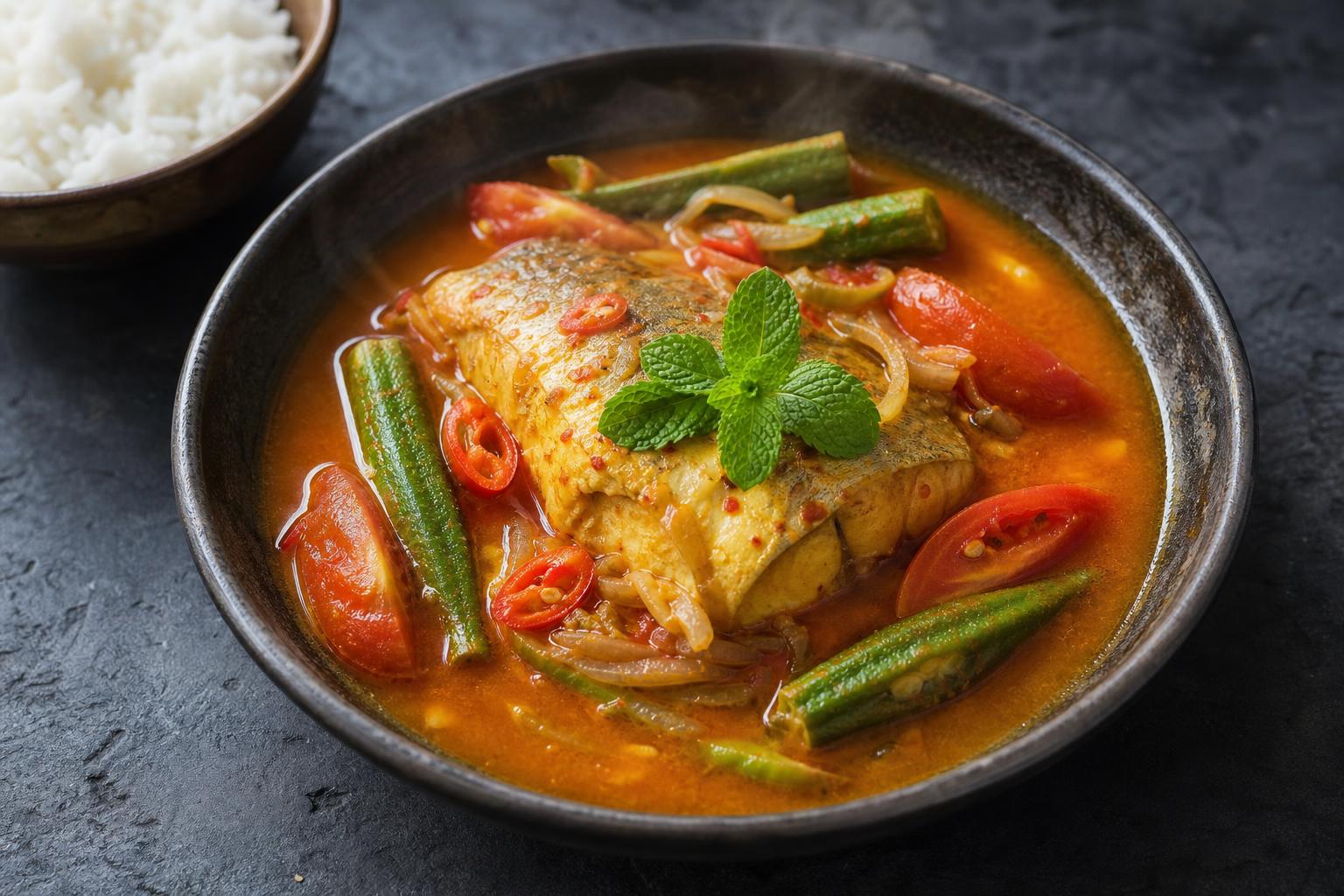
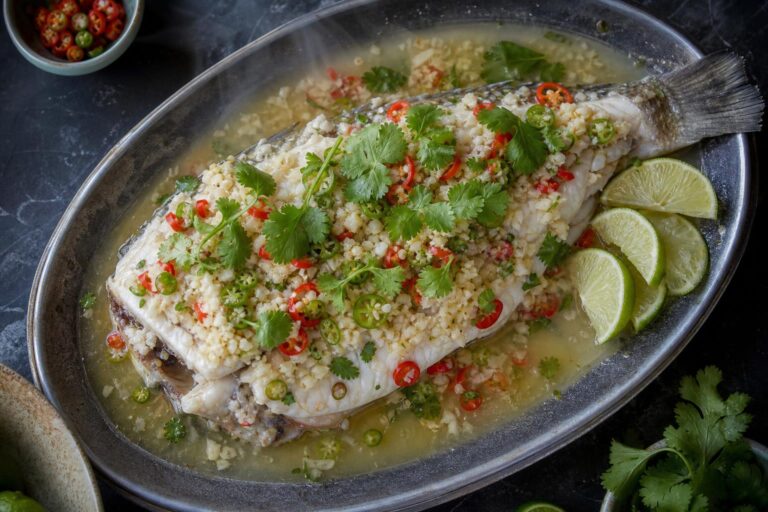
Assam fish is what I reach for when a fillet of white fish is going to be dinner and I want something with real backbone. One serving lands around 38 grams of protein, built from a firm fillet that poaches in a tamarind broth that is sour, spicy, and savory all at once. It is humble Malaysian home cooking that looks quiet in the bowl and then disappears fast.
Assam means tamarind and pedas means spicy, so assam pedas is exactly what the name says. Because the fish gently poaches in the sour broth instead of frying, it stays moist and lean, and the whole serving comes in under 350 calories. In our kitchen this is a weeknight regular because the broth does the heavy lifting while the fish just needs ten minutes to cook through.
You blend a quick spice paste, fry it until it smells deep and toasty, then simmer it with tamarind water and slide the fish in at the end. That is the entire job.
Why this works
Two things make or break this dish. The first is frying the spice paste properly. Raw blended aromatics taste sharp and thin, but once you cook the paste until the oil separates at the edges, the flavors turn round and savory, and that is the base of the whole broth. Give it the full 6 to 8 minutes.
The second is adding the fish last and leaving it alone. White fish goes from perfect to rubbery in about two minutes of overcooking, so I poach it covered on a gentle simmer and pull it the moment it flakes. Poaching in an acidic broth also firms the flesh slightly, which keeps the fillets from falling apart the way they can in a plain stir fry. If you like a cleaner steamed treatment of fish, my steamed fish with ginger and scallion uses the same pull-it-early rule.
Ingredient notes
Fish: any firm white fish works. Tilapia and snapper are easy to find and hold together well. Spanish mackerel or stingray are the traditional choices and bring more richness, but they are oilier, so trim your added oil if you use them. Avoid thin, flaky fillets like sole, which will shred in the broth.
Tamarind: this is the soul of the dish. Tamarind concentrate in a jar is the fastest route, about 2 tablespoons to 2 cups water. If you use block tamarind pulp, soak 3 tablespoons in the warm water, then squeeze and strain out the seeds and fibers.
Belacan: a small amount of toasted shrimp paste gives the broth its savory depth. It is optional, and a teaspoon of fish sauce is a reasonable stand-in if you cannot find it. If you enjoy that funky, savory edge, it is the same backbone in my sambal prawns.
Okra: the lady’s fingers are traditional and soak up the broth nicely, but the dish is still good without them. Tomatoes are not optional in my book, since they round out the sourness and add body.
Malaysian Assam Fish (Spicy Tamarind Stew)
Ingredients
Method
- Pat the fish fillets dry and season lightly with salt. Set aside while you make the paste.
- Blend the soaked chilies, shallots, garlic, lemongrass, turmeric, and belacan with a splash of water into a coarse paste. A small food processor or a mortar and pestle both work.
- Heat the oil in a wide pan over medium heat. Fry the spice paste, stirring often, for 6 to 8 minutes until it darkens and the oil separates at the edges. This step builds the flavor, so do not rush it.
- Pour in the tamarind water, add the sugar and salt, and bring to a gentle simmer. Taste and adjust so it reads sour first, then spicy, then a little sweet.
- Add the okra and tomatoes and simmer 3 minutes to soften.
- Slide in the fish fillets in a single layer. Spoon broth over them, cover, and simmer gently for 8 to 10 minutes until the fish is just opaque and flakes at the thickest part. Do not stir hard or the fillets will break.
- Turn off the heat, scatter mint over the top, and rest 2 minutes. Serve with steamed rice.
Tips and storage
This actually tastes better the next day, once the fish has soaked up more of the broth, which makes it a solid meal prep candidate. Store the fish and broth together in an airtight container in the fridge for up to 3 days. Reheat gently on the stove or in short bursts in the microwave so the fillet does not toughen.
To scale it up for the week, double the broth and cook extra fillets separately, then portion them into the broth as you go so they do not overcook while sitting. Serve with steamed rice, or keep it lower carb with cauliflower rice and let the broth do the flavor work. For another grilled, sambal-forward fish night, my Indonesian grilled sambal fish is worth a look.