Lean Sweet and Sour Pork (41g Protein)
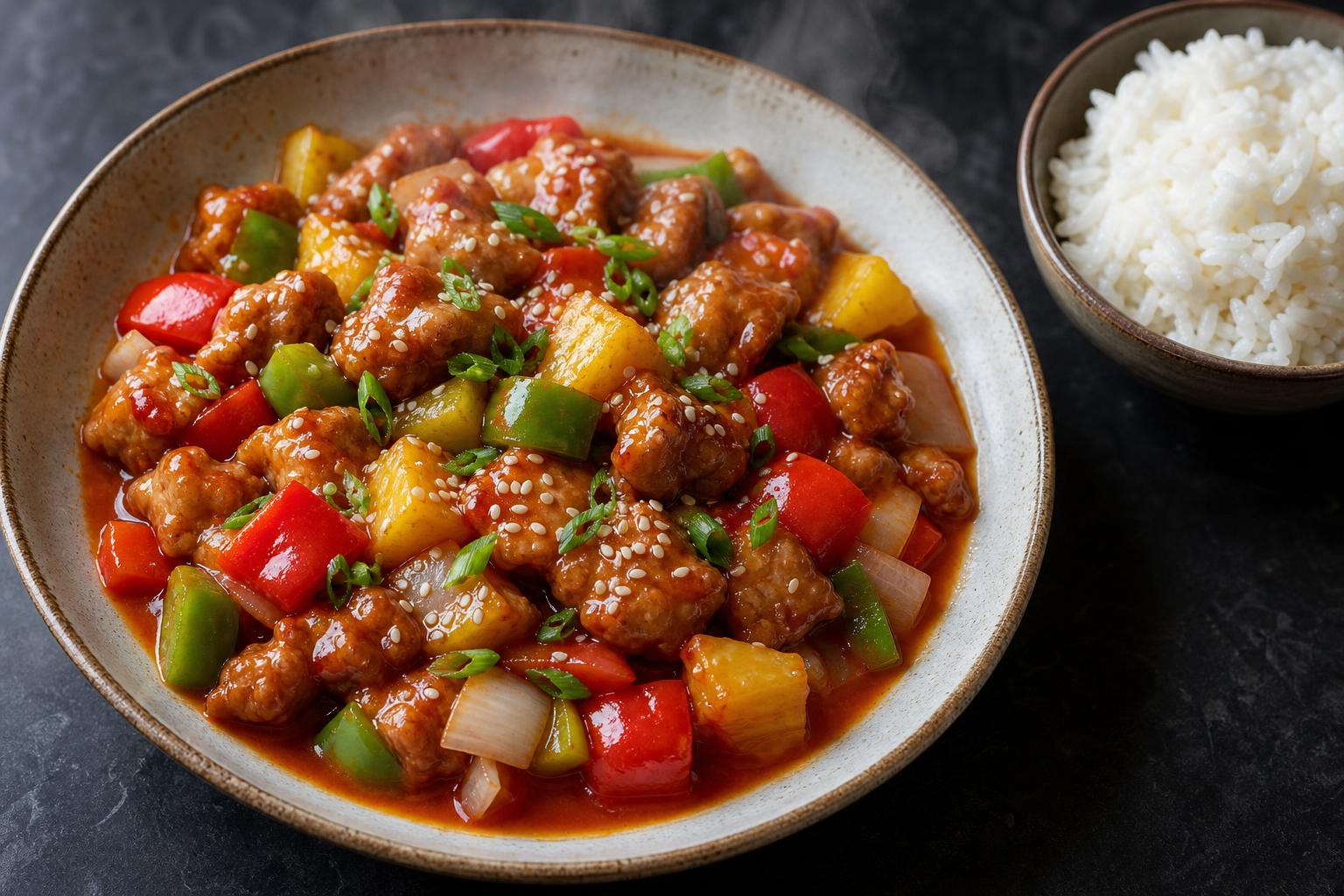
This is sweet and sour pork built around lean pork tenderloin, so each serving lands at about 41 grams of protein instead of the deep fried, batter-heavy version you get from takeout. The pork gets a thin cornstarch coating and a quick sear in a couple tablespoons of oil, which gives you the crisp edges and glossy sauce without a pot of frying oil to deal with.
The sauce is the usual bright, tangy balance of vinegar, a little sugar, ketchup for color, and pineapple juice. It comes together in one bowl while the pork marinates. Peppers and onion go in fast and stay crisp, and the whole thing is on the table in about 40 minutes.
If you like this kind of leaner takeout remake, it sits right next to my lean twice cooked pork and kung pao shrimp in the weeknight rotation.
Why this works
Pork tenderloin is the leanest cut on the pig, so it carries a lot of protein for its calories, but that also means it dries out if you overcook it. Cutting it into 1-inch cubes and searing hot and fast keeps the inside juicy. The thin egg and cornstarch coating is doing two jobs: it browns into a light crust, and it protects the surface of the meat while it cooks.
The other key move is adding the pork back to the sauce only at the very end. Sweet and sour sauce is watery by design, and if the pork simmers in it the crust goes soft in a minute. Toss it just long enough to coat and serve.
Ingredient notes
Pork tenderloin is worth seeking out here, but pork loin (the larger, cheaper roast) works too if you trim it and cut it small. Shaoxing wine adds depth to the marinade; dry sherry is the closest swap, or you can leave it out. For the sauce, canned pineapple in juice is genuinely convenient because you use both the chunks and the juice, but fresh pineapple plus water is fine. Rice vinegar is milder than distilled white vinegar, so if you only have white vinegar, use a little less and add a splash of water.
814
Tips and storage
This holds up well for meal prep, with the understanding that the crust softens once it sits in sauce. Store the pork and sauce together in an airtight container for up to 4 days. Reheat in a hot pan rather than the microwave if you can, which crisps the edges back up a little. Portion it over rice at about 3/4 cup cooked rice per bowl to keep the protein to carb ratio where you want it. For a lower carb version, serve it over cauliflower rice or a pile of stir fried cabbage. Leftover sauce that thickens too much in the fridge loosens right back up with a spoon of water when you reheat. If you want more protein without more pork, stir a couple of beaten eggs into the finished dish off the heat, the same trick I use in my char siu pork tenderloin bowls.