Sichuan Boiled Beef (Shui Zhu Niu Rou, 44g Protein)
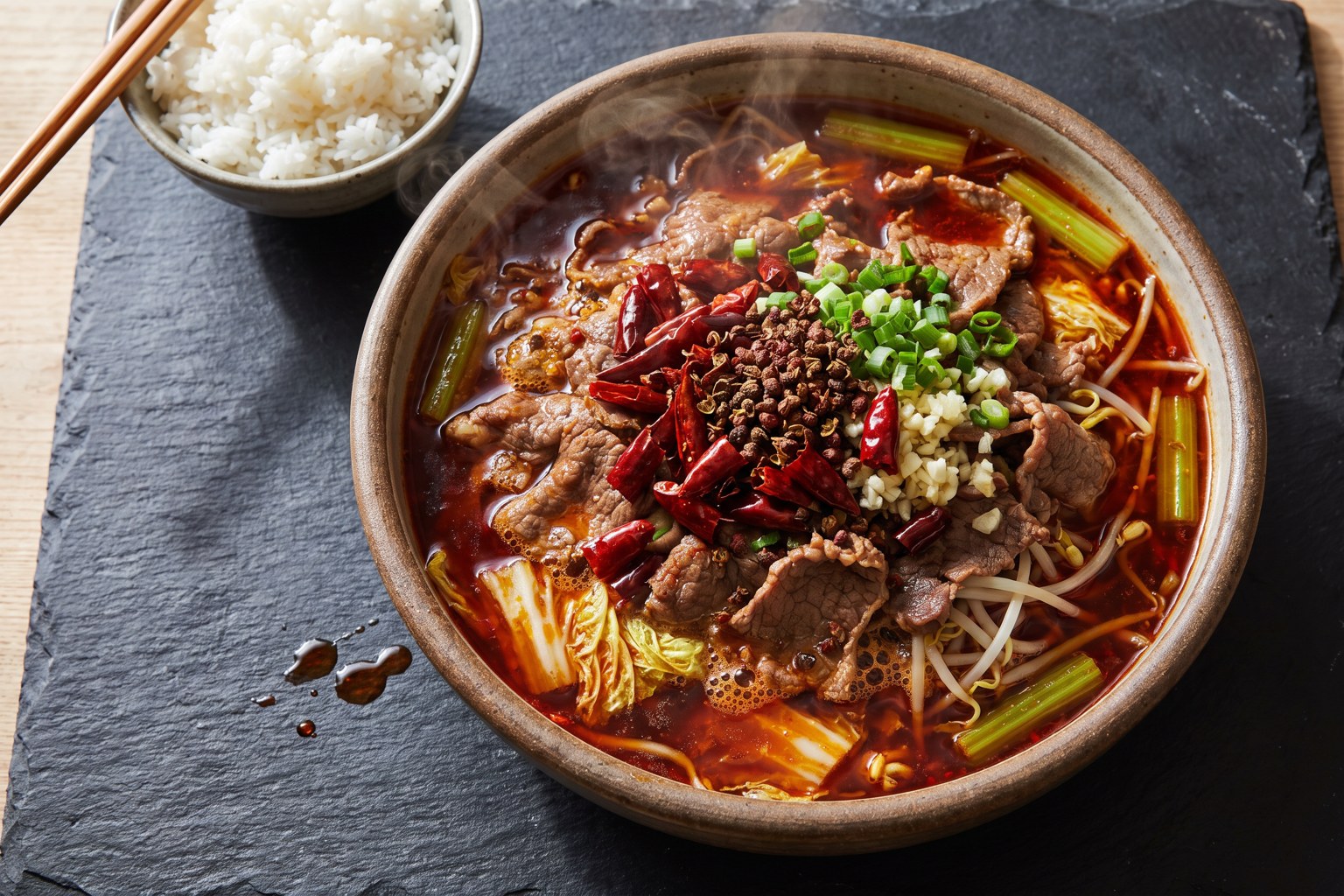
Shui zhu niu rou, Sichuan boiled beef, is one of those dishes that looks like a bowl of chili oil with beef floating in it. At a restaurant that is mostly what it is. This version puts 44g of protein in each serving and uses three tablespoons of oil for the whole pot, not the cup and a half that gets poured over the top in Chengdu. The beef is still silky, the broth still numbs your lips, and there is a big pile of cabbage and bean sprouts underneath that soaks it all up.
The name is a bit of a trick. Nothing is boiled in the sense of being cooked to death. The beef is velveted with egg white and cornstarch, then slipped into a barely simmering doubanjiang broth for about a minute. That is the whole cook. Then a spoonful of smoking hot oil goes over a pile of dried chili, garlic and Sichuan pepper on top, and the smell hits you before the bowl reaches the table.
I teach this in classes as a lesson in heat control, because both the poaching and the final sizzle only work at the right temperature. If you have made the mapo tofu or the twice cooked pork, you already have the doubanjiang in the fridge and you know the smell of it frying properly.
Why this works
Two things keep the beef tender. First, the marinade. Egg white and cornstarch form a thin coating that sets the moment it hits hot liquid and holds the juices in, which is the same velveting logic used in Cantonese stir fries. A pinch of baking soda raises the surface pH and stops the muscle proteins from tightening up, which matters if you are using flank rather than sirloin. Second, the water temperature. If the broth is at a rolling boil the coating tears and the outside of each slice overcooks before the middle is done. You want lazy bubbles, not a boil, and 60 to 90 seconds is plenty for slices this thin.
The doubanjiang needs to be fried in oil before any liquid goes in. Raw, it tastes like salty beans. Fried for two minutes over medium heat until the oil goes brick red, it turns savory and rounded and gives the broth its color without needing extra chili oil. Skipping this step is the most common reason home versions taste flat.
Ingredient notes
Use sirloin, flank or a tender lean cut like top round if you slice it thin enough. Partially freezing the beef for 20 minutes makes 1/8 inch slices possible with a normal kitchen knife. Slice across the grain or the slices will be chewy no matter how well you velvet them.
Pixian doubanjiang is the one with the red label and a fermented, slightly funky depth. Lee Kum Kee chili bean sauce works in a pinch but is sweeter and milder, so add an extra half tablespoon. Chop the paste finely before frying so it disperses instead of sitting in lumps.
Dried chilies here are mostly for aroma and looks. Shake the seeds out and they contribute smoke and color more than heat. Most of the actual burn comes from the chili flakes, so if you want the dish milder, cut those in half and leave everything else alone. For the Sichuan peppercorns, buy them whole and grind a teaspoon fresh at the end. Pre-ground loses its numbing quality within a few weeks.
The vegetables are flexible. Napa cabbage, bean sprouts and celery are traditional, but bok choy, sliced lotus root or enoki mushrooms all work. Keep the total around 650g so the broth-to-vegetable ratio stays right.
Sichuan Boiled Beef (Shui Zhu Niu Rou)
Ingredients
Method
- Slice the beef thinly across the grain (20 minutes in the freezer first makes this much easier). Toss with 1 tbsp soy sauce, the Shaoxing wine, egg white, cornstarch and baking soda if using. Set aside for 15 minutes while you prep everything else.
- Heat a large pot or wok over high heat with 1 tsp of the oil. Add the napa cabbage, bean sprouts and celery with a pinch of salt and stir fry for 2 minutes until just wilted but still crunchy. Tip them into a wide, deep serving bowl and spread them out. They are the bed for the beef.
- Wipe the pot, add 2 tbsp of oil over medium heat. Add the doubanjiang and fry for about 2 minutes, stirring, until the oil turns deep red and the paste smells toasty rather than raw. Add half the garlic and all the ginger and cook 30 seconds more.
- Pour in the stock, soy sauce and sugar. Bring to a boil, then keep it at a strong simmer for 3 minutes so the flavor comes together. Taste. It should be salty and rich because it is going to season plain vegetables and beef.
- Turn the heat down so the broth is just barely simmering. Add the beef slices one handful at a time, separating them with chopsticks so they do not clump. Poach for 60 to 90 seconds only, until the slices have just turned from red to pale brown. Do not boil hard and do not walk away.
- Ladle the beef and broth over the vegetables in the serving bowl. Scatter the dried chilies, remaining raw garlic, whole Sichuan peppercorns, chili flakes and scallions in a pile on top of the beef.
- Heat the last 1 tbsp of oil in a small pan until it shimmers and just starts to smoke. Pour it directly over the pile of chilies and garlic. It should sizzle loudly for a few seconds. Finish with the ground Sichuan pepper and cilantro. Serve with rice, fishing the beef and vegetables out of the broth as you eat.
Tips and storage
The hot oil at the end is not decoration. It fries the raw garlic and chili on contact and releases the Sichuan pepper aroma, so make sure the oil is properly hot. Heat it until you see the first wisp of smoke, then pour immediately. If it just sits on top without sizzling, it was not hot enough and the garlic will taste raw.
For meal prep this keeps well for 3 days in the fridge, though the vegetables soften. Store the beef and broth together and the crunch will be gone by day two, which honestly does not bother me. Reheat gently on the stove or in the microwave at 70 percent power. Do not boil it again or the beef goes tough. If you want fresh crunch, keep a bag of raw bean sprouts and throw a handful into the bowl after reheating.
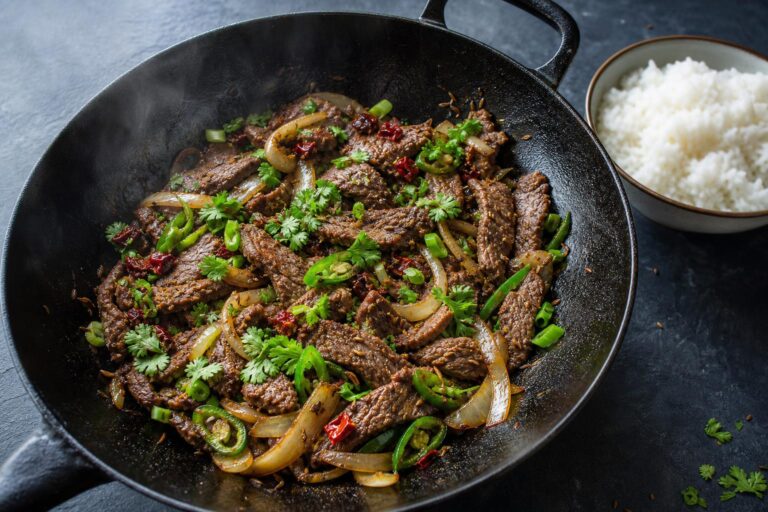
Leftover broth is worth keeping on its own. Strain it and use it to poach more beef the next day, or thin it with stock and cook noodles in it. For a similar Sichuan-style beef with a completely different flavor profile, the Xinjiang cumin beef is drier, faster and just as high in protein.