Andong Jjimdak (Korean Braised Chicken, 38g Protein)
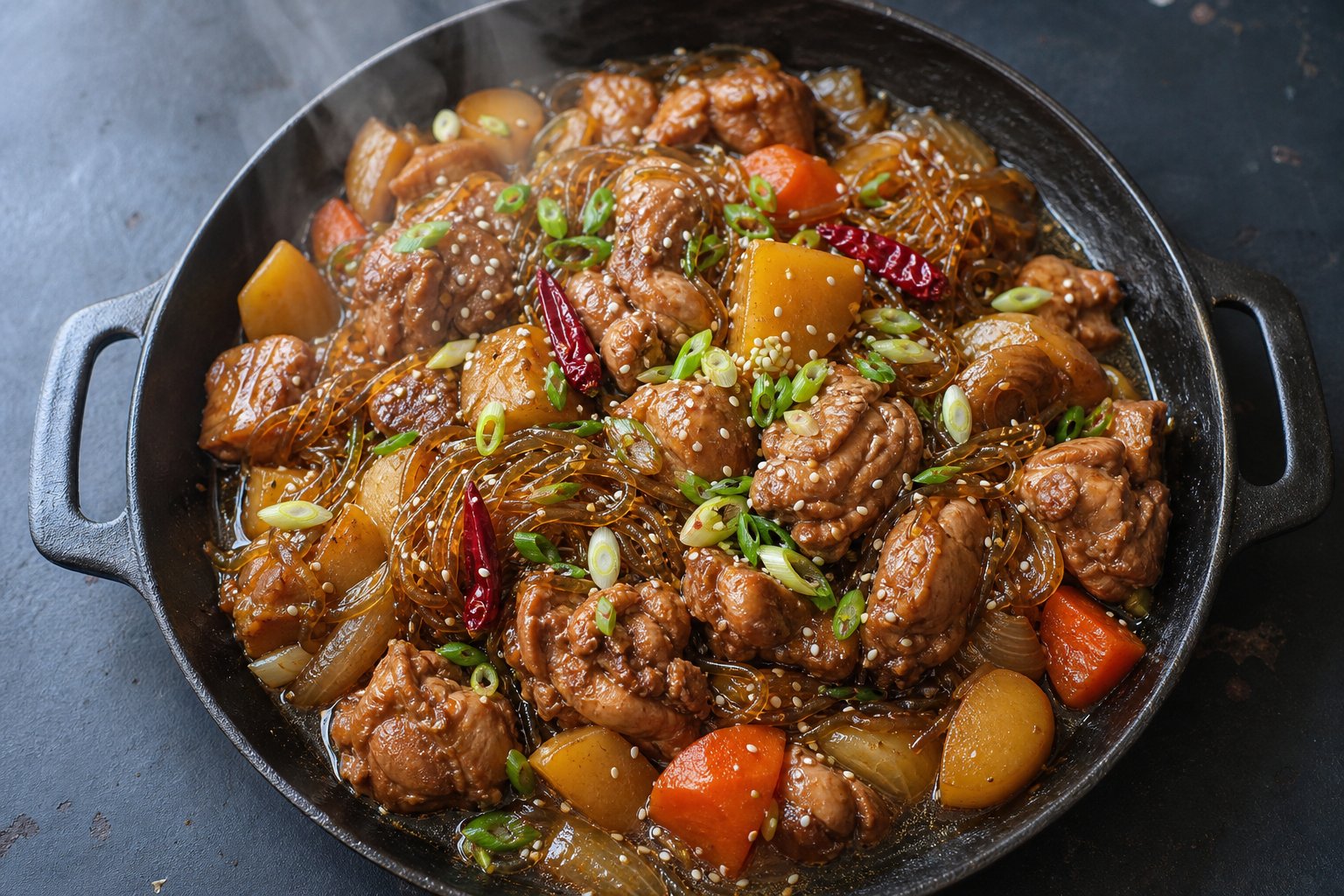
Andong jjimdak is the braised chicken dish I reach for when I want one pot to do everything: protein, vegetables and noodles in a single glossy braise. This version comes in around 38g of protein per serving. Chicken thigh, potato and carrot simmered with chewy sweet potato glass noodles in a sweet soy sauce, dark and shiny and just a little spicy from dried chilies.
It is named for the city of Andong in Korea, and unlike the fiery stir-fried Korean chicken dishes, jjimdak leans savory-sweet rather than gochujang-hot. The heat is gentle and comes from whole dried chilies you can leave in or take out. It takes about 45 minutes start to finish, and most of that is hands-off simmering.
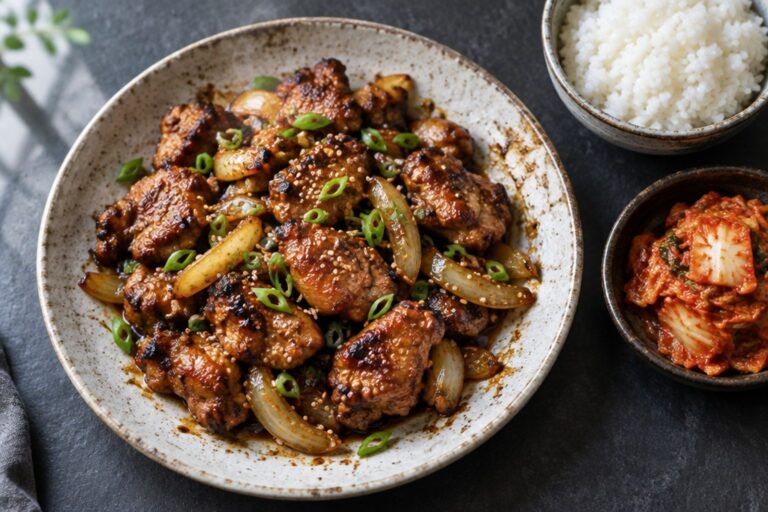
If you like Korean chicken, this is a mellower counterpart to my dak galbi and the crunchy air fryer dakgangjeong. It uses the same sweet potato glass noodles as my high-protein japchae, so a bag of dangmyeon covers both dishes.
Why this works
The quick parboil of the chicken is worth the extra pot. Blanching for a minute and rinsing pulls off the grey scum and excess fat before the braise, which is why the finished sauce stays clear and glossy instead of muddy. It is the classic first move for jjimdak and it makes a real difference.
Add the glass noodles near the end, not the start. Dangmyeon goes from perfectly chewy to a bloated mush in a matter of minutes, and it drinks up sauce like a sponge. Sliding it in for the last 6 to 8 minutes lets it soak up flavor and thicken the braise without turning soft, and it stops the sauce from disappearing entirely.
Ingredient notes
Dangmyeon, Korean sweet potato starch noodles, are the right noodle here. They are sold dry in any Korean or East Asian grocery and stay chewy in a way regular vermicelli will not. If you truly cannot find them, wide mung bean glass noodles are the closest swap, but reduce the soak and cook time since they are thinner.
Chicken thigh is essential. It stays juicy through a 20 minute braise where breast would seize up and dry out. Bone-in thigh is even more traditional and flavorful if you do not mind eating around the bones, just add 5 minutes to the simmer.
For the sweetness, brown sugar is easy, but a mix of sugar and honey or a spoon of Korean rice syrup (jocheong) gives that signature high-gloss finish. Oyster sauce adds savory depth, and if you keep it out for shellfish reasons, add an extra teaspoon of soy plus a pinch of sugar.
Andong Jjimdak (Korean Braised Chicken, 38g Protein)
Ingredients
Method
- Soak the glass noodles in a bowl of warm water for about 20 minutes while you prep everything else. Drain when softened and pliable. Do not boil them yet.
- Bring a small pot of water to a boil and blanch the chicken pieces for 1 minute, then drain and rinse. This quick parboil pulls out scum and gives you a cleaner-tasting braise, which is the traditional first step for jjimdak.
- Stir the soy sauce, brown sugar, oyster sauce, mirin, garlic, ginger, sesame oil and black pepper together with the water in a measuring jug. This is your braising liquid.
- Put the chicken, potato, carrot, onion and dried chilies in a wide pot or deep skillet. Pour the braising liquid over the top, it should come about halfway up. Bring to a boil, then lower to a steady simmer, cover, and cook for 15 minutes.
- Uncover and check the potato. It should be nearly tender. Add the drained glass noodles, tuck them under the liquid, and simmer uncovered for another 6 to 8 minutes. Stir now and then so the noodles cook evenly and soak up the sauce as it reduces to a glossy coat.
- When the sauce is thick enough to cling and the noodles are soft and chewy, fold in the scallions and kill the heat. Taste and add a splash more soy or a pinch of sugar if it needs it. Scatter sesame seeds over the top and serve.
Tips and storage
Jjimdak reheats well, which makes it good meal prep, with one catch: the noodles keep absorbing sauce in the fridge. Store it in an airtight container for up to 3 days, and when you reheat, add a splash of water or stock to loosen everything back up. It reheats best in a pan over low heat rather than a hard blast in the microwave.
To push the protein higher and the carbs lower, cut the noodles back to 50g and add more chicken, or serve smaller portions over a bed of steamed cabbage. A bowl of plain rice on the side is the traditional way to eat it and soaks up the extra sauce, the same way I like to serve my gochujang chicken thighs.