Tonjiru (Japanese Pork Miso Soup, 44g Protein)
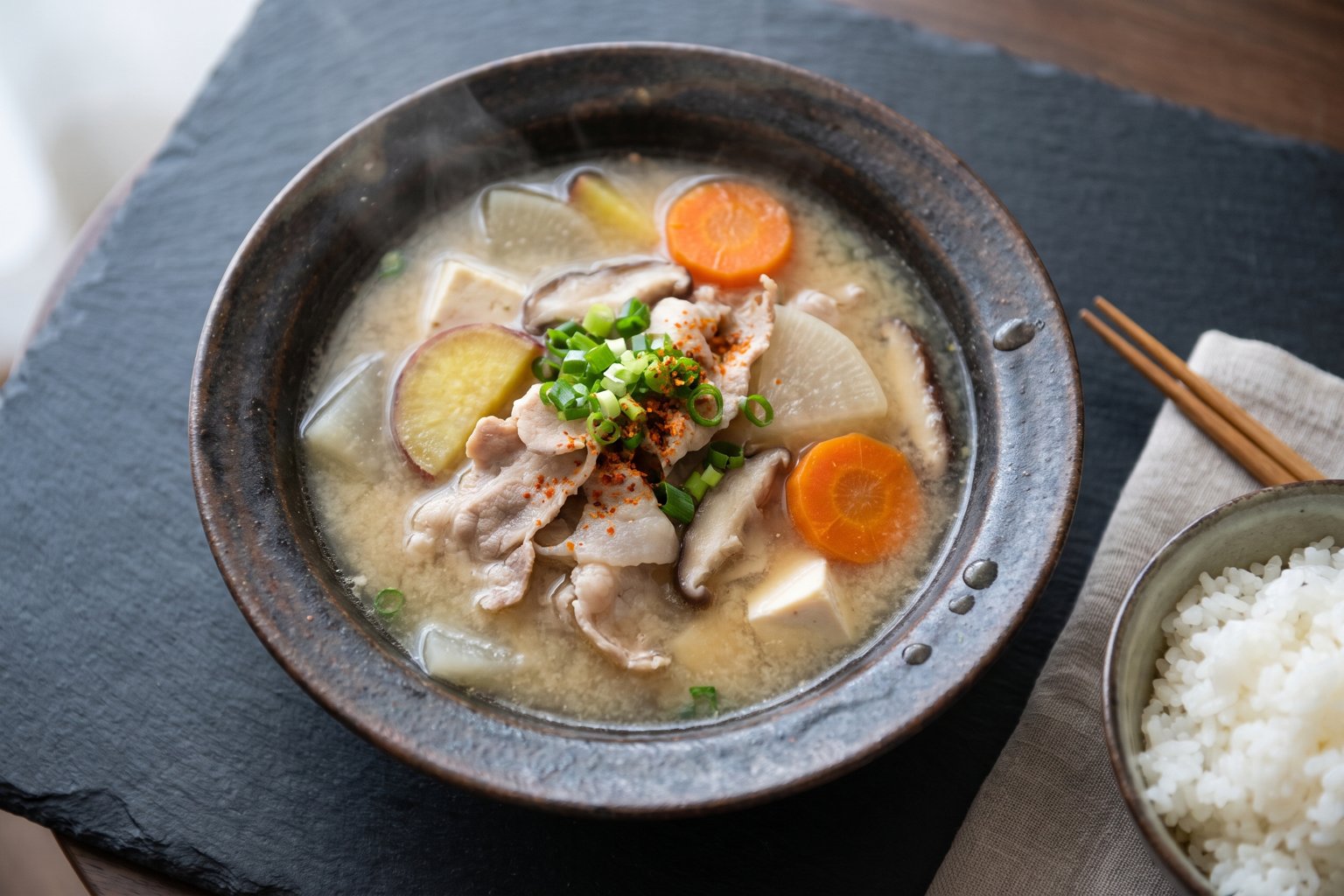
Tonjiru is the Japanese pork and root vegetable miso soup that shows up in ski lodges, school cafeterias and home kitchens all winter. My version swaps the usual pork belly for sliced pork shoulder and adds a block of tofu, which brings each bowl to 44g of protein. It is one pot, about 45 minutes, and mostly hands-off once the vegetables go in.
Miso soup on its own is a side dish. Tonjiru is dinner. The broth is dashi thickened with miso and the fat that renders off the pork, and it carries daikon, carrot, sweet potato, shiitake and springy konnyaku. If you liked the protein miso soup I posted earlier, this is the heavier, more filling cousin.
It also reheats better than almost anything else on this site. The vegetables keep soaking up broth overnight, so day two is arguably the better bowl.
Why this works
Pork belly is traditional because the fat is what turns plain miso soup into something rich. Pork shoulder has enough marbling to do the same job at a fraction of the fat, as long as you brown it first. Searing the slices in sesame oil before any liquid goes in renders some fat and builds a layer of browned bits on the pot that dissolve into the dashi. Skip the browning and the soup tastes flat.
The other thing that matters is when the miso goes in. Miso is a fermented paste, and boiling it after it is dissolved kills the aroma and leaves a grainy texture. Every Japanese cook adds it at the very end, off a hard boil, and so should you. Dissolve it in a ladle of broth first so you do not get lumps sitting at the bottom of the pot. I make the same point in the buta no shogayaki post about not overcooking thin pork, and the principle is the same here: the pork is done after the sear, the simmer is for the vegetables.
Ingredient notes
Pork shoulder, also sold as Boston butt or pork collar. Ask the butcher for thin slices if you can, or freeze the piece for 30 minutes and slice it yourself with a sharp knife. Thin slices matter because thick chunks of shoulder need an hour or more to turn tender, and this recipe simmers for under 20 minutes. Pork loin works if you want it leaner still, but it will be drier and the broth loses some body.
Dashi is the base and worth doing properly. Dashi packets (Kayanoya is the well known one, but any supermarket brand is fine) simmer for a few minutes and are gone. Instant dashi powder like Hondashi is what most home cooks in Japan use anyway, and 2 teaspoons in 6 cups of water is about right. If you have neither, chicken stock diluted half and half with water is a workable substitute, though the soup will taste less Japanese.
Miso. Awase (mixed) miso is the safe middle choice. Red miso gives a deeper, saltier soup that suits the pork well. White miso is too sweet and mild for this dish on its own. Brands vary a lot in salt, so start with 3 tablespoons, taste, and add the fourth if it needs it.
Konnyaku is a grey, jiggly block made from konjac yam. It has almost no calories and a bouncy texture that is a big part of the traditional dish. Tear it rather than cutting so the rough edges catch more broth. It is optional, and the soup is still very good without it.
Daikon and sweet potato. Daikon turns sweet and translucent when simmered and is the vegetable I would not skip. For the starch, Japanese cooks use potato, satoimo (taro) or sweet potato depending on the region and what is in the house. I use sweet potato because it holds its shape and tastes good with red miso. If you want to cut carbs, leave it out and add more daikon.
Tonjiru (Japanese Pork Miso Soup)
Ingredients
Method
- If using konnyaku, put the torn pieces in a small pot of water, bring to a boil for 2 minutes, then drain. This gets rid of the faint mineral smell. Skip this step if you are not using it.
- Heat the sesame oil in a large pot or Dutch oven over medium high heat. Add the pork in a single layer and let it sit for a minute before stirring. Cook for 3 to 4 minutes until no longer pink and lightly browned at the edges.
- Add the daikon, carrot, sweet potato, konnyaku and shiitake. Stir for 2 minutes so the vegetables pick up the pork fat. Add the sake and let it bubble off for 30 seconds.
- Pour in the dashi and bring to a boil. Skim off the grey foam that rises in the first couple of minutes, then lower the heat to a gentle simmer. Cover with the lid slightly ajar and cook for 15 to 18 minutes, until a knife slides into the daikon and sweet potato with no resistance.
- Add the tofu and simmer for 3 minutes to heat through. Turn the heat down to the lowest setting.
- Put the miso in a ladle or small bowl, add a ladleful of the hot broth and stir until smooth, then pour it back into the pot. Do not let the soup boil again after this. Taste, and add a little more miso if it needs salt.
- Ladle into bowls and top with scallions and a pinch of shichimi togarashi. Serve with rice on the side.
Tips and storage
This is built for meal prep. Cool the pot, then portion into containers with the broth. It keeps 4 days in the fridge. Reheat gently on the stove or in the microwave and stop before it boils, for the same miso reason as above. The tofu and konnyaku change texture if frozen, so if you plan to freeze a batch, add those fresh when reheating instead.
To push the protein higher without changing the taste, crack an egg into each bowl of simmering soup for the last 3 minutes, the way I do in sundubu jjigae. That adds about 6g per serving.
A bowl of rice on the side turns this into a complete meal at around 700 calories. If you are keeping carbs down, the soup alone with the sweet potato left out is filling enough for most people.