Buta no Shogayaki (Japanese Ginger Pork, 40g Protein)
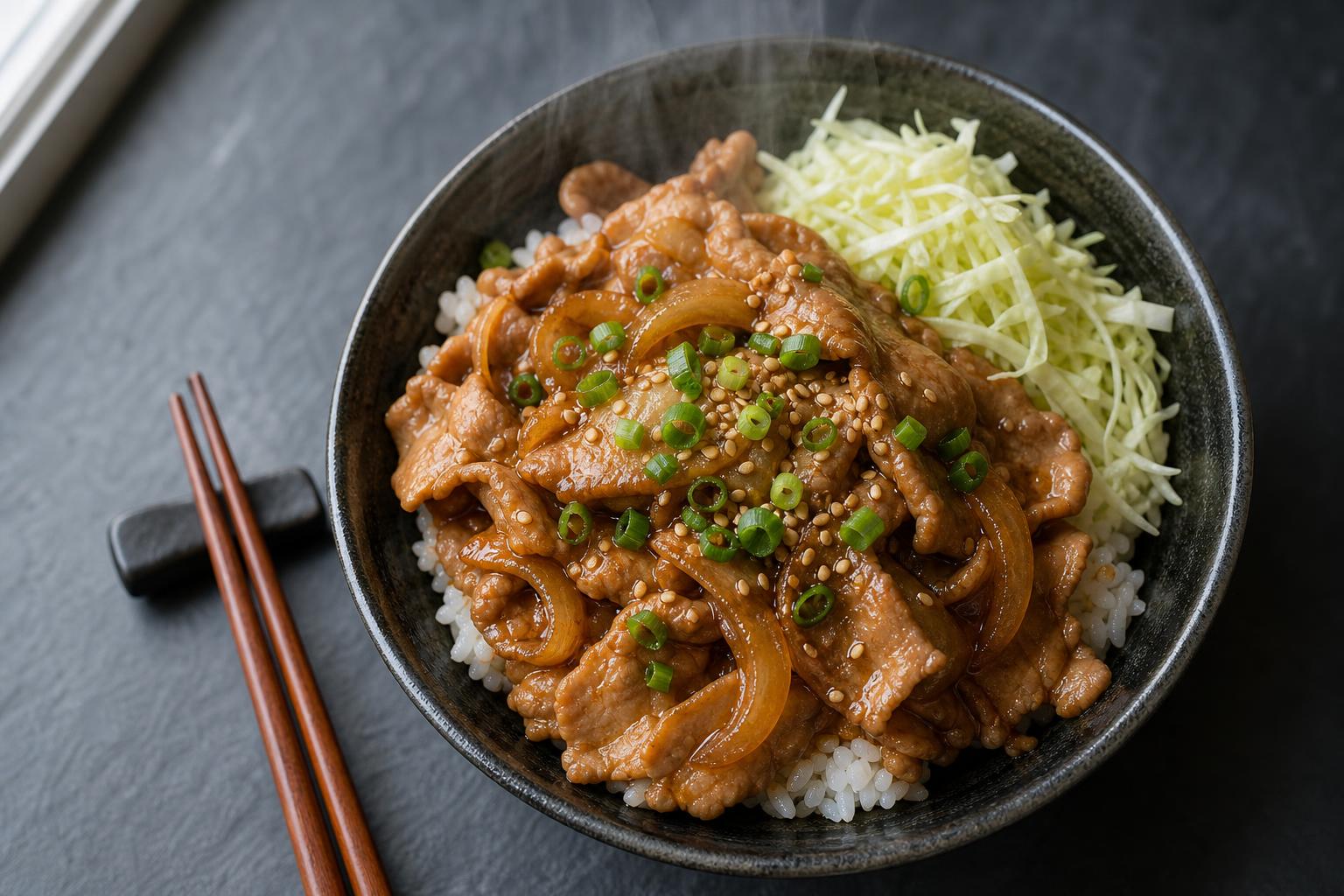
Buta no shogayaki is the ginger pork you get at every teishoku counter in Japan, and this version lands 40g of protein per serving without changing what makes it good. Thin slices of lean pork loin, soft onion, and a ginger soy glaze that goes glossy in the pan. It is on the table in about 20 minutes.
The headline here is the cut. Most ginger pork uses fatty belly or shoulder, which tastes great but drags the protein down. Lean loin keeps each serving at 40g protein for around 360 calories, and the sauce carries enough flavor that you do not miss the fat.
This is a weeknight workhorse. One pan, a pantry sauce, and it reheats well, so it earns a spot in the meal prep rotation right next to my char siu pork tenderloin.
Why this works
Freshly grated ginger, with its juice, is doing the heavy lifting. Ginger contains an enzyme that tenderizes the pork slightly while it cooks, and the raw grated texture gives a brighter, hotter bite than tubed paste ever will. Slicing the loin thin against the grain matters too: thin slices cook in a couple of minutes, so the lean meat never has time to dry out. Reduce the sauce only until it just coats the pork, because a lean cut turns chewy if you hold it over heat chasing a thicker glaze.
Ingredient notes
Pork loin is the lean choice, but the easiest path is pre-sliced shabu-shabu pork from an Asian grocer, already cut paper thin. If you are slicing a whole loin yourself, freeze it for 30 minutes first so you can cut clean 3 mm slices. Mirin gives the dish its gentle sweetness and shine; if you do not have it, use 1 tablespoon soy sauce thinned with 1 tablespoon water plus a teaspoon of sugar. Sake deglazes and rounds out the sharp soy, but water works in a pinch. The raw shredded cabbage is not optional in my kitchen, it is the standard partner and resets your palate between bites.
Buta no Shogayaki (Japanese Ginger Pork)
Ingredients
Method
- Stir the grated ginger, soy sauce, mirin, sake and sugar together in a small bowl. The ginger juice is the point, so grate it fresh rather than using paste from a jar.
- Heat the oil in a large skillet over medium-high. Add the onion and cook 2 to 3 minutes until it softens and picks up a little color at the edges.
- Spread the pork out in as close to a single layer as you can. Let it sit 1 minute before stirring, then cook 2 to 3 minutes more until no longer pink.
- Pour in the sauce. Toss everything and simmer 2 to 3 minutes until the liquid reduces to a glossy glaze that clings to the pork.
- Top with scallions and sesame seeds. Serve over rice with a pile of raw shredded cabbage on the side to cut the richness.
Tips and storage
For meal prep, cook the pork a touch under and stop while the sauce is still loose, since it tightens as it cools. It keeps in the fridge for up to 4 days. Reheat in a hot pan for a minute or two rather than the microwave, which can overcook the lean slices and turn them tough. Pack the cabbage separately and add it cold when you eat.
If you want more vegetables in the bowl, throw in sliced bell pepper or shimeji mushrooms with the onion. And if you like this kind of fast Japanese home cooking, my Japanese hamburger steak and oyakodon rice bowl run on the same sweet-savory soy backbone.