Dak Bulgogi (Korean Soy Garlic Chicken, 46g Protein)
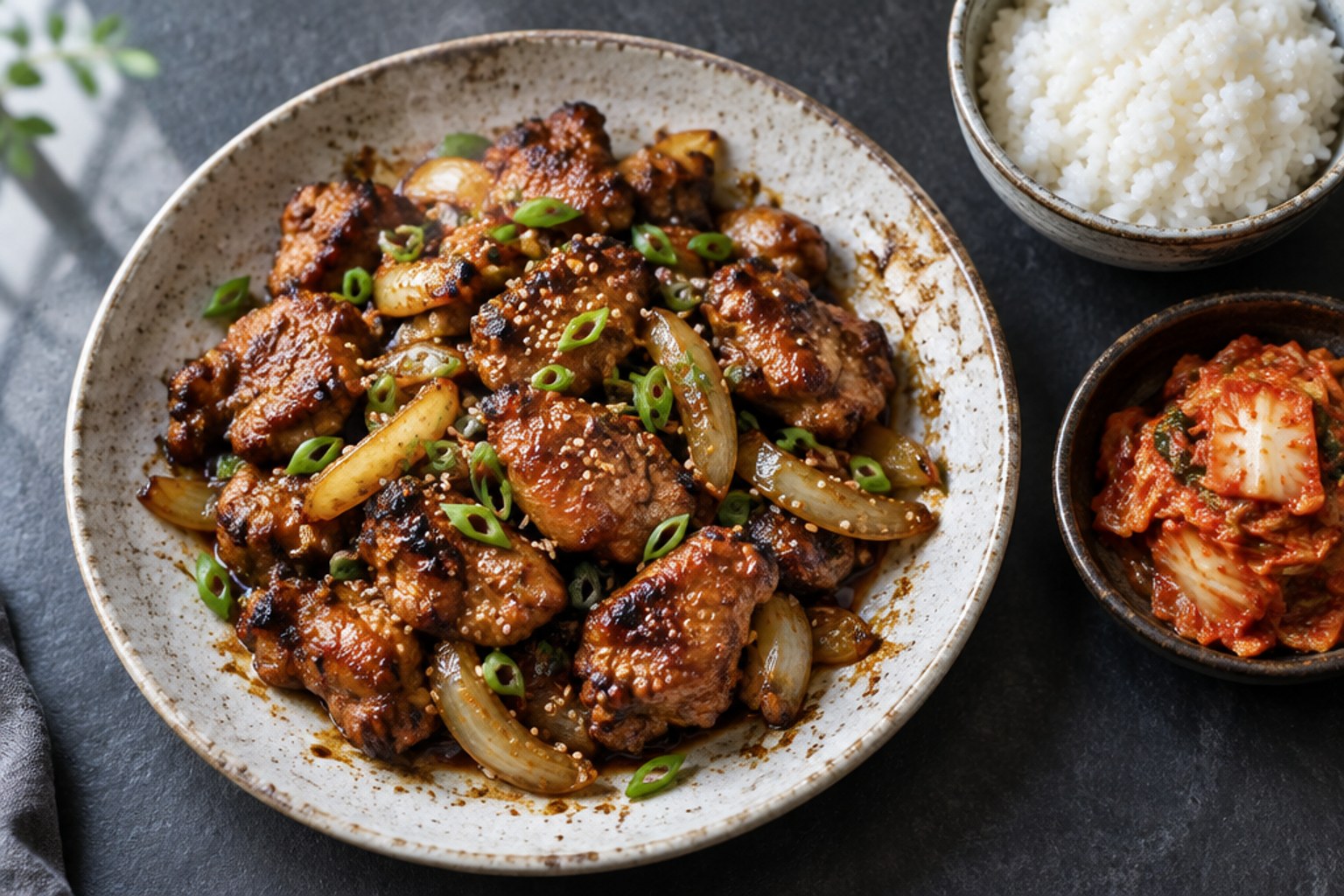
Dak bulgogi is the chicken version of the Korean barbecue everyone knows from beef: thin pieces in a soy, garlic and pear marinade, cooked fast over high heat until the sugars catch and char. Three servings from a pound and a half of boneless thighs gives you 46g of protein per plate. It is one of the easiest ways I know to get a lot of chicken into a lot of people without anyone noticing they are eating diet food.
The marinade is the same one I use for beef bulgogi, just with a bit more garlic and pepper because chicken thigh can take it. Thirty minutes in the bowl is enough. Overnight is better. The cooking takes about 12 minutes in two batches.
Unlike dak galbi, there is no gochujang here, so it is not spicy. That makes it a good one for a mixed table. Put kimchi and a dish of ssamjang next to it and the people who want heat can add their own.
Why this works
Bulgogi marinades are sweet, and sugar is what gives you the dark, sticky char that makes this dish. It is also what burns. The trick is to cook the chicken almost dry, lifted out of the marinade and shaken off, so the pan is searing meat rather than boiling sauce. Then you add the reserved marinade back at the end and reduce it in a minute or two into a glaze. You get the char and the sauce, in that order, instead of a grey stew.
Grated pear is not decoration. The enzymes in Asian pear (and to a lesser degree apple) start breaking down the surface proteins during the marinade, which is why bulgogi chicken stays tender even when you cook it hard. I would not skip it. If you can only find apple, use a little less because it is sweeter.
Cook in two batches. A 12 inch skillet fits about half of this comfortably in one layer. Crowd it and the temperature drops, the chicken releases water and you lose the whole point.
Ingredient notes
Boneless skinless thighs are the right cut. They stay juicy through a hard sear and they do not dry out when reheated, which matters because this recipe is made for leftovers. Chicken breast works if you prefer it, cut into slightly thicker pieces, and it takes the protein per serving to around 50g, but pull it from the pan the moment it hits 160F because it goes from done to chalky fast. Trim the obvious fat pads from the thighs before cutting. That is where most of the fat in the nutrition numbers would come from.
Soy sauce should be a regular Korean or Japanese brand (Sempio, Kikkoman). Dark soy and Indonesian kecap manis are too sweet and heavy for this. If you are watching sodium, use low sodium soy and do not reduce the quantity, since the soy is doing all the seasoning.
Mirin adds a little sweetness and gloss. If you do not have it, a tablespoon of water and an extra teaspoon of sugar gets you close enough.
Asian pear is sold in most US supermarkets in the fall and in any Korean or Chinese grocer year round. Half a pear, grated on the fine side of a box grater, gives about a third of a cup of pulp and juice. Use all of it.
Toasted sesame oil goes in the marinade, not the pan. It burns at searing temperatures and turns bitter. Use a neutral oil (canola, avocado, grapeseed) for the cooking.
Dak Bulgogi (Korean Soy Garlic Chicken)
Ingredients
Method
- In a large bowl, stir together the soy sauce, mirin, brown sugar, grated pear, garlic, ginger, sesame oil and black pepper until the sugar dissolves.
- Add the chicken pieces and the onion wedges and mix with your hands so every piece is coated. Cover and marinate at room temperature for 30 minutes, or in the fridge for up to 24 hours. If it has been in the fridge, let it sit out for 15 minutes before cooking so it sears rather than steams.
- Lift the chicken and onion out of the marinade with tongs or a slotted spoon, letting the excess drip back into the bowl. Keep the leftover marinade. Wet chicken will not char.
- Heat a 12 inch cast iron or heavy stainless skillet over high heat until a drop of water skitters and evaporates instantly. Add the neutral oil, then lay in half the chicken and onion in a single layer. Leave it alone for 2 to 3 minutes until the underside is deeply browned with charred edges, then flip and cook another 2 minutes. Transfer to a plate and repeat with the second batch.
- Return all the chicken to the pan. Pour in the reserved marinade and add the scallion lengths. Boil hard for 1 to 2 minutes, tossing, until the liquid reduces to a sticky glaze that clings to the chicken and the thickest piece reads 165F (74C) inside.
- Turn off the heat, scatter over the sesame seeds and sliced scallions, and serve with rice, kimchi and lettuce leaves for wrapping if you have them.
Tips and storage
This is one of the better meal prep chickens because the glaze keeps it moist through reheating. Portion it over rice with a handful of blanched spinach or some cucumber, and it holds four days in the fridge. Reheat in a covered container in the microwave with a teaspoon of water, or in a skillet over medium heat for two minutes. It also freezes well for up to two months, either cooked or raw in the marinade. Raw in a freezer bag is my preference: thaw it overnight in the fridge and it marinates as it defrosts.
If you have a grill, thread the marinated chicken onto skewers, shake off the marinade and cook over direct high heat, brushing with the reserved marinade in the last minute. Same idea as the skillet, just smokier. Boil any marinade you brush on for at least a minute first.
For a crispy version, the marinated chicken also works in an air fryer at 400F for 12 minutes, shaking halfway, the way I cook dakgangjeong. Reduce the reserved marinade in a small saucepan and toss the chicken in it after.
Leftover marinade that has touched raw chicken is fine to use as long as it comes to a proper boil, which it does in step 5. Do not spoon it over cooked chicken cold.