Nikujaga (Japanese Beef and Potato Stew, 34g Protein)
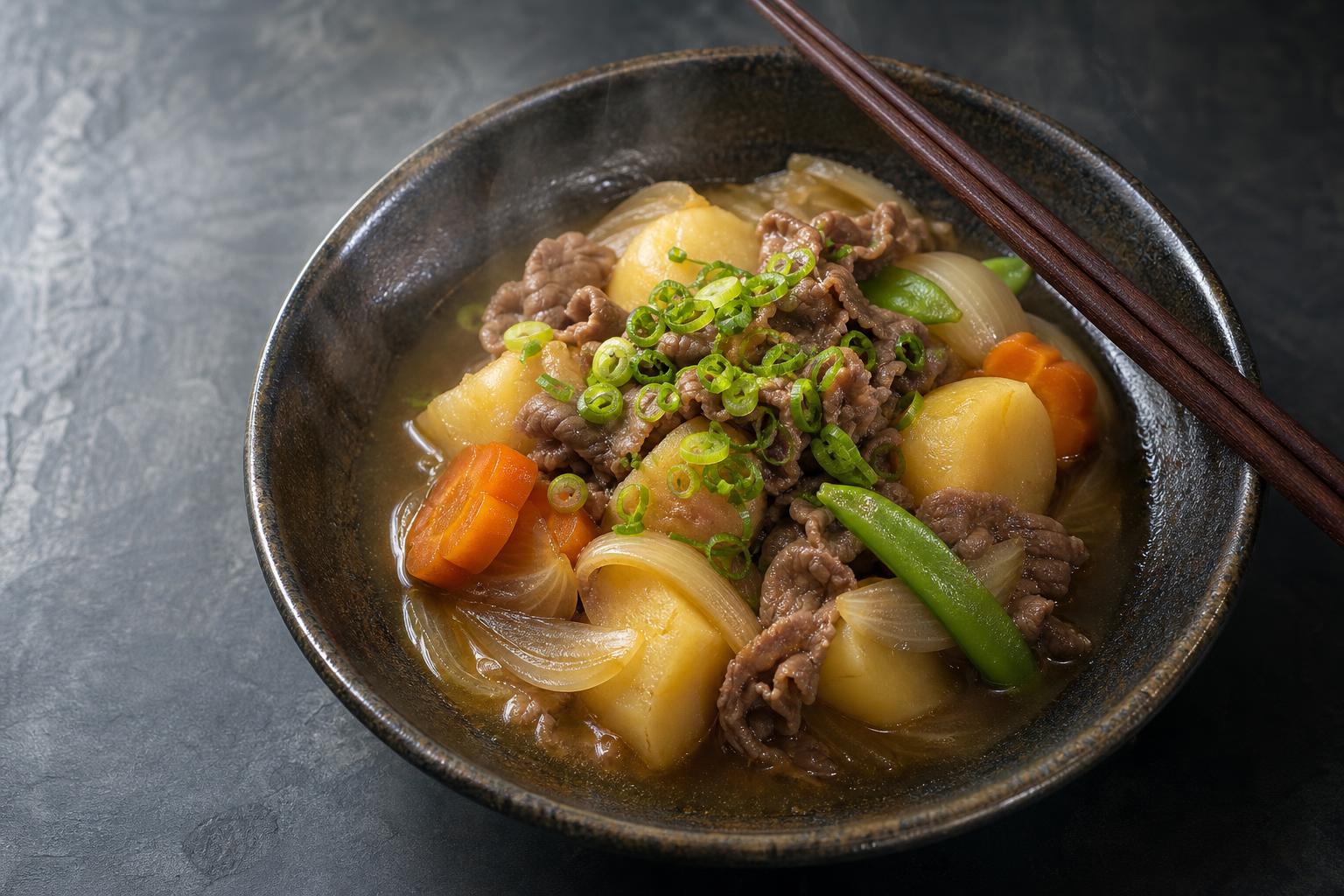
Nikujaga is the Japanese stew you reach for when you want dinner to feel like a warm blanket. This high-protein version lands at 34 grams of protein per serving, built on lean beef with the potato kept in a supporting role. The name literally means meat and potatoes, and that plain honesty is the whole charm.
Thin slices of beef, soft potato, and a sweet and savory dashi broth, all from one pot. It is humble food, the kind most Japanese home cooks learn long before anything fancy.
It also tastes better on day two, which quietly makes it one of the best meal prep dishes on this site.
Why this works
Two small moves keep this stew both high in protein and tender. First, I sear the beef for barely a minute and pull it out before it toughens, then return it only in the last few minutes so it stays silky instead of chewy. Beef simmered hard for twenty minutes turns to string, and thin cuts especially need a light hand.
Second, the potatoes cook in dashi rather than plain water, so they take on savory flavor from the inside instead of just sitting in seasoned liquid. A loose lid, or a drop lid if you have one, keeps everything moving gently and helps the potatoes cook evenly without breaking apart. Yukon golds hold their shape better than russets here.
Ingredient notes
Beef: thin sliced beef sold for hot pot or sukiyaki is ideal, usually chuck or sirloin. If you cannot find it, freeze a lean steak for about thirty minutes and slice it as thin as you can against the grain. Leaner cuts push the protein up and keep the broth from turning greasy.
Dashi: a teaspoon of instant dashi powder in 400 ml of hot water is all you need. No dashi on hand? Use low sodium beef or chicken stock and drop in a small piece of dried kombu if you have it.
Mirin brings the gentle sweetness. If you are out, use 1 tablespoon of water plus 1 teaspoon of sugar in its place and cut the brown sugar slightly. Shirataki noodles (ito konnyaku) are traditional and add bulk with almost no calories, but they are easy to skip.
Nikujaga (Japanese Beef and Potato Stew)
Ingredients
Method
- Heat the oil in a wide pot or deep skillet over medium-high. Add the beef and sear just until it loses its raw color, about 1 minute. Lift it out and set aside.
- Add the onion wedges and potato chunks to the same pot. Stir for 2 minutes to coat them in the beefy oil.
- Pour in the dashi, soy sauce, mirin, sake, and brown sugar. Bring to a gentle simmer and skim off any foam.
- Add the carrot and the shirataki if using. Lay a drop lid or a loose lid on top and simmer for 15 to 18 minutes, until the potatoes are fork-tender.
- Return the beef to the pot and simmer uncovered for 3 to 4 minutes, letting the broth reduce slightly.
- Stir in the blanched snow peas, turn off the heat, and let it rest for 5 minutes so the flavors settle. Serve warm, over rice if you like.
Tips and storage
Nikujaga keeps in the fridge for up to 4 days in a sealed container, and the flavor deepens overnight as the potatoes and beef soak up more of the broth. Reheat gently on the stove or in short bursts in the microwave so the beef does not seize up.
I would not freeze it. Cooked potato turns grainy and watery once thawed, which ruins the texture that makes this dish comforting in the first place.
For a full meal prep, spoon it over rice, or keep the rice separate and add a soft boiled egg on top when you reheat. If you like this style of Japanese home cooking, my high-protein gyudon is the faster weeknight cousin, buta no shogayaki is there when you want ginger pork in fifteen minutes, and Japanese hamburger steak makes a great next pick.