High-Protein Japchae (33g Protein)
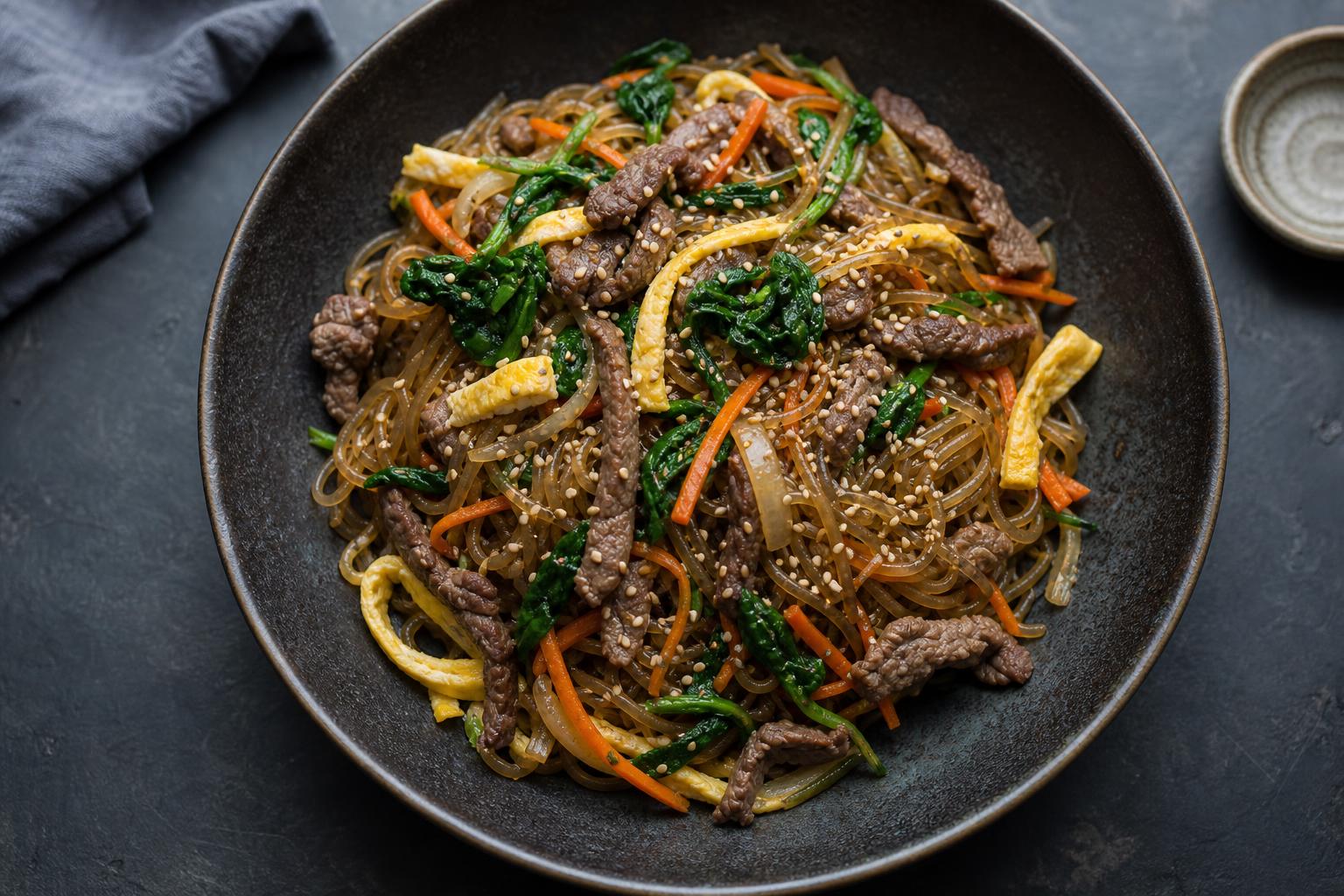
Japchae is usually a side dish at Korean restaurants, a tangle of glass noodles with a polite scattering of beef. This version doubles the beef and folds in egg ribbons, which turns it into a proper dinner with 33g of protein per serving. It also happens to be one of the few noodle dishes that is genuinely better at room temperature, which makes it a quiet meal prep weapon.
The ingredient list looks long. It is mostly the same five seasonings used twice.
Why this works
Traditional japchae cooks every component separately, and that is not fussiness, it is the whole dish. Each element keeps its own texture and seasoning instead of stewing together. The egg ribbon technique (a thin omelet cooked low with no color, rolled and sliced) adds protein that traditional japchae does not have, and it folds in at the end so the ribbons stay in strips instead of shredding into the noodles.
Sweet potato noodles are also nearly impossible to overcook into mush the way wheat noodles are, which is why this survives the fridge so well.
Ingredient notes
Dangmyeon, the sweet potato glass noodles, are the one ingredient without a substitute. Mung bean vermicelli is too thin and rice noodles miss the chew entirely; any Asian market and most large supermarkets carry the real thing. Sirloin and flank both work, sliced thin against the grain. Spinach can swap for blanched broccolini or thin asparagus. Use regular soy sauce, not dark, or the noodles turn muddy.
High-Protein Japchae
Ingredients
Method
- Toss the beef strips with 2 tablespoons of the soy sauce, 1 teaspoon of the sugar, and half the garlic. Let it sit while you cook everything else.
- Make the egg ribbons. Heat a little of the neutral oil in a nonstick pan over medium-low and pour in half the beaten egg, swirling into a thin sheet. Cook gently with no browning, about 1 minute, flip, then slide out. Repeat, then roll both sheets and slice into thin ribbons.
- Boil the glass noodles 6 to 7 minutes until chewy but not mushy. Drain, rinse under cold water, snip a few times with scissors so they are forkable, and toss with 1 teaspoon of the sesame oil.
- Blanch the spinach for 30 seconds, rinse cold, and squeeze it firmly dry.
- Stir fry the onion and carrot with a pinch of salt in the same pan over high heat for 2 minutes, then remove. Add the remaining neutral oil and stir fry the beef for 2 to 3 minutes until just cooked.
- In your largest bowl, combine the noodles, beef with its pan juices, vegetables, and spinach. Add the remaining soy sauce, sugar, garlic, and sesame oil, and toss thoroughly with tongs. Fold in the egg ribbons last so they stay intact, and finish with sesame seeds. Taste; it should be glossy, savory, and lightly sweet.
Tips and storage
Japchae keeps 4 days refrigerated and is the rare noodle dish that reheats without penalty. Microwave it briefly or eat it cold from the container, which I do more often than I admit. The noodles firm up when chilled and relax again at room temperature, so pull a portion out 15 minutes before eating if you can.
If this flavor profile is your thing, the beef bulgogi lettuce wraps run the same soy, sugar, and sesame marinade in low-carb form, and the Korean ground beef bowls are the 15-minute weeknight shortcut. For more Korean heat, see the gochujang chicken thighs.