Malaysian Chicken Curry Meal Prep (Kari Ayam, 46g Protein)
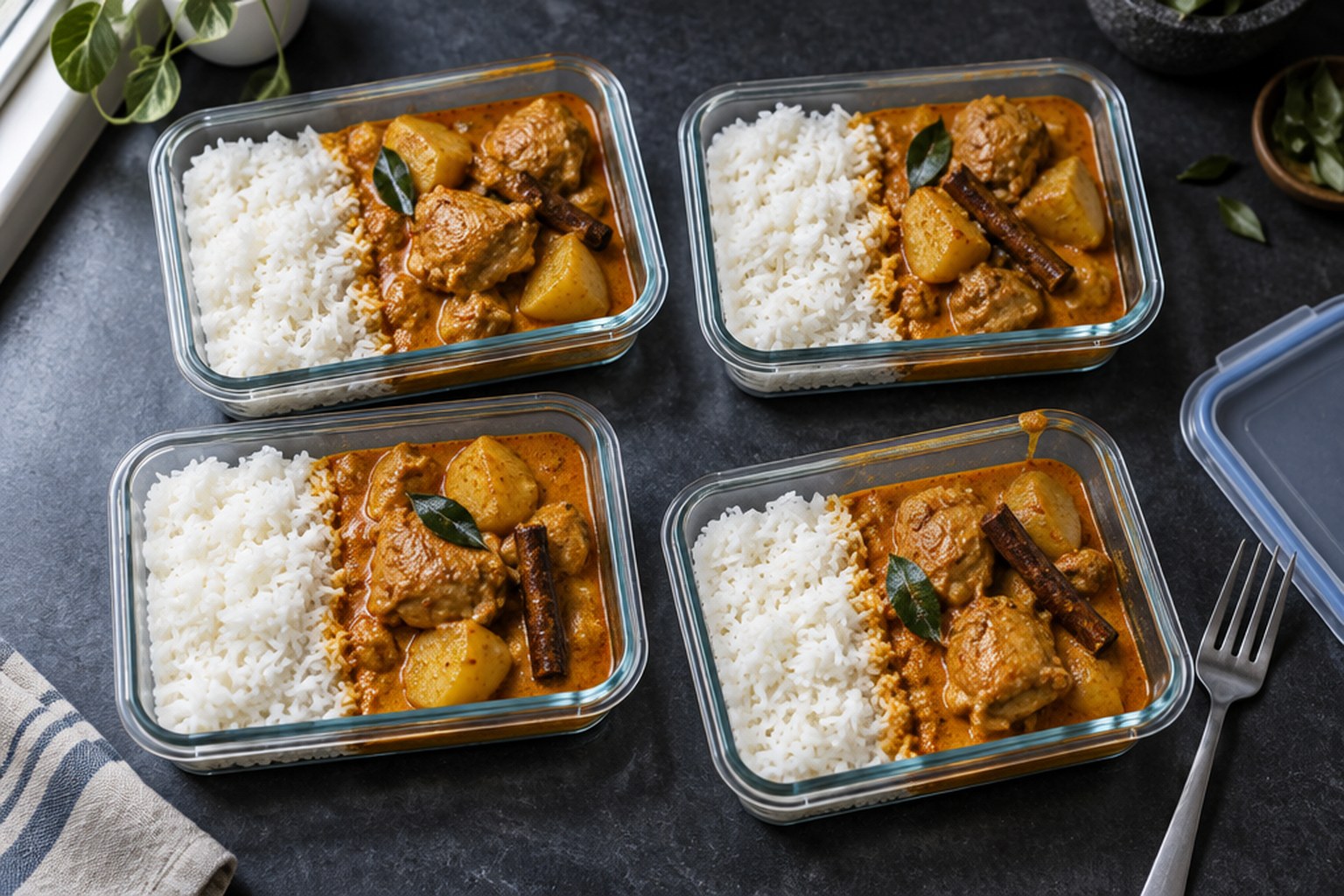
Kari ayam is the Malaysian chicken curry that shows up at nearly every hawker centre and family table I know, and this version gives you 46g of protein per serving with two pounds of boneless thigh feeding four. It is built for containers. The gravy is light coconut milk and stock rather than a thick coconut cream, so it reheats without splitting, and the potato soaks up the curry as it sits in the fridge and tastes better on day two than it did on day one.
The flavour comes from a Malaysian meat curry powder (Baba’s is the standard in Singapore and easy to find online in the US) fried in oil until it stops smelling raw, plus lemongrass, cinnamon, star anise and curry leaves. It is warmer and more rounded than Thai green curry and less sweet than Japanese chicken curry. Medium heat, not fierce.
One pot, about an hour, four lunches sorted. That is the whole pitch.
Why this works
The step that matters is frying the curry powder. Mix it into a paste with a little water first, then cook it in the oil with the onion and aromatics until the oil starts to separate out at the edges and the smell changes from dusty to toasted. That takes two to three minutes and you cannot skip it. Curry powder that is only simmered in liquid tastes chalky and flat. Curry powder that has been fried tastes like the curry you get from a good stall. Same jar, completely different result.
Thighs, not breast, and I say that as someone who uses breast for most of the recipes on this site. A curry that simmers for 30 minutes will turn breast into string. Boneless skinless thighs trimmed of the obvious fat stay juicy through the simmer, still land at around 19g of protein per 100g raw, and the fat they do carry is what gives the gravy body. If you want to cut it further, use light coconut milk as written and skim the pot once before the second addition.
Coconut milk goes in twice. Half early so the potato and chicken cook in it, half at the end so the gravy tastes fresh rather than cooked down. Adding it all at once and simmering for half an hour leaves you with a heavier, oilier sauce, which is the opposite of what you want in something you will microwave four times.
Ingredient notes
Malaysian meat curry powder is a specific blend: coriander and chili forward, with fennel, cumin, turmeric, cinnamon and clove. Baba’s, Adabi or Alagappa’s are the usual brands. A standard supermarket Madras curry powder works in a pinch but is milder and more turmeric heavy, so use 4 tbsp instead of 3 and add half a teaspoon of chili powder if you want the colour and heat.
Light coconut milk (one 13.5 oz can) keeps the gravy at a fridge friendly consistency and saves roughly 100 calories per serving over full fat. If you only have full fat, use two thirds of the can and top up with water.
Fresh curry leaves make a real difference and freeze well, so buy a bunch from an Indian grocer and keep them in a bag in the freezer. If you cannot get them, leave them out rather than substituting bay leaf, which tastes nothing like them.
Potatoes are traditional and they matter for meal prep because they hold the gravy. Waxy potatoes like Yukon Gold or red keep their shape through the simmer and the reheating. Russets fall apart.
Lemongrass: use the bottom third of two stalks, bruised flat with the side of a knife so they release flavour, then fish them out before packing. They are not eaten.
Malaysian Chicken Curry Meal Prep (Kari Ayam)
Ingredients
Method
- Toss the chicken pieces with 1 tbsp of the curry powder and 1 tsp of the salt. Set aside while you prepare everything else.
- Blend the shallots, garlic and ginger with 1 tbsp of water into a rough paste (or mince them very finely). Mix the remaining 2 tbsp curry powder with 3 tbsp water into a thick paste.
- Heat the oil in a Dutch oven or heavy pot over medium heat. Add the cinnamon, star anise and curry leaves and let them sizzle for 20 seconds. Add the sliced onion and the shallot paste and cook, stirring, for 5 to 6 minutes until soft and lightly golden.
- Add the curry powder paste and fry for 2 to 3 minutes, stirring constantly. It is ready when it darkens slightly, smells toasted rather than raw, and the oil starts to separate at the edges. Add a splash of water if it catches.
- Add the chicken and stir to coat in the paste. Cook for 3 to 4 minutes until the outside is no longer pink.
- Add the potatoes, lemongrass, stock and half the coconut milk. Bring to a simmer, cover, and cook on low for 20 minutes until the potatoes are tender when pierced.
- Uncover, stir in the remaining coconut milk, fish sauce, sugar and the remaining 1/2 tsp salt. Simmer uncovered for 8 to 10 minutes until the gravy coats the back of a spoon. Taste and adjust salt. Remove the lemongrass, cinnamon and star anise.
- Cool for 20 minutes, then divide into four containers alongside cooked rice. Refrigerate up to 4 days.
Tips and storage
Let the curry cool for 20 minutes before dividing into containers, then pack it with rice on one side and the curry on the other so the rice does not turn to mush. It keeps four days in the fridge and reheats in about two and a half minutes in the microwave with the lid loosely on. It also freezes well for two months, though the potato goes slightly grainy after freezing, so if you plan to freeze a batch, leave the potato out and add a handful of frozen green beans when you reheat instead.
The gravy thickens in the fridge. That is the potato starch, not a problem. A splash of water when reheating brings it back.
If you want more heat, split two fresh red chilies lengthwise and add them with the lemongrass. If you like the tangy edge that some stalls give it, a squeeze of lime or a teaspoon of tamarind paste at the end works. For a similar slow simmered protein hit with beef instead, the weeknight beef rendang follows the same fry the paste first logic.
Rice is not counted in the nutrition below, so add about 200 calories and 4g of protein for 3/4 cup of cooked jasmine rice per bowl.