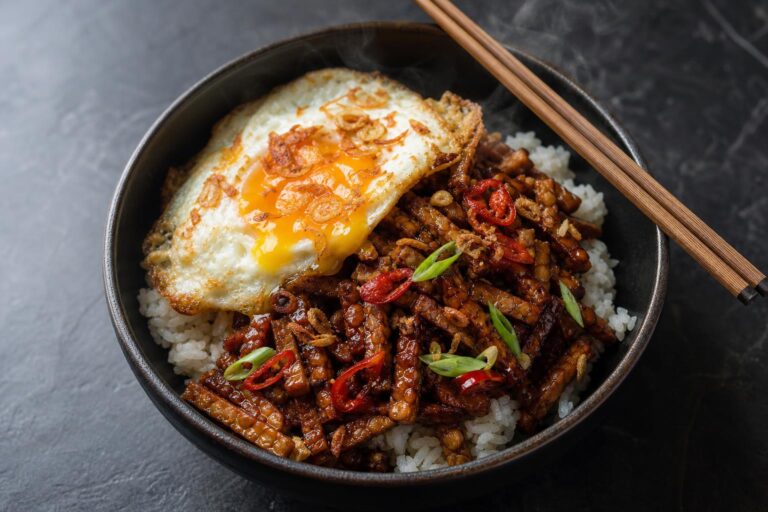
Thai Basil Beef, Pad Kra Pao (40g Protein)
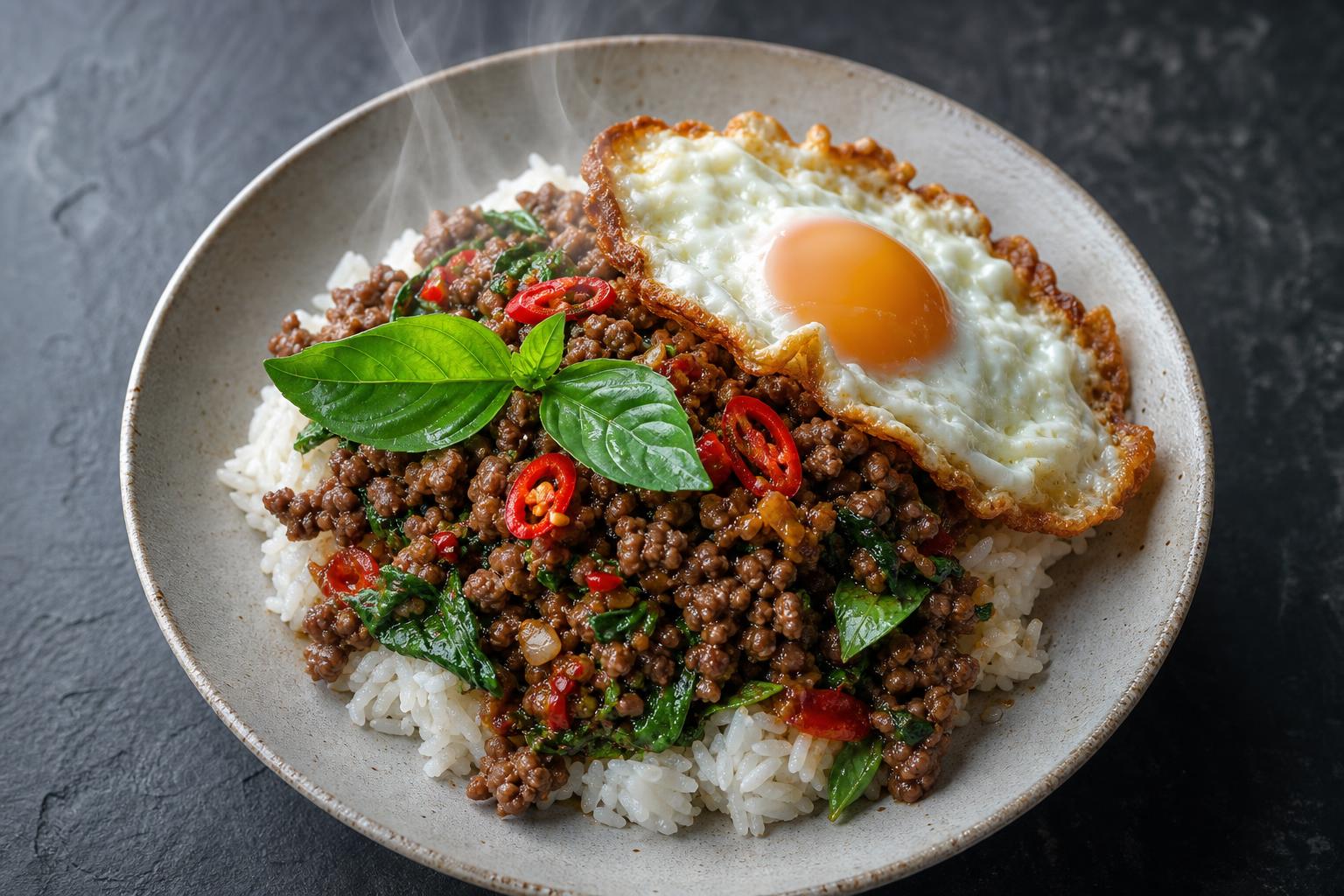
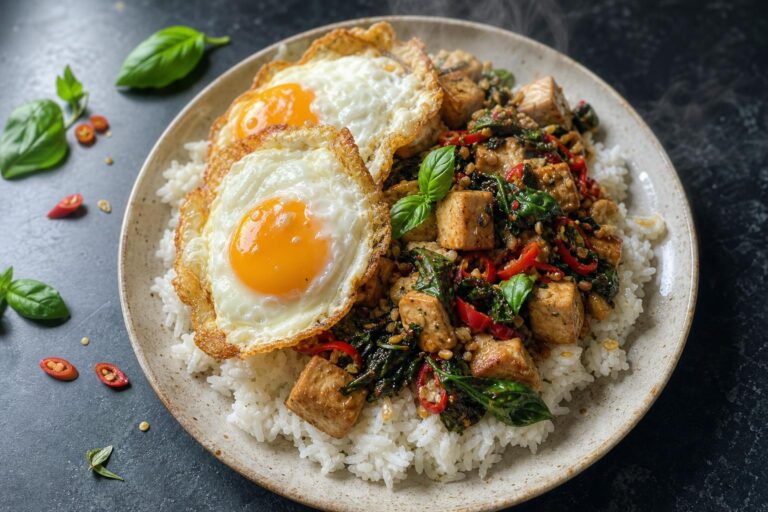
This is my go-to when I want a big hit of protein on the table in about 25 minutes. Each serving lands around 40g of protein, most of it from lean ground beef with a crispy fried egg on top. Pad kra pao is the Thai street stir fry you see cooked to order over a screaming wok, and the home version is honestly just as good if you get two things right: high heat and fresh basil at the very end.
It is a one-pan dinner that reheats well, so I usually cook a double batch on Sunday and eat it over rice all week. The sauce is short, salty, and a little sweet, and the holy basil does most of the heavy lifting on flavor.
Why this works
Lean ground beef wants to steam, not sear, because it releases a lot of water. The fix is high heat and patience. Spread the meat flat, leave it alone for a minute, and only start breaking it up once the bottom has taken on color. You are cooking off that liquid and building browned, crisp edges, which is where the flavor lives. If you crowd the pan or keep the heat low, you get gray beef in a puddle.
The basil goes in off the heat on purpose. Holy basil is aromatic and a bit peppery, and those oils fade fast when they cook. Kill the heat, fold the leaves through until they just wilt, and the whole pan smells like the dish is supposed to smell.
Ingredient notes
Holy basil (bai kra pao) is the traditional choice and has a clove-like, peppery bite. It can be hard to find outside of Asian grocers, so Thai sweet basil (horapha, the one with purple stems) is a fine everyday swap with a more anise note. Regular Italian basil works in a pinch but is much milder, so use a little extra.
For the beef, 93/7 keeps the protein high without the pan swimming in fat. If you only have 85/15, spoon off some of the rendered fat before the sauce goes in. Fish sauce and oyster sauce both bring salt and depth, so go easy on any extra salt. The dark soy is mostly for that appetizing brown color, and you can skip it if you do not keep it around. On the chilies, four bird’s eye chilies is a moderate Thai heat, which for most people is properly spicy. Start lower if you are unsure, since you cannot take it back out.
Thai Basil Beef (Pad Kra Pao)
Ingredients
Method
- Stir the oyster sauce, soy sauce, dark soy, fish sauce, sugar, and water together in a small bowl. Set it by the stove so you are not measuring mid-stir-fry.
- If you want fried eggs, heat 1 tablespoon oil in a nonstick pan over medium-high and fry the eggs until the edges are crisp and lacy but the yolk is still runny. Slide onto a plate and set aside.
- Heat the remaining 1 tablespoon oil in a wide skillet or wok over high heat until it shimmers. Add the garlic, bird's eye chilies, sliced red chili, and shallot. Stir for about 30 seconds, just until fragrant, do not let the garlic brown.
- Add the ground beef. Spread it flat and let it sit for a minute to sear before you break it up. Keep the heat high and cook 6 to 8 minutes, breaking the meat into small pieces, until any liquid has cooked off and the beef starts to crisp at the edges.
- Pour in the sauce and toss for about 1 minute until it coats the beef and mostly evaporates.
- Turn off the heat. Add the basil and fold it through just until wilted, 15 to 20 seconds. Taste and adjust with a little more fish sauce or sugar. Serve over jasmine rice with a fried egg on top.
Tips and storage
The beef keeps in the fridge for up to 4 days and is one of the better stir fries for meal prep, since there are no vegetables to go soggy. Store the beef and rice together and add a fresh fried egg when you reheat, or skip the egg for prep boxes and let the beef carry the protein. Reheat in a hot pan for a minute or two rather than the microwave if you want the crisp edges back.
If you like this, it is in good company with a few other high-protein stir fries here: my Thai waterfall beef (nam tok) uses the same lean beef in a bright, herby salad, the Vietnamese shaking beef is another fast high-heat pan dish, and the Thai cashew chicken is the one to make when you want something in the same family but milder.