Sambal Sotong (Malaysian Sambal Squid, 39g Protein)
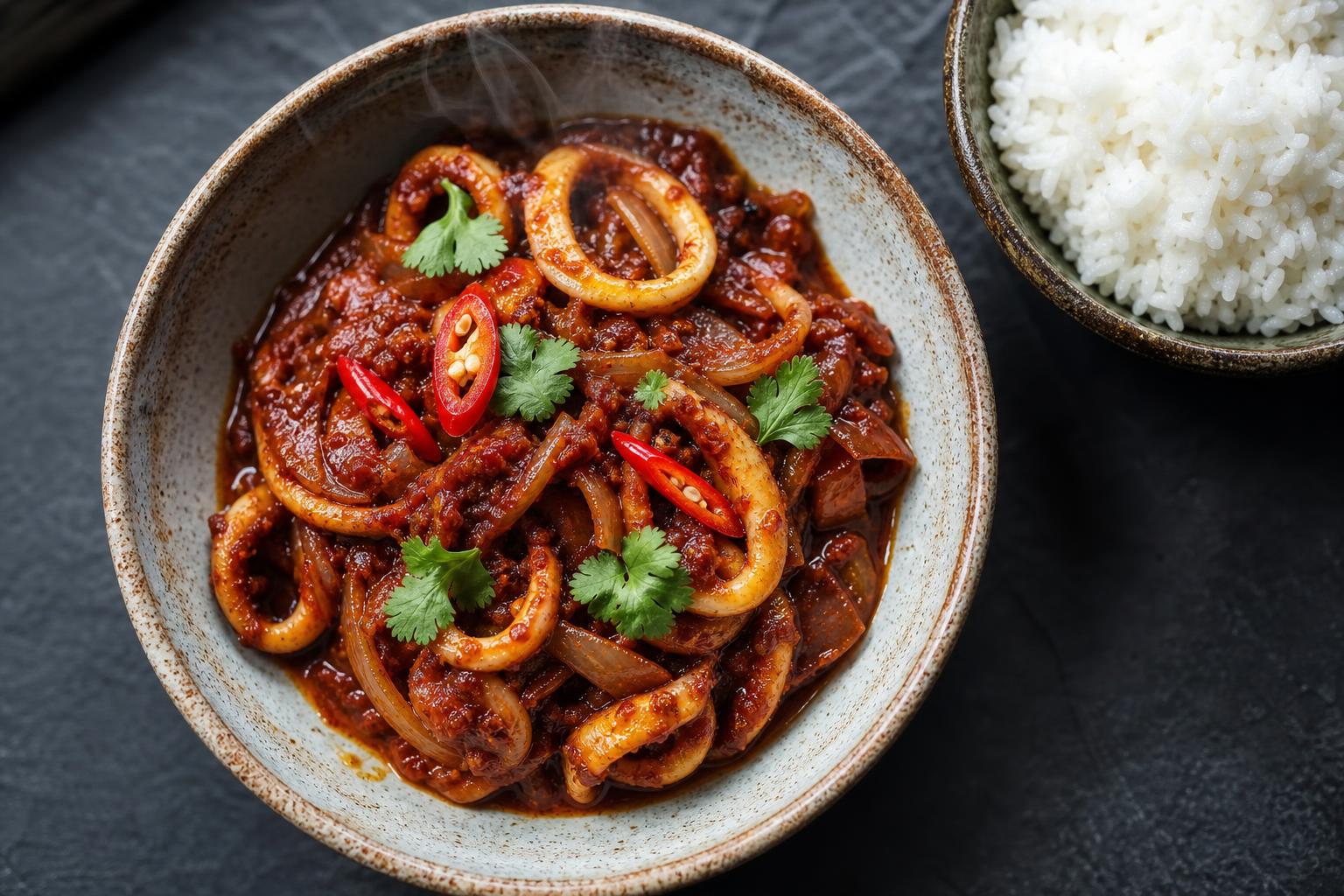
Sambal sotong is squid rings cooked down in a dark, toasted chili sambal, and it lands 39 grams of protein a serving. Squid is one of the leanest proteins in the seafood case, so almost all of those calories are doing real work. It comes together in about 35 minutes, most of which is patient frying rather than active effort.
This is a hawker classic across Malaysia and Singapore, usually eaten with a mound of steamed rice and not much else. The whole thing hangs on two moves: frying the rempah until it splits, and cooking the squid for almost no time at all.
Why this works
Squid has a very short window between tender and rubbery. The trick I use is a quick blanch before it ever meets the sambal. Twenty seconds in simmering water sets the proteins gently and tightens the rings, so when they go back in at the end they only need a minute to warm through. That single step is the difference between a bounce you enjoy and one you have to chew twice.
The other half is the rempah. Frying the chili paste low and slow until the oil separates is what builds the deep, almost smoky base flavor. Raw, underfried sambal tastes sharp and one note. Give it the full ten minutes and it turns sweet and round on its own, before you add anything else.
Ingredient notes
Dried red chilies give color and a mellow, raisin like heat rather than a sharp burn. Soak them in hot water for 15 minutes so they blend smoothly, or take the shortcut of 1.5 tbsp sambal oelek if that is what you have. Belacan is toasted shrimp paste and it carries a lot of the savory backbone here, but a teaspoon of fish sauce covers most of it if you cannot find belacan. Tamarind brings the sour edge that keeps the dish from feeling heavy, and lime juice works in a pinch. Buy squid tubes already cleaned to save real time, and thaw frozen squid fully and pat it bone dry, since surface water is the enemy of a clingy sambal.
Sambal Sotong (Malaysian Sambal Squid)
Ingredients
Method
- Make the rempah. Drain the soaked dried chilies and blend them with the fresh chilies, shallots, garlic, lemongrass and belacan into a coarse paste, adding a splash of water to get the blades moving.
- Pat the squid very dry. Bring a small pot of water to a gentle simmer and blanch the squid rings for 20 to 30 seconds, just until they turn opaque, then drain right away. This firms them up and stops the sambal from going watery later.
- Heat the oil in a wok over medium. Fry the rempah, stirring often, for 8 to 10 minutes until it darkens and the oil starts to split from the paste. This is the step most people rush. Keep going until it smells toasty and sweet, not raw and sharp.
- Add the sliced onion and cook for 2 minutes until it softens at the edges but still has some bite.
- Stir in the tamarind and sugar, add 3 to 4 tbsp water to loosen the sauce, and simmer for 1 minute. Taste and adjust salt now, while there is no squid in the pan to overcook.
- Add the blanched squid and toss to coat, cooking just 1 to 2 minutes to heat through. Kill the heat the moment it is hot. Squid turns rubbery if it sits on the fire, so serve straight away over rice.
Tips and storage
The sambal itself is the make ahead hero. Fry a double batch of rempah through step 3, cool it, and keep it in the fridge for up to a week or freeze it in a flat bag. On a weeknight you just reheat the paste, add onion and tamarind, and cook fresh squid at the last minute, which brings the active time down to about ten minutes. I would not cook the squid ahead, since reheating it is exactly how it goes tough.
Leftovers keep for two days in the fridge, and they are honestly better cold over rice than microwaved. If you love this style of sambal seafood, my sambal prawns use the same rempah with an even faster cook, and the Malaysian assam fish leans harder into the sour tamarind side. For a different take on squid entirely, the Korean spicy squid stir fry swaps sambal for gochujang and skips the blanch.