Semur Daging (Indonesian Braised Beef, 42g Protein)
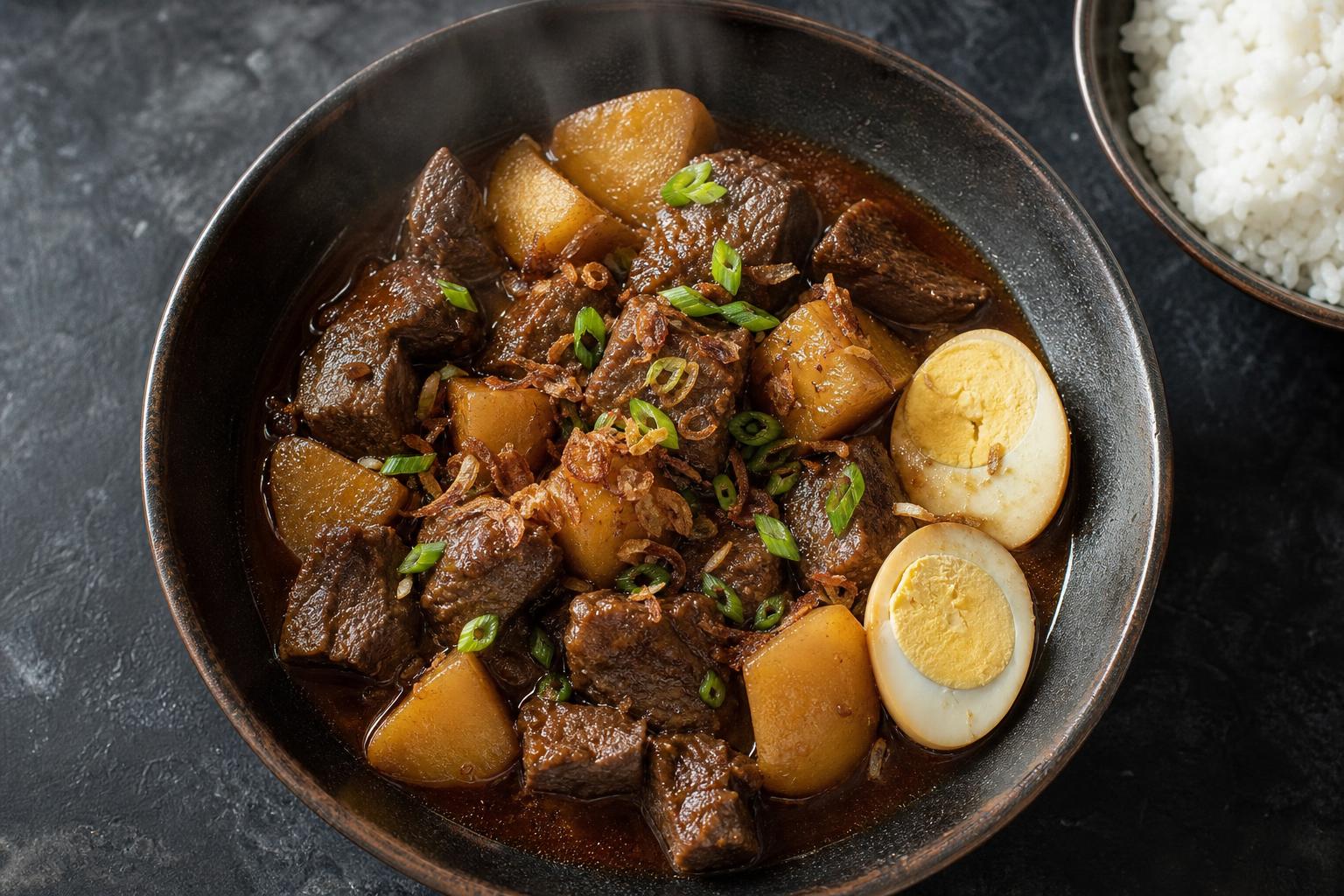
Semur daging is the Indonesian braise I reach for when I want beef to look after itself. It runs about 42g of protein per serving, most of it from a pound and a half of chuck simmered down into four bowls, with a hard-boiled egg tucked into each one for a few extra grams. The sauce is dark and glossy and gently sweet, built on kecap manis and warm spices rather than chili heat.
What makes semur different from the other sweet soy dishes on this site is the spicing. Clove, nutmeg and cinnamon give it an almost mulled, aromatic quality that reads more comforting than fiery. It is a homey dish, the kind of thing cooked in big pots for family meals across Indonesia, and it happens to be a strong choice when you are chasing protein without eating another plain chicken breast.
The only thing it asks of you is a slow simmer. Twenty minutes of real work at the front, then it just ticks along on the stove until the beef goes fork-tender and the sauce thickens on its own.
Why this works
Two steps do most of the heavy lifting. First, brown the beef hard before any liquid goes in, because that seared crust is where a lot of the savory depth comes from, so give each batch room in the pot. Second, let the kecap manis bubble and darken with the aromatics for a minute before you add the broth. Sweet soy poured straight into liquid tastes flatly sugary, but a quick fry deepens it and gives semur its signature near-black color. After that it is time doing the work. A bare simmer, barely bubbling, breaks the collagen in the chuck down into gelatin, which is what gives the sauce its body and the beef its softness.
Ingredient notes
Beef chuck is my default here for the balance of protein, flavor and price, but beef shin with its collagen-rich connective tissue is arguably even better if you can find it, and brisket works too. Kecap manis is the backbone of the dish, a thick, syrupy sweet soy sauce, and it is worth buying a bottle (ABC is the common brand in the US). In a pinch, 3 tablespoons of regular soy sauce plus 2 tablespoons of brown sugar gets you close. Use a waxy potato like Yukon Gold so the chunks hold their shape through the braise instead of dissolving into the sauce. The hard-boiled eggs are traditional and not just for looks, they soak up the gravy and quietly push the protein higher.
If you like this style of sweet soy cooking, it sits right next to my babi kecap (Indonesian sweet soy pork), which uses the same kecap manis base with a lighter hand. For a richer, drier Indonesian beef, the weeknight beef rendang is worth a look, and if you want a brothy Indonesian bowl instead, try the soto ayam.
Semur Daging (Indonesian Braised Beef)
Ingredients
Method
- Pat the beef dry and season it lightly with salt. Heat the oil in a heavy pot or Dutch oven over medium-high, then brown the beef hard on two sides, about 6 to 8 minutes total, working in two batches so the pieces sear rather than steam. Move the browned beef to a plate.
- Lower the heat to medium. Add the onion, garlic and ginger to the same pot and cook until soft and fragrant, about 4 minutes, scraping up the browned bits stuck to the bottom. Stir in the chopped tomato and let it break down for a minute.
- Add the kecap manis and regular soy sauce and let them bubble and darken for about a minute. Cooking the sweet soy this way takes off the raw sugary edge and starts building the deep color semur is known for.
- Return the beef and any juices to the pot. Add the cloves, nutmeg, cinnamon, white pepper and the broth. The liquid should nearly cover the beef, so top up with a little water if needed. Bring to a boil, then drop to a bare simmer.
- Cover and simmer gently for 90 minutes, stirring once or twice. Chuck is a hard-working cut full of connective tissue, and it needs this slow stretch to turn silky rather than chewy. Skim off any heavy fat that pools on top.
- Add the potatoes and the peeled hard-boiled eggs, nestling them into the sauce. Simmer uncovered for a final 30 minutes, until the potatoes are tender and the beef pulls apart with a fork. The sauce should reduce to a glossy gravy that coats a spoon.
- Fish out the cinnamon stick and cloves if you can find them. Taste and adjust with the salt or a splash more kecap manis. Serve over steamed rice, spooning the eggs and gravy on top, and finish with fried shallots and scallions.
Tips and storage
This is a meal-prep dream. Semur daging keeps in the fridge for up to 4 days and genuinely improves by day two as the spices settle into the sauce. Store it separately from the rice so nothing goes soggy, and reheat gently on the stove or in the microwave with a splash of water if the gravy has thickened too much in the cold. It freezes well too, up to 3 months, so I often portion half the batch into containers before it reaches the table. If you own a pressure cooker, you can shortcut the long simmer: brown and build the base as written, then cook on high pressure for 35 minutes with a natural release, adding the potatoes and eggs for a final 5 minute pressure cycle so the potatoes do not turn to mush.