Goong Ob Woon Sen (Thai Shrimp Glass Noodle Pot, 45g Protein)
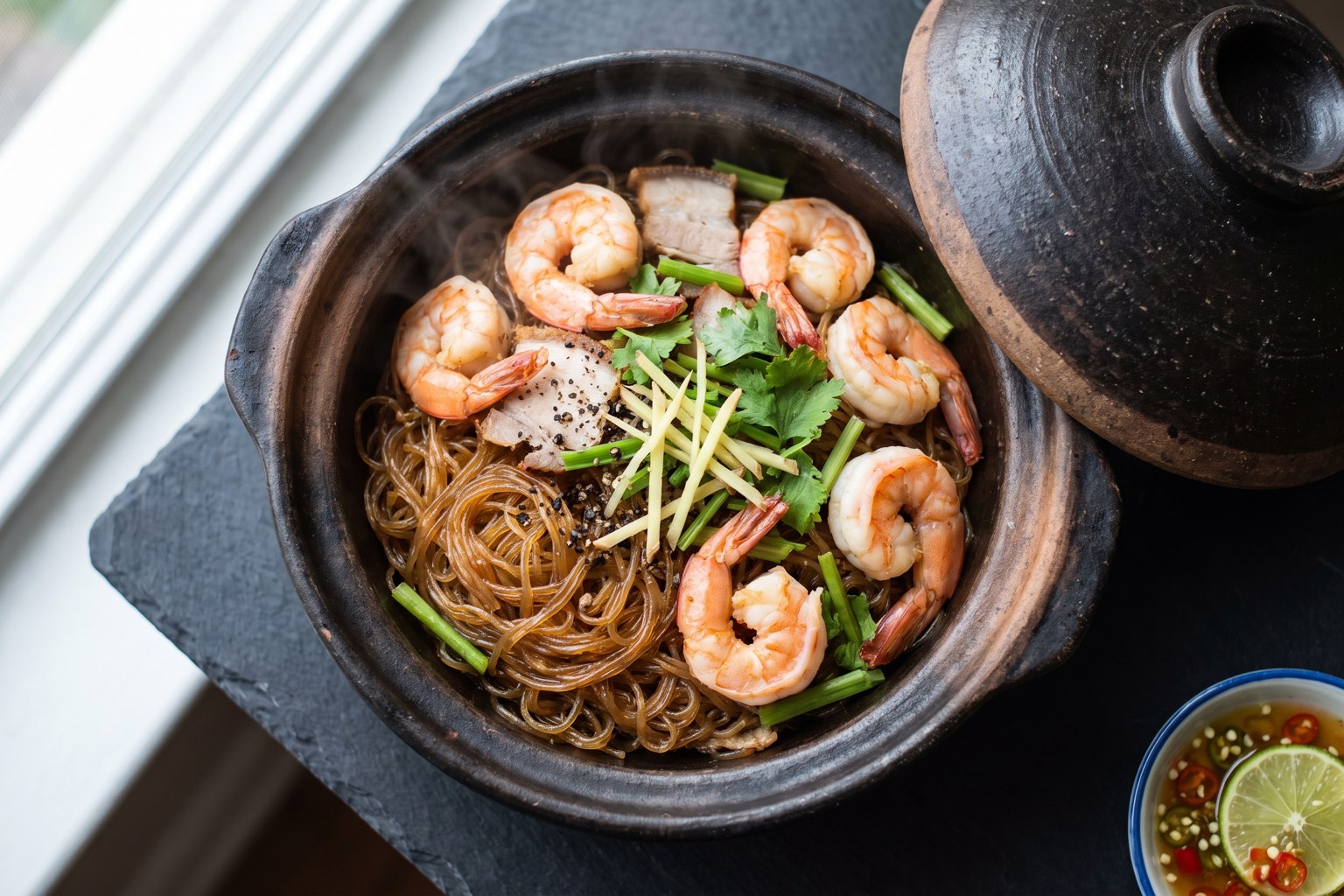
Goong ob woon sen is a Thai shrimp and glass noodle dish that is cooked, not stir fried. The noodles steam in a covered pot under a layer of shrimp, and each serving lands at 45 grams of protein for around 500 calories. The whole thing takes one pot and about 35 minutes, most of that with the lid on while you do nothing.
You see this in Bangkok as goong ob mor din, shrimp baked in a clay pot, and it usually comes with a few slices of pork belly on the bottom to render fat into the noodles. I swap the belly for thin sliced pork loin, which gives up the fat but keeps the protein, and lean on black pepper, garlic and a lot of ginger to carry the flavor instead. The noodles are the point. They soak up the oyster sauce and soy dressing, then steam in shrimp juices, and by the end they taste like they were cooked in stock rather than water.
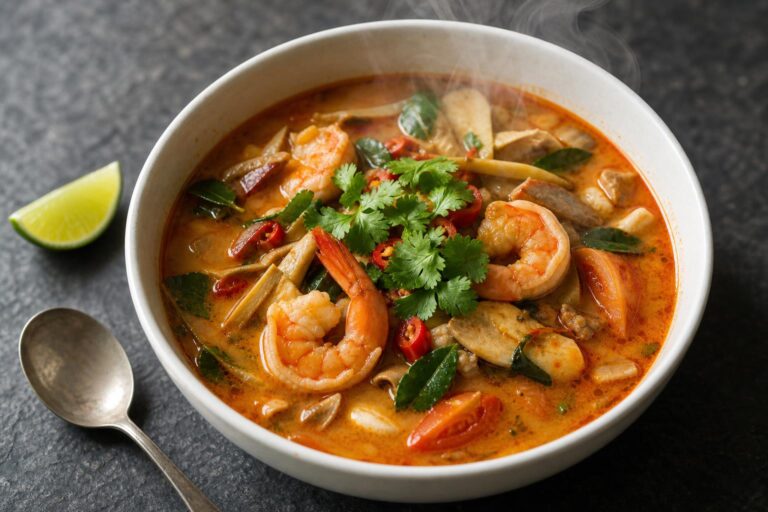
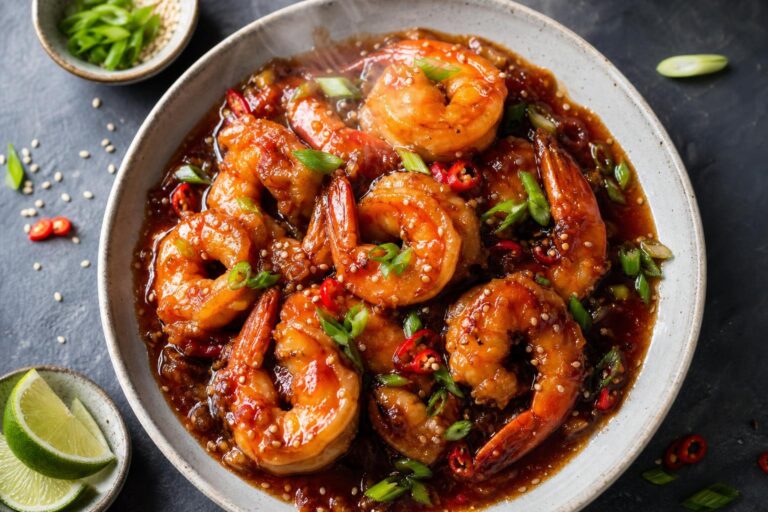
If you like the shrimp in my tom yum goong or the Vietnamese tamarind shrimp, this is a quieter, more peppery dish from the same shopping list.
Why this works
Glass noodles are mung bean starch, and they absorb far more liquid than wheat or rice noodles without falling apart. That is why the dressing goes on before the noodles hit the pot: they take up the sauce while raw, and then the steam finishes them. If you boiled them first they would be waterlogged and the sauce would slide off. Soaking for 10 minutes in cool water is enough; hot water makes them mushy before they see the pan.
Layering matters. Pork on the bottom takes the direct heat and stays out of the way, noodles in the middle, shrimp on top. The shrimp never touch the base of the pot, so they cook gently in steam instead of scorching, which is why they come out plump rather than rubbery. Eight minutes on medium low is right for large shrimp (21 to 25 per pound). Smaller ones, check at 6.
Ingredient notes
Shrimp: buy raw, not cooked, and peel them yourself if you can. Shells left on the tail are traditional and look nice but make the dish annoying to eat with chopsticks. Frozen raw shrimp are fine; thaw fully and pat dry or they will water down the noodles.
Glass noodles: sold as bean thread, cellophane noodles or mung bean vermicelli. Check the packet says mung bean starch. The sweet potato starch ones used for japchae are thicker and need more liquid and time, so they are not a straight swap here.
Cilantro roots: Thai cooks pound the roots with garlic and pepper as the base of the dish. Asian grocers sometimes sell cilantro with roots attached, and they freeze well. Chopped stems get you most of the way there. Leaves alone do not; save those for the finish.
Black pepper: crack it coarse. Pre-ground pepper goes dusty and bitter in the hot oil. A mortar, a spice grinder pulsed twice, or the base of a pan pressed over the peppercorns on a board all work.
Chinese celery: thin, leafy, and more strongly flavored than the supermarket kind. If you cannot find it, one regular celery rib sliced thin with its leaves is a reasonable stand in. Do not skip the celery entirely; it is a big part of the aroma.
Goong Ob Woon Sen (Thai Shrimp and Glass Noodle Pot)
Ingredients
Method
- Soak the glass noodles in room temperature water for 10 minutes while you prep everything else. Drain well. They should be pliable but still a bit firm; they finish cooking in the pot.
- Mix the sauce. In a bowl, stir together the oyster sauce, light soy, dark soy, sugar, sesame oil and stock until the sugar dissolves. Toss the drained noodles in this sauce and let them sit while you do the next step. They will start drinking it up.
- Pound or chop the cracked peppercorns, garlic and cilantro roots together into a rough paste. A mortar is fastest, but a knife and the flat of the blade work fine.
- Heat a heavy lidded pot or deep skillet (a Dutch oven is ideal) over medium heat. Add the neutral oil and the pepper garlic paste and fry for 1 minute until fragrant. Add half the ginger and fry 30 seconds more.
- Lay the pork slices over the base of the pot in one layer. Pile the sauced noodles on top of the pork, pouring in any sauce left in the bowl. Scatter the remaining ginger and the celery over the noodles.
- Arrange the shrimp on top in a single layer. Cover with the lid, turn the heat to medium low and cook for 8 minutes without lifting the lid. The steam trapped inside cooks the shrimp and finishes the noodles at the same time.
- Lift the lid. The shrimp should be pink and curled and the noodles clear and glossy. If there is still a puddle of liquid at the bottom, cook uncovered for 1 to 2 minutes more. If the noodles look dry, splash in 2 tablespoons of water and cover for another minute.
- Add the scallions, put the lid back on and turn off the heat. Rest 2 minutes. Toss everything together gently from the bottom so the pork and the pepper oil come up through the noodles. Finish with cilantro and serve with lime wedges and, if you like, a chili lime dipping sauce on the side.
Tips and storage
Use a pot with a lid that actually seals. A wide Dutch oven or a deep skillet with a tight glass lid is better than a real clay pot for most home stoves, because it holds steam and the heat is even. If your lid is loose, lay a sheet of foil over the pot before putting the lid on.
Do not overload the pot. If your pot is small, split the recipe into two batches rather than stacking the shrimp two deep, or the top layer will be raw when the noodles are done.
Leftovers keep 2 days in the fridge, though glass noodles firm up when cold. Reheat in a covered pan with a splash of water over low heat and they loosen back up. The microwave works too, again with a spoon of water and a cover. The shrimp will be slightly firmer on day two, which is the cost of any shrimp leftover. For a dipping sauce, mix 2 tablespoons lime juice, 1 tablespoon fish sauce, 1 teaspoon sugar and a chopped bird’s eye chili, and spoon it over as you eat. If you want a wok version instead of a steamed one, my chicken pad see ew is the same soy and pepper idea with wide rice noodles.