Saba Shioyaki (Japanese Salt-Grilled Mackerel, 42g Protein)
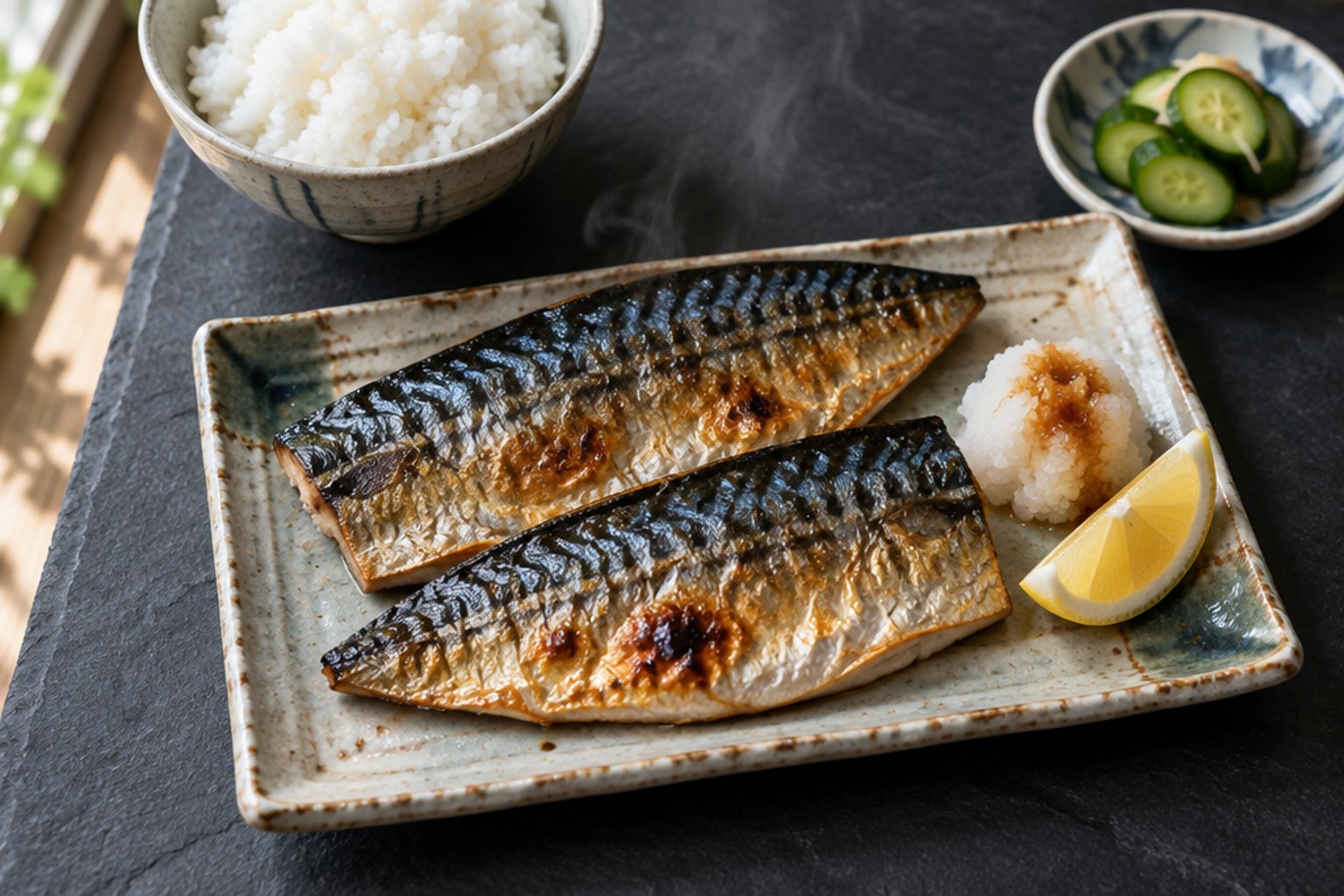
Saba shioyaki is about as plain as Japanese cooking gets: mackerel, salt, heat. Two pieces of fish per person, which is half a pound of fillet, comes to 42g of protein and takes ten minutes under the broiler. It is the dish I cook when I have done nothing about dinner and want something that still feels like a proper meal.
Mackerel is cheap, sold frozen almost everywhere, and has more flavor than any white fish at the same price. It is also oily, which is the whole reason this works. The fat under the skin renders and crisps against the salt, and it keeps the flesh moist even if you overshoot the timing by a minute. That forgiveness is why it is the first fish I teach people to broil.
The Japanese serve it with grated daikon and a few drops of soy sauce. Do not treat that as a garnish. The daikon is sharp and cold and it cuts the richness of the fish so you can finish the whole plate. With a bowl of rice and something pickled it is a complete teishoku, the kind of set meal you would get at a lunch counter in Tokyo for a few hundred yen.
Why this works
The 20 minute salting rest is the recipe. Salt pulls water out of the fish, and that water carries the compounds that give mackerel its fishy smell when it is a day or two old. You will see beads of liquid on the surface at the end of the rest. Wipe them off and you have thrown out most of the funk and seasoned the fish all the way through at the same time. The surface is also drier, which is what lets the skin blister instead of steam.
Broiling skin side up without flipping is deliberate. The skin is where the fat is, and it needs direct radiant heat to crisp. The flesh side sits on a hot rack over foil and cooks through from below and from the ambient heat of the oven. Flipping a mackerel fillet is how you lose the skin, and mackerel flesh is soft enough that it breaks anyway. Leave it alone.
The slashes through the skin do two things. Mackerel skin tightens hard as it cooks and will curl the fillet into a U shape, which lifts half of it away from the heat. Two cuts release that tension. They also let salt and heat reach the thickest part of the fillet a little faster.
Ingredient notes
Mackerel in US supermarkets is almost always frozen Atlantic mackerel or Norwegian saba, usually as boneless butterflied fillets in vacuum packs. Both are right for this. Thaw overnight in the fridge, or in a bowl of cold water for 30 minutes still in the pack. If you can get fresh mackerel from a fishmonger, look for firm flesh, clear eyes and bright metallic skin, and cook it the same day. Spanish mackerel and king mackerel are different fish, larger and meatier, and they work too but need a couple more minutes. Avoid the tinned stuff here for obvious reasons.
The salt quantity matters more than usual because the salt is the only seasoning. A teaspoon of Diamond Crystal kosher for a pound of fish is a medium salting, about what you would get in Japan. If you use Morton kosher or fine sea salt, which are much denser by volume, drop to three quarters of a teaspoon or the fish will be too salty for the daikon to fix.
Sake is a traditional rinse that helps with the fishiness. It is a small effect, honestly, and the salting does most of the work. Skip it if you do not have any.
Daikon should be grated on the fine side of a box grater or a Japanese oroshigane if you have one. You want a wet, snowy pulp, not shreds. Squeeze it gently in your hand to get rid of the excess juice, and grate it close to serving because it loses its bite after half an hour. A watermelon radish or even a peeled regular red radish, grated fine, is a fair substitute if daikon is hard to find.
Lemon is the practical substitute for sudachi, the small green Japanese citrus that usually goes with this. Lime is closer in flavor than lemon if you have to choose.
Saba Shioyaki (Japanese Salt-Grilled Mackerel)
Ingredients
Method
- Check the fillets for pin bones by running a finger along the center line and pull any you find with tweezers. If the fillets are large, cut each one in half crosswise so you have 4 pieces. Pat dry.
- Sprinkle the sake over the flesh side, if using, and let it sit 2 minutes, then pat dry again. Salt both sides evenly, going a little heavier on the skin side. Lay the fillets skin side up on a plate or rack and leave them uncovered at room temperature for 20 minutes. Beads of moisture will come to the surface.
- Meanwhile set an oven rack about 5 inches below the broiler element and turn the broiler to high. Line a rimmed sheet pan with foil, set a wire rack on top and brush the rack with the oil. If you do not have a rack, oil the foil directly. Grate the daikon and squeeze out the excess liquid so it is damp, not wet.
- Pat the fillets dry once more with paper towel. Do not rinse the salt off, just wipe away the surface moisture. Make 2 shallow diagonal slashes through the skin of each piece so it does not curl. Lay them skin side up on the rack.
- Broil for 7 to 9 minutes without turning, until the skin is blistered and browned in patches and the flesh at the thickest part flakes when pressed with a fork. Thin fillets can be done in 6 minutes. If the skin is browning faster than the fish is cooking, drop the rack one level lower. There is no need to flip; the rack and the hot foil cook the underside.
- Rest 2 minutes on the rack. Serve skin side up with a mound of grated daikon beside each portion, a few drops of soy sauce on the daikon, a lemon wedge and shiso if using. Squeeze the lemon over the fish at the table, not before, or the skin softens.
Tips and storage
If you have a gas or charcoal grill, this is even better over direct medium-high heat on a well oiled grate, skin side down first for 4 minutes, then a quick flip for 2 more. The skin releases from the grate when it is ready and tears if you rush it. A fish basket makes life much easier.
A stovetop version works too. Heat a nonstick or well seasoned cast iron skillet over medium-high with a teaspoon of oil, lay the fillets in skin side down, press them flat with a spatula for the first 30 seconds so the skin makes contact, and cook 4 minutes until the skin is crisp and the flesh is opaque most of the way up. Flip and give it 1 more minute. Open a window. Mackerel in a skillet makes its presence known.
Cooked mackerel keeps 3 days in the fridge and is one of the few grilled fish I like cold. Flake it over rice with the daikon and some shredded cucumber for a lunch box, or fold it into a bowl of rice with sesame seeds and a splash of soy. Reheating softens the skin, so if you want it hot, put it under the broiler again for 2 minutes rather than in the microwave. I would not freeze it after cooking. Freeze the raw fillets instead, which is how they arrived anyway.
For a rounder meal, a bowl of tonjiru alongside is the classic pairing and pushes the protein for the whole meal past 60g. If you like the idea of a fast broiled fish but want something sweeter and less assertive, miso glazed salmon uses the same rack and broiler setup. And for the Southeast Asian version of a whole grilled oily fish with a sambal instead of daikon, there is ikan bakar.