High-Protein Beef Bibimbap (44g Protein)
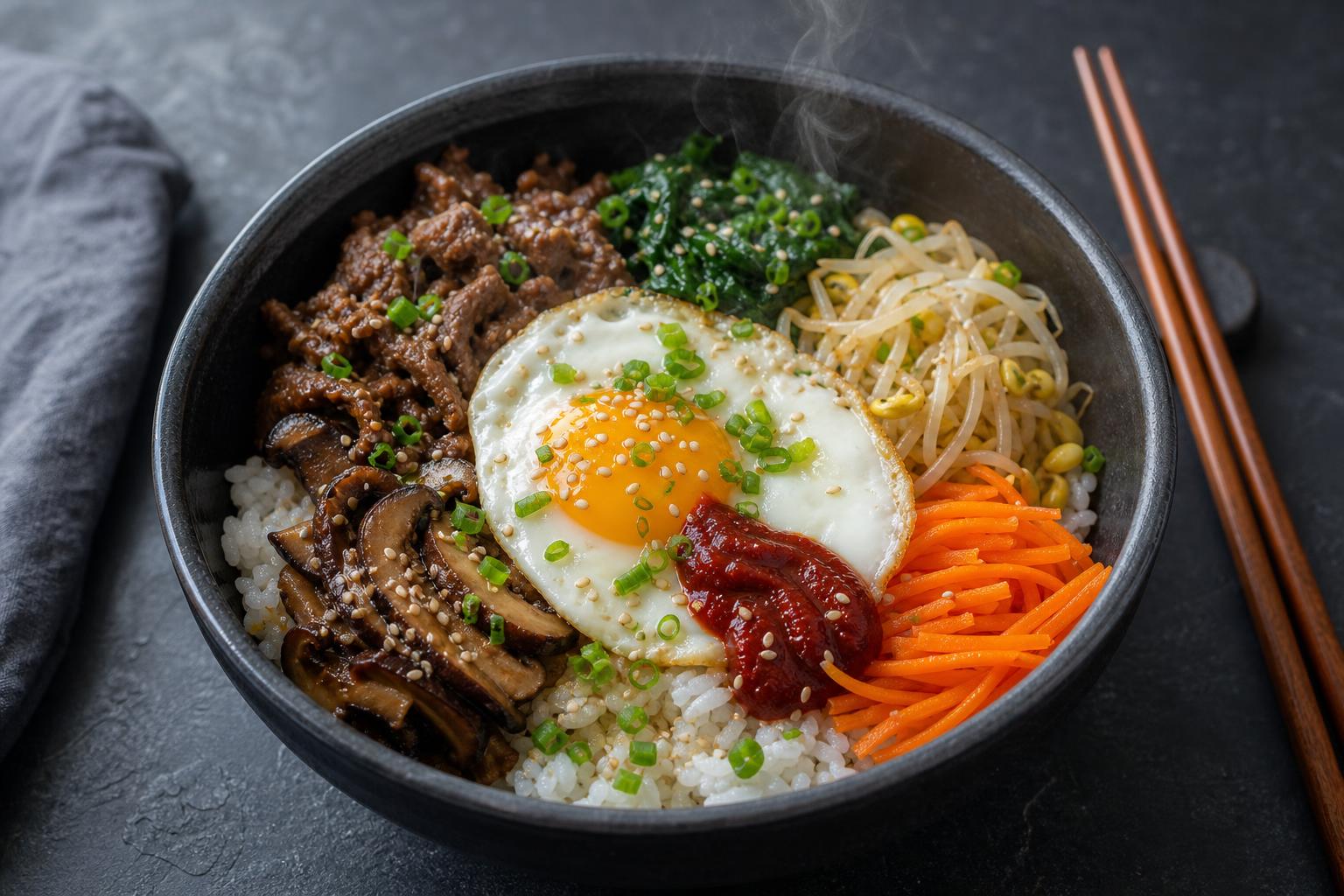
Bibimbap is the best argument I know for keeping cooked rice and a few seasoned vegetables in the fridge. This version stacks bulgogi-marinated beef, a pile of quick-seasoned vegetables, and a runny fried egg over rice for 44g of protein in a single bowl. It looks like a project and eats like a weeknight dinner.
The name just means mixed rice, and that is the whole method. You lay everything out in neat sections, then break the yolk and stir it all together at the table until the gochujang coats every grain. Each component is plain on its own. Cooked side by side, they turn into something far better than the sum of the parts.
I build the protein around lean flank steak, marinated the way I do for beef bulgogi, so the meat stays the centerpiece without a lot of added fat. Prep the vegetables once and you can put a bowl together in the time it takes to fry an egg.
Why this works
Two habits make or break this bowl. First, slice the beef thinly across the grain and sear it in a single hot layer, working in batches if you have to. Crowd the pan and the meat steams and goes gray instead of browning, and that seared edge is most of the flavor. Second, season each vegetable separately with a little salt, garlic, and sesame oil rather than dumping them together. Blanch the spinach for just thirty seconds, then squeeze it dry hard with your hands, or it will leak water into the rice. A quick gochujang sauce, loosened with a splash of water and a little sugar and sesame oil, spreads far more evenly than the thick paste straight from the tub.
Ingredient notes
Flank steak is my default because it is lean, takes a marinade well, and slices cleanly when it is partly frozen for about fifteen minutes. Sirloin or a lean cut of skirt steak work too. Gochujang is the fermented Korean chili paste that gives bibimbap its color and low, savory heat, and it keeps for months in the fridge, so one tub goes a long way. Short grain or medium grain rice has the slight stickiness you want, so the bowl holds together once you mix it. Bean sprouts and spinach are the classic pair, but this is a forgiving dish, so zucchini, cucumber, or whatever vegetable needs using all fit. If you already keep gochujang around for my Gochujang Chicken Thighs, you have most of the seasoning covered.
High-Protein Beef Bibimbap
Ingredients
Method
- Marinate the beef. Toss the sliced flank with the soy sauce, brown sugar, 1 tbsp sesame oil, 3 cloves of the minced garlic, the ginger, and a few grinds of black pepper. Let it sit while you prep everything else, at least 15 minutes. Slicing is easier if you freeze the steak for 15 minutes first, and cutting across the grain keeps the cooked beef tender.
- Make the gochujang sauce. Stir the gochujang with the sugar, 1 teaspoon of the sesame oil, and 2 to 3 tablespoons of water until it is smooth and pourable. Loosening the paste this way lets it coat the whole bowl instead of sitting in one hot clump.
- Blanch the spinach in boiling water for 30 seconds, then lift it out into cold water. Squeeze it dry hard with your hands, chop roughly, and season with a pinch of salt, half a clove of minced garlic, and a few drops of sesame oil. Squeezing matters, since wet spinach waters down the bowl.
- Blanch the bean sprouts in the same water for 2 minutes, drain well, and season the same way with salt, garlic, and a little sesame oil.
- Heat a little of the remaining sesame oil in a skillet over medium heat. Saute the carrot matchsticks for 2 minutes until just softened, season with a pinch of salt, and set aside. Add the mushrooms with the last of the garlic and cook 4 to 5 minutes until browned, then set aside.
- Turn the heat to high and add the neutral oil. Sear the beef in a single layer, working in two batches so the pan stays hot. Let each batch brown for about a minute before stirring, 3 to 4 minutes total per batch. Crowd the pan and the beef steams and turns gray instead of searing.
- Fry the eggs in a little oil to your liking, keeping the yolks runny so they mix into the rice.
- Assemble. Divide the warm rice among four bowls. Arrange the beef and each vegetable in its own section on top, set a fried egg in the middle, and add a spoon of the gochujang sauce. Finish with sesame seeds and spring onion. Mix everything together at the table before eating.
Tips and storage
Bibimbap is built for meal prep as long as you store it smart. Keep the beef, rice, and vegetables in separate containers, or in divided lunch boxes if you want grab and go portions, and they hold for up to four days in the fridge. Everything except the egg reheats fine in the microwave, so fry a fresh egg when you sit down to eat, since a reheated yolk turns rubbery. If you are cooking for the week, double the beef marinade and set half aside for the High-Protein Gyudon or Korean Ground Beef Bowls another night. To push the protein even higher, add a second egg or a spoon of edamame to the bowl.