Haemul Sundubu Jjigae, Korean Seafood Tofu Stew (38g Protein)
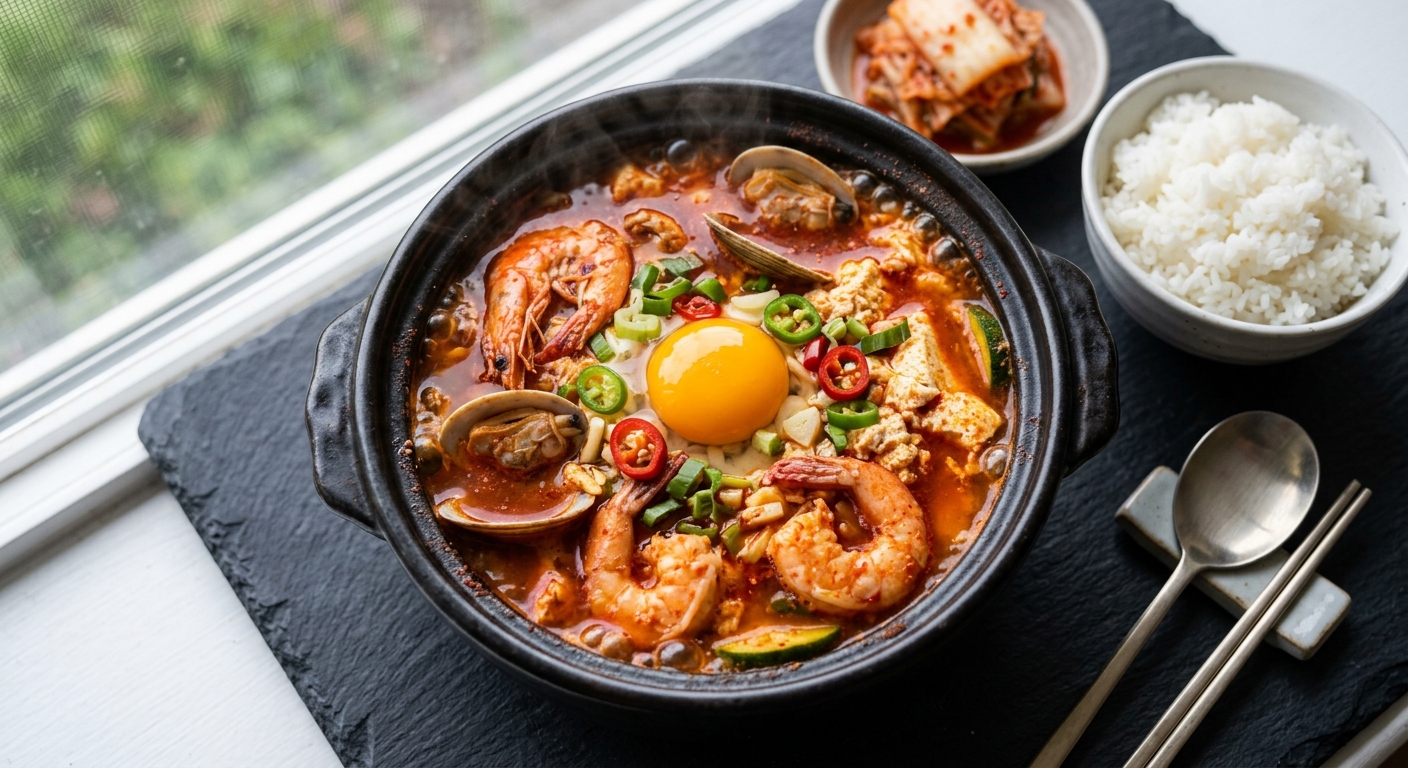
Sundubu jjigae is the Korean soft tofu stew that arrives at the table still bubbling, with a raw egg waiting to be cracked into it. This seafood version gives you about 38 grams of protein per serving, from shrimp, silken tofu and one egg each.
The whole thing takes 30 minutes in one small pot. The broth is spicy, a little smoky from the chili oil, and the tofu is so soft it almost melts. If you like Korean tofu dishes, it sits at the soupy end of our Dubu Kimchi.
Why this works
The first step does most of the work. Frying the gochugaru in oil over medium-low heat pulls the color and flavor into the fat, which then carries it through the whole broth. Cook it for about a minute and stop when it smells toasty. Chili flakes go bitter fast on high heat.
Shrimp go in before the tofu and only cook for 2 minutes. They finish cooking in the hot broth while the tofu warms, so they stay springy instead of turning rubbery. And because sundubu is mostly water and protein, it adds about 9 grams of protein per serving while keeping the broth light.
Homemade vs takeout
A restaurant seafood sundubu usually comes with a lot of broth, more oil and often a mix of shellfish that varies by kitchen. Rice is separate, but the stew itself is salty. These are rough estimates for a standard restaurant portion, not measured values.
- This recipe, per serving: 38g protein, about 385 calories, roughly 900 mg sodium with a low-sodium stock.
- Typical restaurant serving: roughly 25 to 30g protein, 450 to 550 calories, often 1,500 mg sodium or more.
The difference comes from using 125 g of shrimp per person and controlling the oil and the salt yourself.
Ingredient notes
Sundubu: Look for the tubes of extra soft tofu in the refrigerated section of a Korean or Asian grocery. Do not drain it, the liquid is part of the broth. If you cannot find it, use the softest silken tofu you can find, about 350 g, and spoon it in without pressing.
Gochugaru: Use Korean chili flakes, which are fruity and moderately hot. Standard crushed red pepper is much hotter, so use about half. For a milder stew, drop to 1 tablespoon.
Stock: Anchovy stock is traditional. Dashi works too, and low-sodium chicken stock is a perfectly fine fallback. Use water if you must and add an extra teaspoon of soy sauce.
Shrimp: Raw, peeled shrimp, thawed if frozen. Pat them dry first. For a heartier stew, swap half for clams or squid rings, similar to the shrimp in our Goong Ob Woon Sen.
Haemul Sundubu Jjigae (Korean Seafood Soft Tofu Stew)
Ingredients
Method
- Heat the oil in a small pot or Korean earthenware pot over medium-low heat. Add the gochugaru, minced garlic and scallion whites. Stir for about 1 minute until the oil turns red and smells toasty. Do not let the chili flakes darken or they turn bitter.
- Stir in the gochujang and soy sauce for 20 seconds, then pour in the stock. Add the zucchini and onion and bring to a boil. Simmer for 4 minutes.
- Add the shrimp and cook for 2 minutes, just until they start to curl and turn pink.
- Slide in the sundubu in large spoonfuls, breaking it into chunks with your spoon. Simmer for 4 to 5 minutes until the tofu is steaming hot and the broth is bubbling again.
- Taste and adjust with salt and pepper. Crack an egg into the center of each portion (or crack both into the pot), cover for 1 minute so the whites set while the yolks stay soft, and top with the scallion greens.
- Serve right away in the pot or ladled into bowls, with steamed rice on the side.
Scale it to your goal
- Cutting: Use one egg total and skip the rice. That lands near 32g protein and about 315 calories per serving.
- Bulking: Add 50 g more shrimp per person and a cup of cooked rice on the side for about 52g protein and 630 calories per serving.
- Vegetarian: Replace the shrimp with 150 g cubed firm tofu per person and use kombu or mushroom stock. That gives about 26g protein and 395 calories per serving.
Tips and storage
This stew is best eaten straight away, because the egg and the tofu do not reheat well. You can prep ahead though. Mince the aromatics, slice the vegetables and keep the shrimp in the fridge for up to a day, then the stew comes together in 20 minutes.
If you have leftovers, keep the broth and tofu in an airtight container for up to 2 days and reheat gently on the stove, not in a hard boil. Shrimp will be a little firmer the second time. The stew does not freeze well.
For another bowl of spicy Korean soup that is better for batch cooking, try our Yukgaejang.