High-Protein Shrimp Pad Thai (48g Protein)
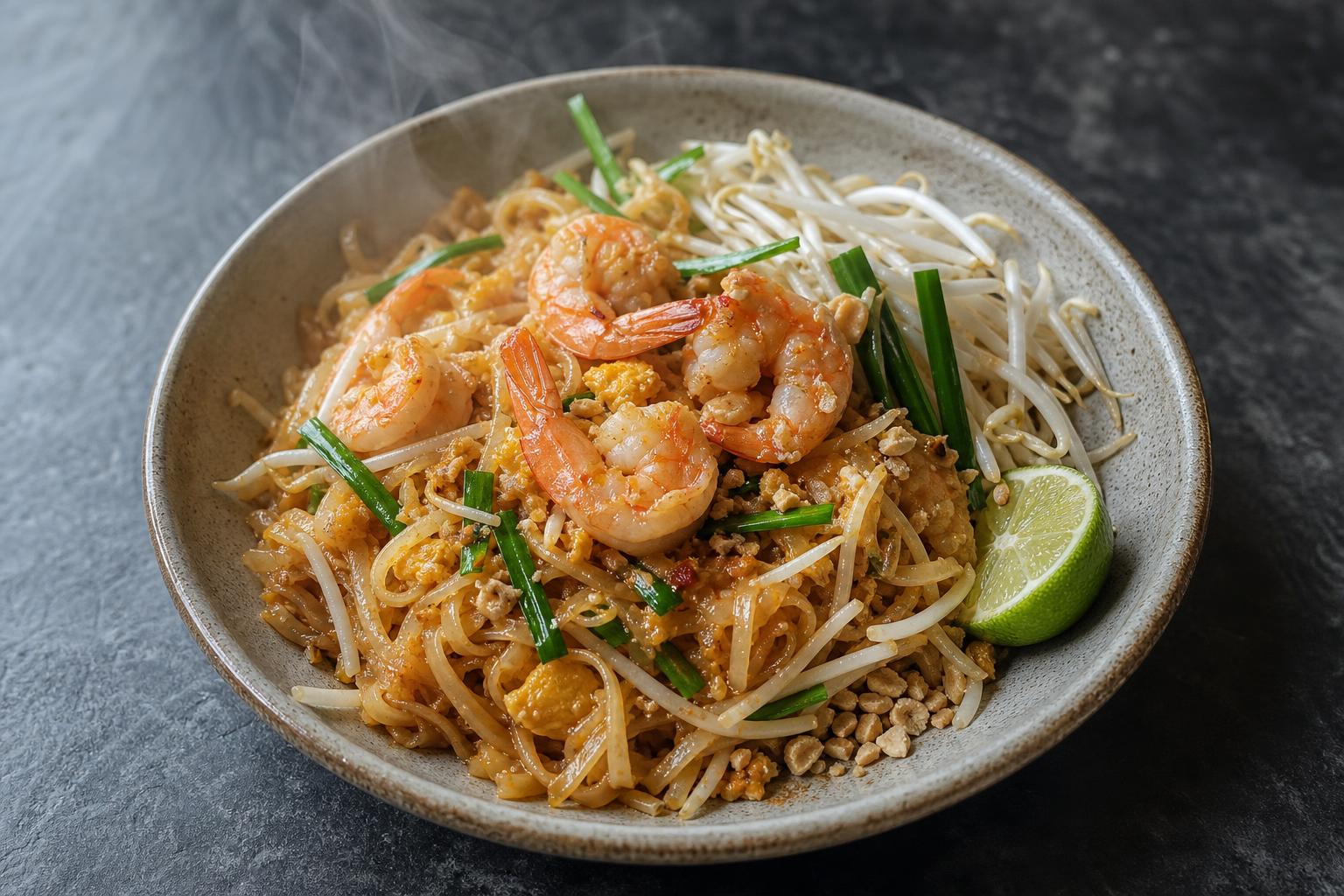
This high-protein shrimp pad Thai has about 48 grams of protein per serving, from shrimp, eggs, tofu and peanuts all in one pan. It makes four plates in 35 minutes, and the noodles come out chewy instead of gluey.
Most pad Thai is mainly noodles with a few shrimp for decoration. Here the shrimp quantity is doubled up and the tofu does real work, so the plate behaves more like a protein meal than a carb bowl.
Why this works
Soaking the noodles in tap water, not boiling them, is the main technique. Rice noodles that are fully cooked before they hit the wok turn mushy and clump. Soaked noodles stay firm and finish in the sauce, which they absorb as they soften.
Searing the shrimp first and removing them is the second. Shrimp go from perfect to rubbery in under a minute, so they sit out while the noodles cook and only return for the final toss. Use a pan big enough that the shrimp lie in a single layer. Crowded shrimp steam, and you lose the browning.
Ingredient notes
Tamarind paste: This is what makes it pad Thai and not sweet fried noodles. Look for a jar or block labelled seedless tamarind pulp, or a concentrate (use about half as much of the concentrate). Ketchup and lime juice is a poor imitation, so skip that route if you can find the real thing at an Asian market or online.
Palm sugar: Light brown sugar is a fine swap. The flavor is a touch less round, but nobody will complain.
Shrimp: Large (21 to 25 count) shrimp are easiest to time. Frozen raw shrimp are fine, just thaw them in cold water and dry them well. Our per-serving figure counts 150 g of raw shrimp per plate, roughly 30 g of the protein.
High-Protein Shrimp Pad Thai
Ingredients
Method
- Soak the noodles in room-temperature tap water for 30 to 40 minutes, until they bend easily but still feel firm in the middle. Drain well. They will finish cooking in the pan, so do not use hot water.
- Mix the tamarind paste, fish sauce, palm sugar and chili flakes in a small bowl. Stir until the sugar mostly dissolves. Taste it: it should be sour, salty and sweet in roughly equal measure, and stronger than you would eat on its own.
- Pat the shrimp dry. Heat a large wok or nonstick skillet over high heat with 1 tbsp oil. Sear the shrimp in a single layer for about 60 seconds per side until just pink. Move them to a plate.
- Add another 1 tbsp oil to the pan, then the tofu. Fry 2 to 3 minutes, turning once or twice, until golden on a couple of sides. Add the garlic and shallot and stir for 20 seconds.
- Push everything to one side. Add the last 1 tbsp oil to the empty side, crack in the eggs and scramble them gently until about 80 percent set, then fold into the tofu.
- Add the drained noodles and the sauce. Toss constantly over medium-high heat for 2 to 3 minutes. If the noodles are still stiff, add a splash of water (2 to 3 tbsp) and keep tossing until they are tender and have soaked up the sauce.
- Return the shrimp with half the bean sprouts and all the chives. Toss for 30 seconds, just until the chives wilt. Turn off the heat.
- Serve topped with the remaining raw bean sprouts, crushed peanuts and a lime wedge. Squeeze the lime over the noodles at the table.
Tips and storage
Pad Thai is best eaten straight from the pan, because the noodles keep absorbing sauce as they sit. For meal prep, undercook the noodles slightly, cool the dish uncovered for 15 minutes, then store it in the fridge for up to 2 days. Reheat in a hot skillet with a splash of water rather than the microwave, which makes the shrimp tough.
Keep the raw bean sprouts, peanuts and lime separate until serving, so you still get the crunch. If you cannot find garlic chives, scallion greens are the closest substitute.
If you like Thai noodles with shrimp, try our Goong Ob Woon Sen or the Mie Goreng Udang. For a wide-noodle chicken version, there is our Chicken Pad See Ew, and the Thai Basil Tofu with Fried Eggs is a good meatless-leaning dinner from the same cuisine.