Haemul Pajeon, Korean Seafood Pancake (42g Protein)
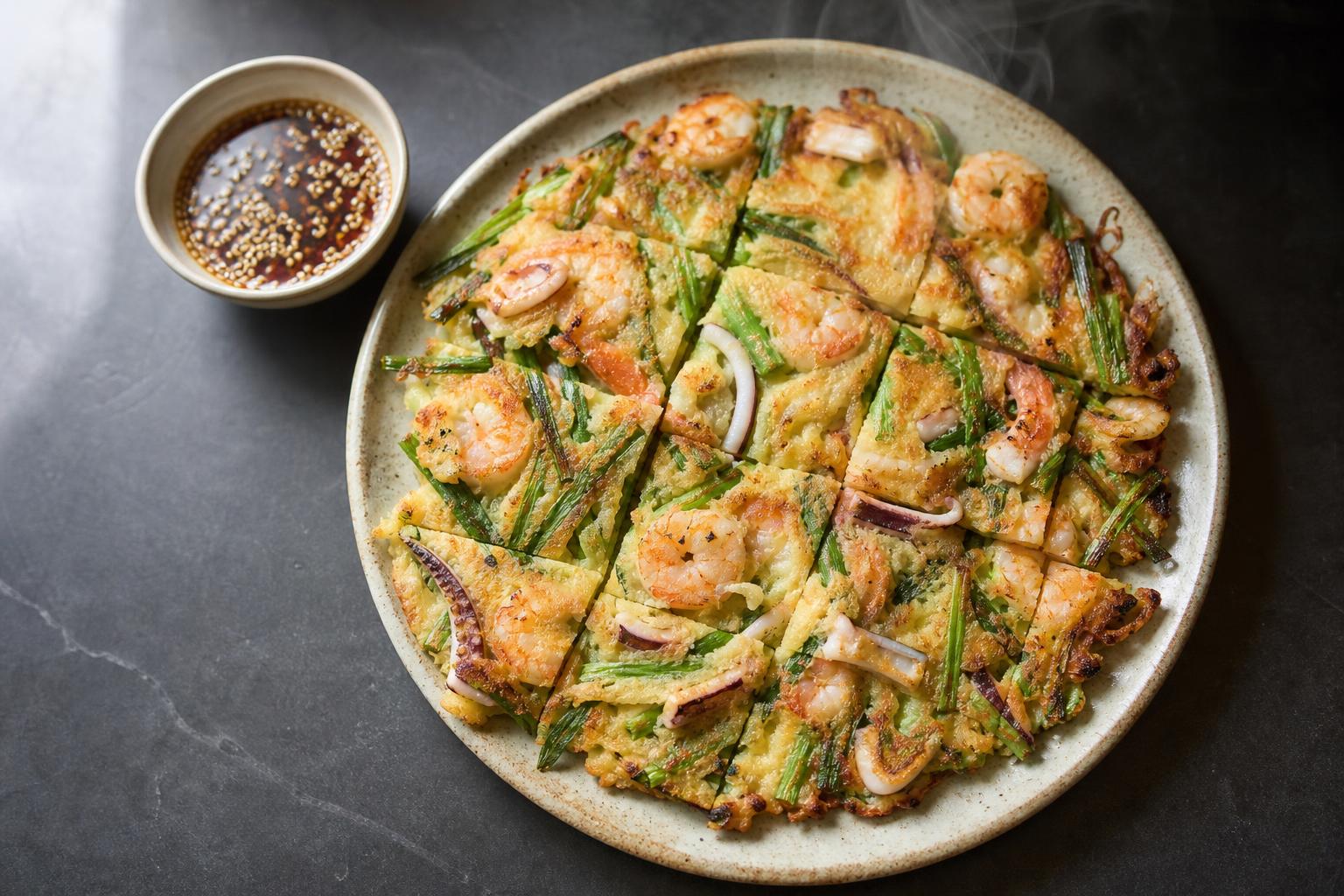
This Korean seafood pancake gives you about 42 grams of protein per serving, which is a lot for something that looks like a snack. Most of it comes from shrimp, squid and three eggs bound with just enough flour to hold everything together.
Haemul pajeon is usually a bar food in Korea, a crisp-edged pancake you tear apart and dunk in a sharp soy and vinegar sauce. Here it is sized as a dinner for two, ready in about 25 minutes, with more seafood and less batter than the restaurant version.
Why this works
The batter is thin on purpose. Flour plus a little rice flour and cold water gives a crisp lacy edge, and the eggs poured over the top set into a golden layer that glues the seafood down. Too much flour makes a bready pancake with a low protein count, so we keep it to a minimum and let the shrimp and squid do the work.
Pat the seafood properly dry before it touches the batter. Wet squid releases water into the pan and the pancake steams instead of frying. Use a wide nonstick or cast iron skillet, a generous amount of oil, and resist the urge to move the pancake for the first 4 minutes. If you like seafood and noodles, our goong ob woon sen is another shrimp-heavy dinner, and the squid here pairs the same way as in our Korean spicy squid stir fry.
Ingredient notes
Seafood: Peeled raw shrimp and cleaned squid tubes. Slice the squid into rings or bite-size pieces and cut larger shrimp in half so they cook through quickly. Frozen seafood is fine, thaw fully and pat dry. Raw seafood mix from an Asian grocer works too.
Scallions: This is the “pa” in pajeon, so use a lot. Cut them to roughly the length of your pan, then lay them in the batter in one direction so the pancake holds together. Korean pancake mix (buchimgaru) can replace the two flours, use 100 g with the water.
Dipping sauce: Soy sauce, rice vinegar, a pinch of gochugaru and sesame seeds. Skip the gochugaru if you do not want heat.
Haemul Pajeon, Korean Seafood Pancake
Ingredients
Method
- Pat the shrimp and squid very dry with paper towels. Dry seafood fries; wet seafood steams the pancake.
- Whisk the flours, salt, cold water and 1 egg until smooth and thin, like heavy cream. Whisk the other 2 eggs in a separate bowl.
- Stir together the soy sauce, rice vinegar, gochugaru and sesame seeds for the dipping sauce.
- Heat 2 tbsp oil in a 26 to 28 cm nonstick or cast iron skillet over medium-high heat. Spread the scallions in one even layer, then pour the batter over them.
- Scatter the shrimp and squid on top and press them lightly into the batter. Cook 3 to 4 minutes without moving, until the edges are crisp.
- Pour the 2 beaten eggs evenly over the top. Cook 1 more minute, then slide a spatula under and flip in one motion.
- Drizzle the remaining 1 tbsp oil around the edge and press the pancake down. Cook 3 to 4 minutes until golden and the seafood is cooked through.
- Slide onto a board, cut into squares with scissors and serve hot with the dipping sauce.
Tips and storage
Cut the pancake into squares with kitchen scissors, it is quicker than a knife and keeps the crisp edge intact. Serve straight away, since the crust softens as it sits.
Leftovers keep 2 days in the fridge. Reheat in a dry nonstick pan or an air fryer at 180 C for 4 minutes to bring the crispness back, not the microwave. For a sturdier meal prep option with the same Korean flavors, see our seafood sundubu jjigae. The raw batter does not store well, so mix it right before cooking.