Kung Pao Shrimp, Better Than Takeout (40g Protein)
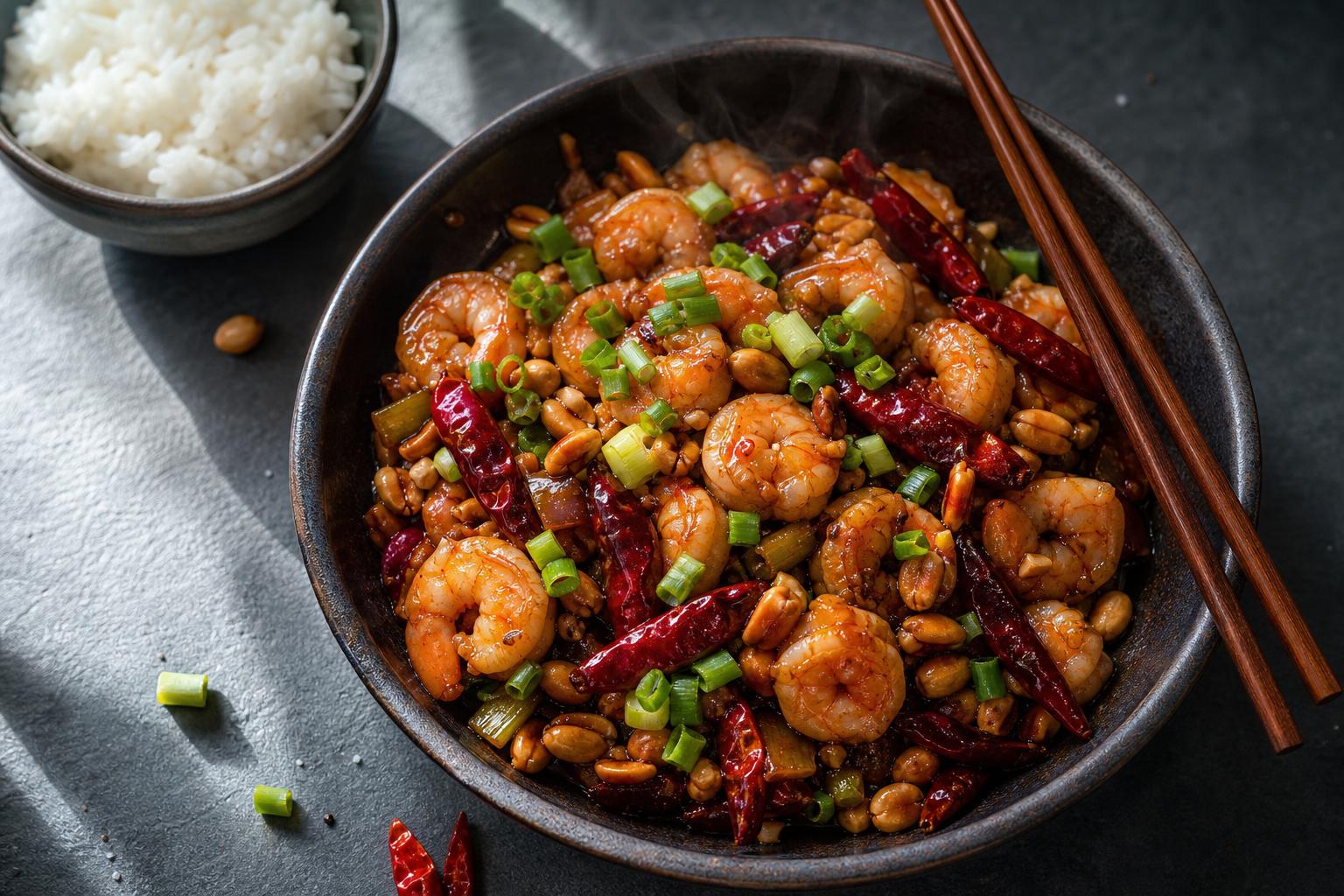
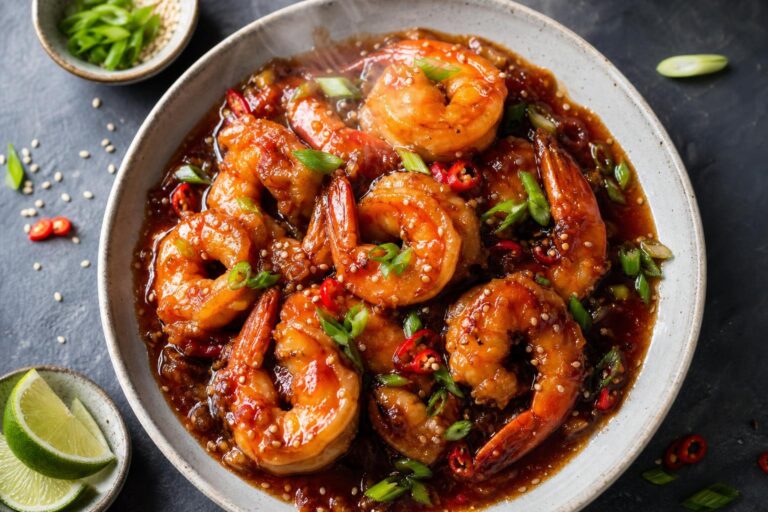
Kung pao shrimp comes together faster than most takeout orders, and one serving lands 40 grams of protein for around 370 calories. Shrimp cooks in about two minutes, so the whole dish is really a sauce-and-aromatics job with a quick toss at the end. That makes it one of the easiest high-protein dinners in my rotation.
The classic version uses chicken, but shrimp is leaner and soaks up the sweet, sour, and lightly numbing sauce just as well. You get the same dried chilies, the same crunchy peanuts, the same glossy glaze, with a protein bump and a shorter cook time.
A couple of things keep it from going sideways: a hot pan and a sauce mixed in advance. Once the shrimp hits the heat there is no time to start measuring soy sauce.
Why this works
Shrimp overcooks in seconds, so everything else needs to be ready before it goes in. I mix the sauce in a small bowl, prep all the aromatics, and measure out the peanuts first. Then the actual cooking takes under five minutes.
A light cornstarch coating on the shrimp does two jobs. It protects the surface so the shrimp stays tender, and it helps the sauce cling instead of sliding off into the pan. The same cornstarch trick shows up in my black pepper beef stir fry, and it is worth making a habit.
The dried chilies are there for aroma more than raw heat. You fry them in oil for a few seconds to bloom them, then they perfume the whole dish. They are not meant to be eaten whole.
Ingredient notes
Shrimp: large or jumbo (16/20 or 21/25 count) hold up best. Frozen is fine, just thaw fully and pat very dry, or they steam instead of sear.
Dried red chilies: Chinese facing-heaven chilies are traditional, but any dried red chili works. Halve them and shake out some seeds if you want less heat.
Sichuan peppercorns: optional, but they give the signature tingly numbness. Toast and lightly crush them. Skip them if you cannot find them, the dish is still good.
Chinese black vinegar (Chinkiang): this is the backbone of the sauce. If you do not have it, use 2 tsp balsamic plus 1 tsp rice vinegar as a rough stand-in.
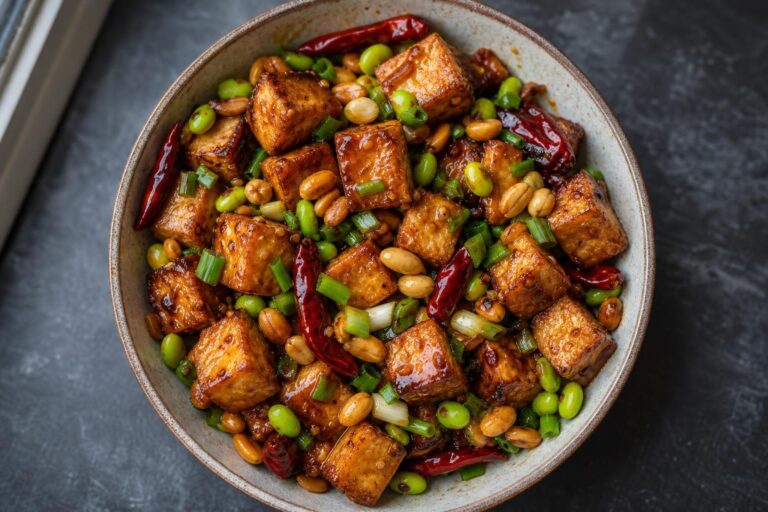
Peanuts: roasted and unsalted. Cashews work too if peanuts are an issue. For a plant-based version of the same flavors, my kung pao tofu uses this exact sauce.
Kung Pao Shrimp
Ingredients
Method
- Pat the shrimp very dry, then toss with 1 tbsp Shaoxing wine and 1 tsp cornstarch. Let it sit while you prep everything else.
- Mix the sauce in a small bowl: soy sauce, black vinegar, Shaoxing wine, sugar, cornstarch, sesame oil, and water or stock. Stir until the cornstarch dissolves.
- Heat a wok or large skillet over high heat until it just starts to smoke. Add 1 tbsp oil, then the shrimp in a single layer. Sear about 1 minute per side until just pink, then remove to a plate. They will finish cooking later, so do not overdo it.
- Add the remaining 1 tbsp oil to the pan. Drop in the dried chilies and Sichuan peppercorns and fry for 10 to 15 seconds until fragrant, watching so the chilies do not burn.
- Add the garlic, ginger, and celery. Stir fry for 1 minute, then add the scallions and peanuts and toss for 30 seconds.
- Return the shrimp to the pan. Give the sauce a quick stir, pour it in, and toss for about 1 minute until the sauce thickens and glazes everything. Serve right away over rice.
Tips and storage
This keeps in the fridge for up to 3 days in an airtight container. The shrimp firms up a little on reheating, so warm it gently in a pan with a splash of water rather than blasting it in the microwave.
For meal prep, I portion it over rice or cauliflower rice and keep the peanuts in a separate small bag so they stay crunchy, stirring them in just before eating.
Want more shrimp dinners on the same weeknight timeline? My chili garlic shrimp stir fry is even simpler if you are short on pantry items.