Korean Spicy Pork (Jeyuk Bokkeum, 36g Protein)
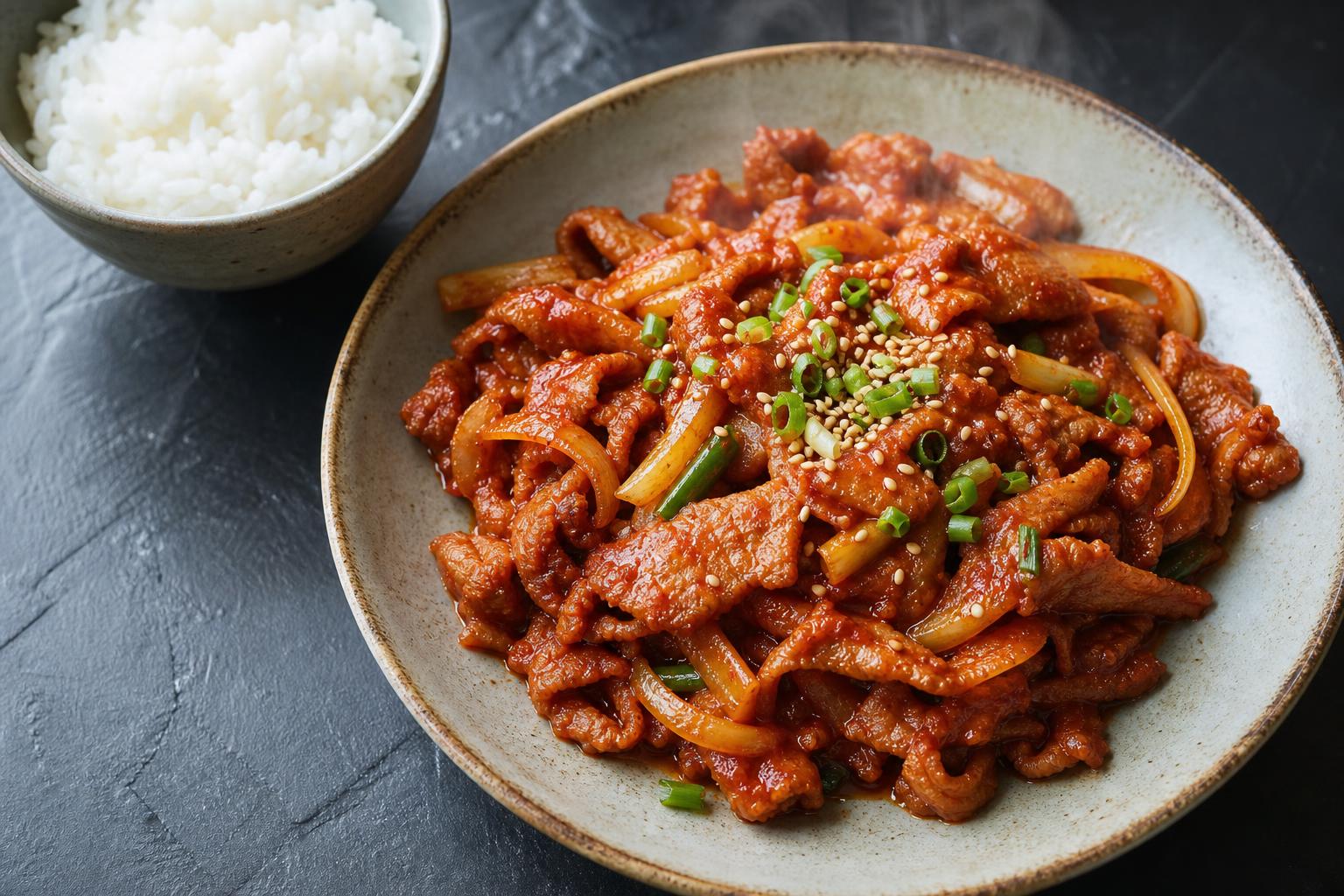
Jeyuk bokkeum is the spicy gochujang pork you get at Korean barbecue spots, and this version lands 36g of protein per serving by swapping the usual fatty pork belly for lean pork loin. You still get the deep red, glossy, slightly sweet and very spicy sauce, just with a lot more usable protein and a lot less grease.
It comes together in about 25 minutes, most of which is slicing. The pork cooks in roughly 5 minutes once the pan is hot, so have everything ready before you start.
This is one of those dishes that tastes like it took effort but really did not. If you already keep gochujang in the fridge for my gochujang chicken thighs, you have most of the sauce covered.
Why this works
Lean pork loin is the move here for protein, but lean cuts dry out fast. Two things keep it tender: slice thin against the grain so each piece cooks in seconds, and cook over genuinely high heat so the meat sears instead of steaming in its own liquid. Thin slices also grab more sauce, which is the whole point.
The sugar and mirin are not just for sweetness. They help the sauce reduce into that sticky, caramelized glaze that clings to the pork. Let the sauce cook down for the last minute or two rather than pulling the pan early.
Ingredient notes
Pork: a lean boneless loin is the leanest easy option. Pork shoulder works too and stays a touch juicier, just trim the big fat caps. If you want it leaner still, pork tenderloin is great but cooks even faster, so watch it.
Gochujang and gochugaru: gochujang brings the body and umami, gochugaru brings the heat and color. If you only have gochujang, you can skip the gochugaru, the dish will just be milder. Start with less chili flake and add more once you taste it.
Mirin: if you do not have it, use 1 tablespoon rice vinegar plus 1 teaspoon sugar. It is not identical but it covers the sweet-tangy job.
Korean Spicy Pork (Jeyuk Bokkeum)
Ingredients
Method
- Slice the pork as thin as you can against the grain. Putting it in the freezer for 20 minutes first firms it up and makes thin slicing much easier.
- In a bowl, stir together the gochujang, gochugaru, soy sauce, brown sugar, mirin, sesame oil, garlic, and ginger. Add the pork and toss to coat. Let it sit 15 to 30 minutes if you have time, or cook right away.
- Heat the neutral oil in a wok or large skillet over high heat until it shimmers. Add the onion and stir for 1 minute to soften the edges.
- Add the pork and its sauce in as flat a layer as you can. Let it sear undisturbed for about 1 minute, then stir-fry for 4 to 5 minutes until the pork is cooked through and the sauce turns thick and glossy.
- Toss in the green onions and cook 30 seconds more. Scatter sesame seeds on top and serve hot over rice or with lettuce for wrapping.
Tips and storage
This is a strong meal prep dish. It keeps in the fridge for up to 4 days and actually tastes better on day two once the flavors settle. Portion it over rice in containers and reheat in the microwave or a quick toss in a hot pan. It also freezes well for up to 2 months.
For lower-carb days, skip the rice and pile the pork into lettuce cups the way I do with my beef bulgogi lettuce wraps. And if you like having a few Korean options in the rotation, my Korean ground beef bowls use a similar sauce base and come together even faster on a busy night.
One honest note: this is meant to be spicy. If you are cooking for kids or spice-averse eaters, cut the gochugaru entirely and halve the gochujang, then add a little more sugar to balance.