Moo Shu Pork (42g Protein)
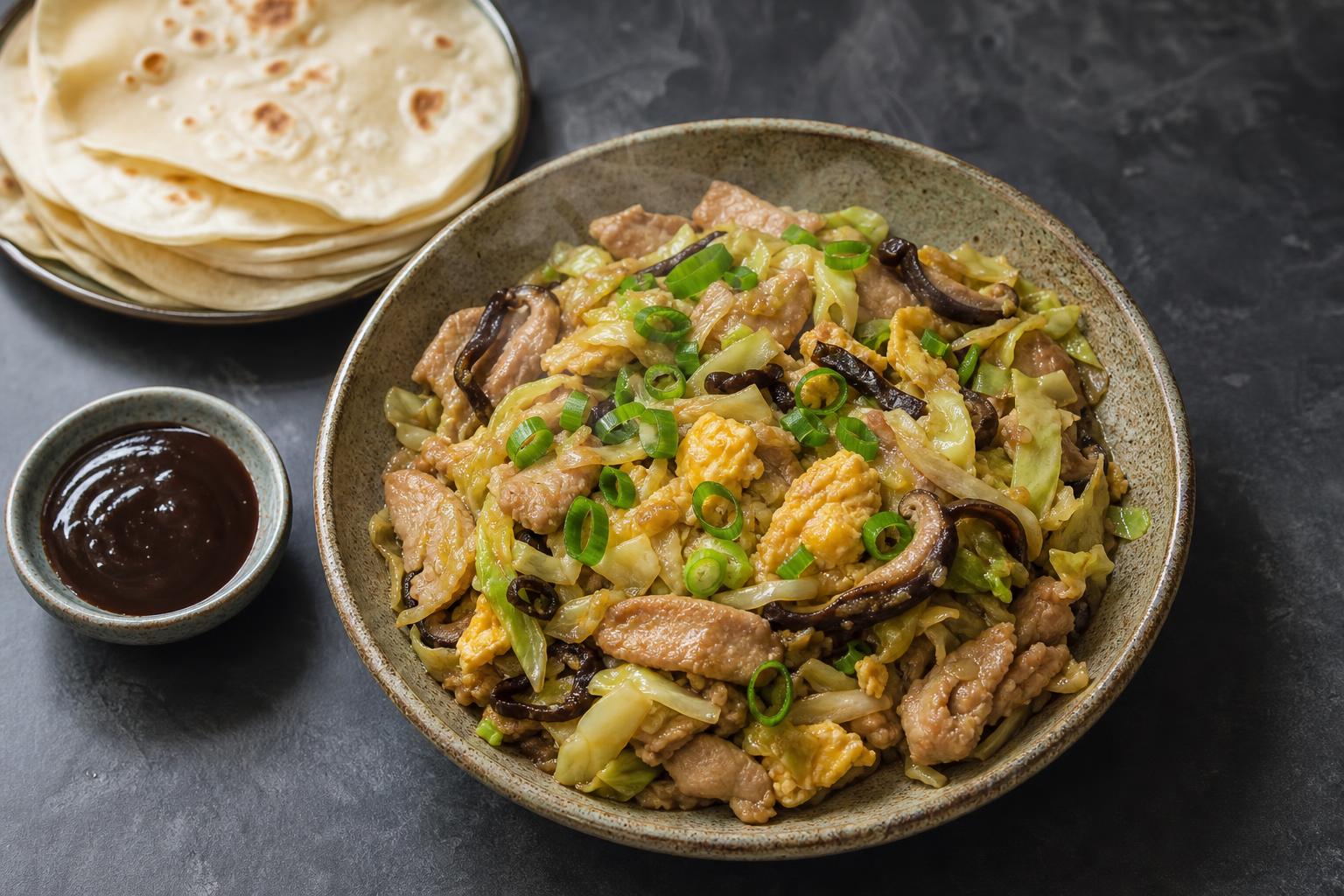
Moo shu pork is one of those takeout dishes that turns out leaner and better at home, and this version lands about 42g of protein per serving. The trick is skipping the fatty pork shoulder most restaurants use and going with thin-sliced pork loin instead, which keeps the meat tender but cuts a lot of the grease.
It comes together in one pan in under half an hour. Soft scrambled egg, a pile of shredded cabbage and shiitake, and a light hoisin sauce that coats everything without turning gloopy. Eat it straight from the bowl over rice, or wrap it in thin pancakes the way it is usually served.
If you already meal prep with lean pork, this slots in next to my lean twice cooked pork and char siu pork tenderloin as a way to get pork on the plate without the usual fat load.
Why this works
Two small moves do most of the heavy lifting. First, marinating the pork with a teaspoon of cornstarch gives it a velvet coating that holds moisture, so lean loin does not dry out over high heat. Second, you cook the egg first and pull it out early while it is still soft, then fold it back in at the end. If the egg stays in the pan the whole time it turns rubbery, and moo shu is all about that contrast of silky egg against crunchy cabbage.
Keep the heat high once the vegetables go in. Cabbage throws off water fast, and a hot pan drives that moisture off as steam instead of letting it pool and boil the stir fry.
Ingredient notes
Pork loin or tenderloin both work. Slice against the grain into thin matchsticks so the pieces stay tender. If you only have pork shoulder, it will taste great but the numbers shift richer.
Shiitake carry the savory backbone here. Fresh is easiest, but dried shiitake soaked in warm water for 20 minutes have even more depth, and you can splash a little of the soaking liquid into the sauce. Cremini work in a pinch.
Hoisin brands vary a lot in sweetness. Lee Kum Kee is a reliable middle ground. If yours runs sweet, add an extra splash of rice vinegar to balance it. For the Shaoxing wine, dry sherry is the closest swap, or leave it out and add a teaspoon of water.
Moo Shu Pork (42g Protein)
Ingredients
Method
-
Toss the sliced pork with 1 tbsp soy sauce, the Shaoxing wine and the cornstarch. Let it sit while you prep everything else, at least 10 minutes.
-
Stir together the hoisin, 1 tbsp soy sauce, rice vinegar and sesame oil in a small bowl. This is your finishing sauce.
-
Heat 1 tbsp oil in a wok or large skillet over medium-high until it shimmers. Pour in the beaten eggs and let them set for a few seconds, then scramble into large soft curds. Scoop them out while still slightly wet and set aside.
-
Add the remaining 1 tbsp oil and turn the heat to high. Spread the pork in a single layer and leave it undisturbed for about 45 seconds to sear, then stir fry until it loses its pink, 2 to 3 minutes. Push it to the side.
-
Add the ginger, garlic and scallion whites and stir for 20 seconds until fragrant. Add the shiitake and cook 1 minute, then add the cabbage and carrot.
-
Stir fry on high heat for 2 to 3 minutes, just until the cabbage wilts but still has snap. Pour in the sauce, return the egg to the pan and toss everything together for another minute.
-
Kill the heat, fold in the scallion greens. Serve in bowls, or brush thin pancakes or warm flour tortillas with a little extra hoisin and wrap it up.
Tips and storage
This keeps well for meal prep. Cool it quickly and store in an airtight container in the fridge for up to 4 days. The cabbage softens over time but the flavor holds, and it reheats fast in a hot pan or the microwave. I would not freeze it, since the egg and cabbage both go watery on thaw.
For a bigger carb load, serve it over rice or in the pancakes. To keep it lean and lower carb, eat it in butter lettuce cups instead. Leftovers are also excellent stuffed into an omelette the next morning, which is the same egg-forward trick I use in my tomato egg stir fry with chicken. If you want another lean pork dinner that reheats well, my lion’s head meatballs braise up big and tender over napa cabbage.