Air Fryer Tonkatsu, Japanese Pork Cutlets (40g Protein)
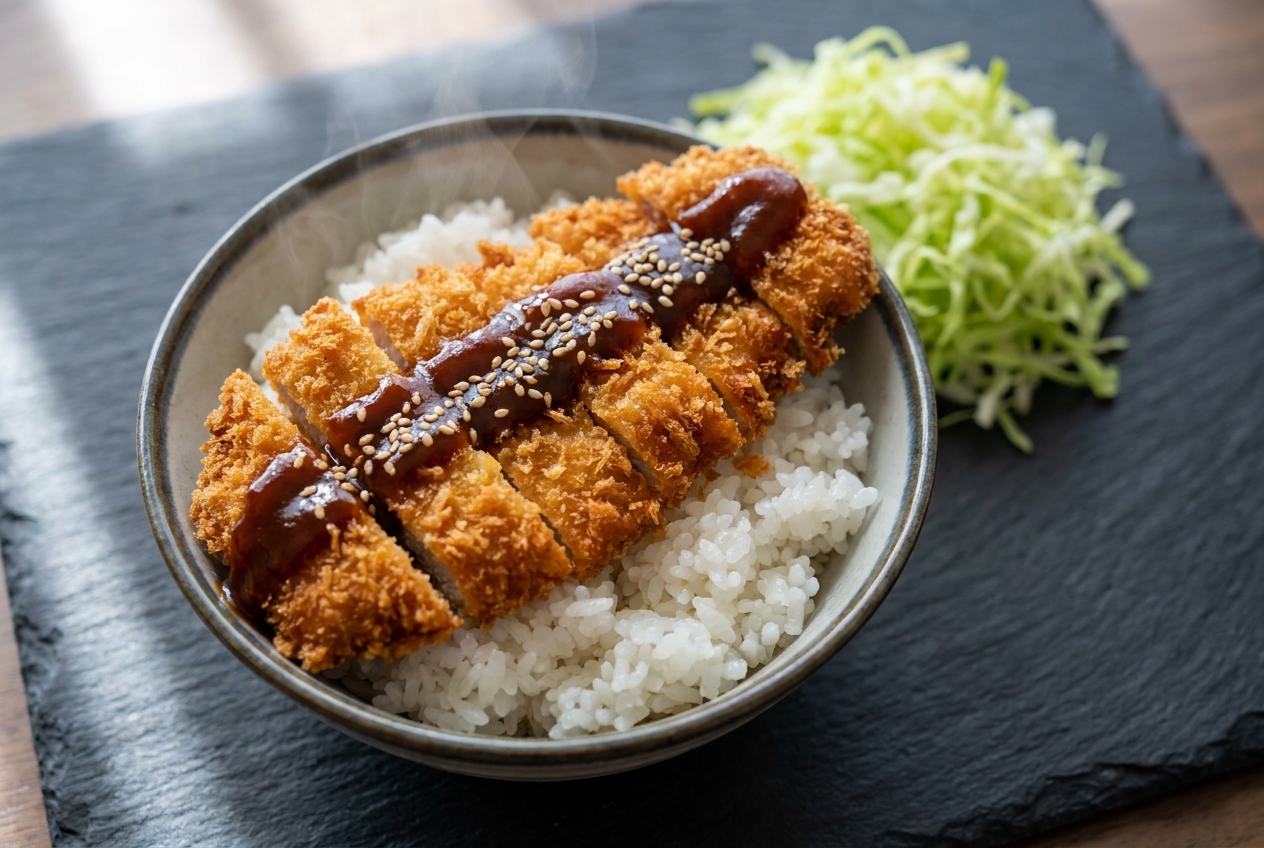
Tonkatsu is a breaded, fried pork cutlet, the crust cracking audibly when you cut into it. This air fryer version gets close to that crunch with a fraction of the oil, and each cutlet carries about 40 grams of protein. It is a weeknight dinner that still feels like a treat.
I use boneless pork loin here rather than the fattier cuts some tonkatsu recipes reach for. Loin is leaner and cooks fast once you pound it thin, so it finishes cooking through right around when the crust turns golden, instead of one lagging behind the other.
Serve it sliced over rice with shredded cabbage and a spoon of tonkatsu sauce on the side. Cutlets to table takes about 30 minutes, most of that hands off while the air fryer does the work.
Why this works
Panko is coarser and airier than regular breadcrumbs, which is why it crisps up properly in an air fryer instead of turning leathery the way fine dried breadcrumbs can. Pounding the pork to an even half inch matters as much as the coating does. An uneven cutlet cooks unevenly, and the thin edges dry out well before the thick middle catches up. Preheating the air fryer basket for a couple of minutes also helps, since a cold basket steams the bottom of the cutlet instead of browning it.
Ingredient notes
Pork loin cutlets, boneless, pounded to about half an inch thick. If you can only find a whole boneless loin, slice it into cutlets yourself and pound between two sheets of plastic wrap.
Panko breadcrumbs give tonkatsu its signature craggy crust. Regular breadcrumbs will still get you a cutlet, just not the same texture, closer to a schnitzel than a proper tonkatsu.
Tonkatsu sauce is tangy and a little sweet, close to a thicker Worcestershire. Store-bought is fine and easy to find in the Asian aisle of most grocery stores now. If you do not have any, ketchup, Worcestershire sauce, a spoon of oyster sauce and a pinch of brown sugar gets you close enough.
Cabbage, finely shredded, is the traditional side and not just a garnish. The crunch and acidity cut through the fried crust, which is heavier without it.
If you like air fried breaded proteins, my air fryer chicken katsu is basically tonkatsu’s sibling and follows the same method. For other ways to cook pork loin, my buta no shogayaki is a good weeknight option, and if you want another Japanese fried cutlet with a sauce on the side, chicken nanban is worth a look.
Air Fryer Tonkatsu
Ingredients
Method
- Pat the pork cutlets dry. If they are not pre-pounded, place each one between two sheets of plastic wrap and pound with a meat mallet or the bottom of a small skillet until an even half inch thick. Season both sides with the salt and pepper.
- Set up a dredging station: flour in one shallow bowl, beaten eggs in a second, panko in a third. Working one cutlet at a time, coat in flour and shake off the excess, dip in egg, then press firmly into the panko so the crumbs stick on both sides.
- Preheat the air fryer to 400°F (200°C) for 3 minutes. Spray the basket lightly with oil, then arrange the cutlets in a single layer without overlapping, working in batches if your basket is small.
- Spray the tops of the cutlets with oil. Air fry for 6 minutes, flip, spray the second side, and cook for another 5 to 7 minutes, until deep golden brown and the internal temperature reads 145°F (63°C).
- While the cutlets cook, whisk together the ketchup, Worcestershire sauce, oyster sauce and brown sugar for the tonkatsu sauce, or skip this step if using store-bought sauce.
- Let the cutlets rest for 3 minutes before slicing into strips. Resting keeps the juices in the meat instead of on the cutting board.
- Serve sliced over rice with the shredded cabbage alongside, sauce drizzled over the top or served on the side for dipping.
Tips and storage
Leftover cutlets keep in the fridge for up to 3 days. Reheat them in the air fryer at 350°F for 4 to 5 minutes to bring the crust back; the microwave will get them hot but the coating turns soft and a little chewy. I would not freeze the breaded raw cutlets for much more than a week, the panko starts to pull away from the meat once thawed.
For meal prep, bread the cutlets up to a day ahead and keep them uncooked in the fridge on a tray, not stacked, so the coating does not go soggy. Cook them fresh when you are ready to eat. Slice the cooked cutlet before serving if you are eating it over rice, it makes portioning and eating with chopsticks easier.