Dak Galbi (Korean Spicy Chicken, 38g Protein)
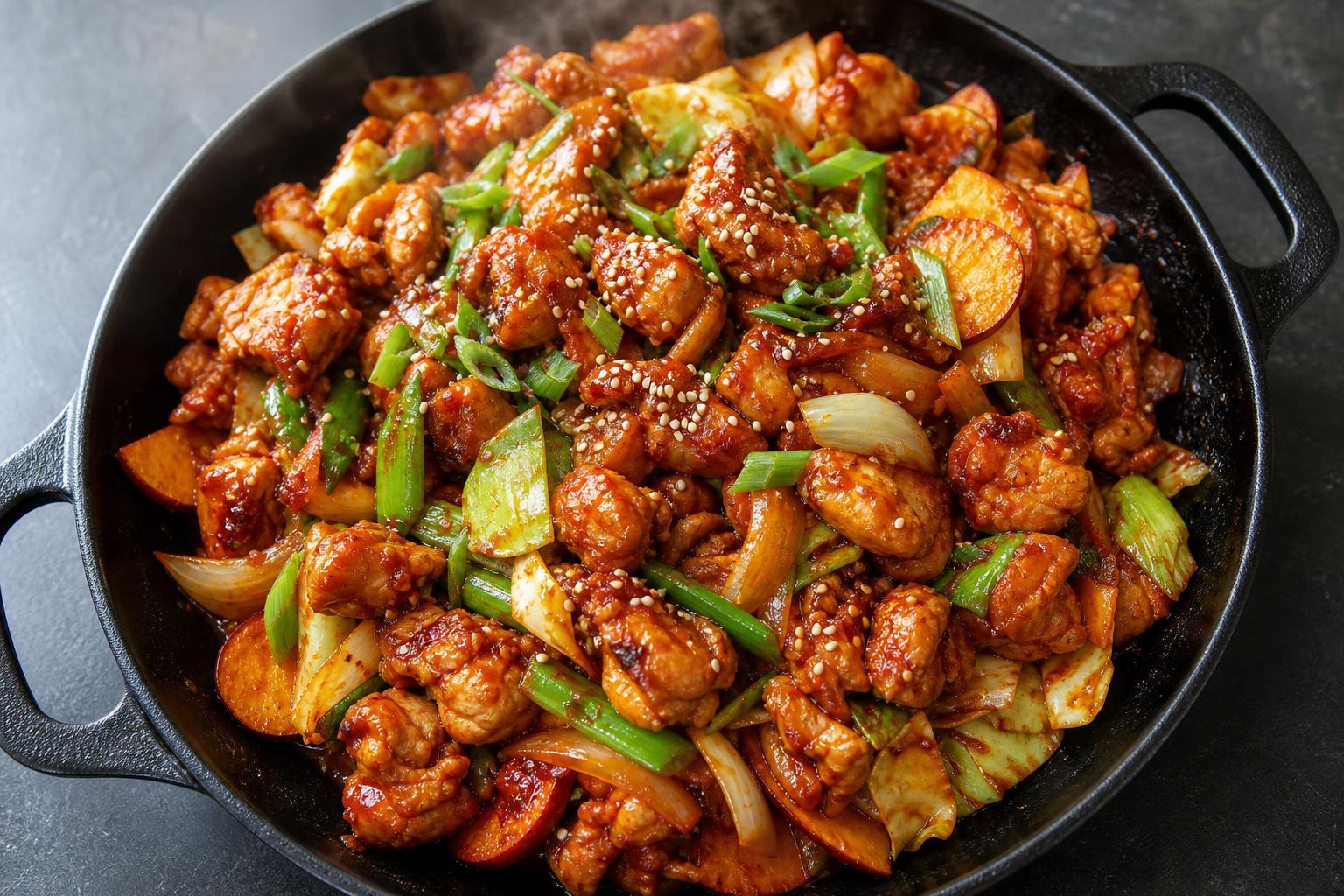
Dak galbi is the Korean spicy chicken stir fry that got me hooked on cooking with gochujang, and this version lands 38g of protein per serving. It is one pan, ready in about 35 minutes, and it hits that sweet, spicy, slightly smoky note that makes you go back for another bite before you have even sat down.
The idea is simple. Boneless thighs get coated in a gochujang marinade, then everything cooks down together with cabbage, sweet potato, and onion until the sauce turns sticky and clings to every piece. Restaurants cook it on a big griddle at the table, but a hot skillet at home gets you 90 percent of the way there.
I lean on thighs here because they stay juicy through the high heat and forgive a distracted cook. If you only have breast, it works, just pull it off the heat the second it hits 165F.
Why this works
Marinating the chicken in the gochujang paste does two jobs. The sugar in the paste helps the surface caramelize when it hits the pan, and the salt seasons the meat all the way through instead of just sitting on top. Even 15 minutes makes a real difference, so do not skip it.
The other trick is order of operations. Sweet potato is dense and needs a head start, so it goes in first. Cabbage and onion release water as they cook, and that liquid is what loosens the thick marinade into a glossy sauce that coats everything. Add them too early and they steam the chicken. Add them at the right time and they build the sauce for you.
Ingredient notes
Gochujang is the backbone. Buy it in a tub from any Korean or Asian grocery, or online. Brands vary in heat and saltiness, so taste at the end before adding more. Gochugaru, the coarse Korean chili flakes, adds color and a cleaner heat. If you cannot find it, use half the amount of regular red pepper flakes, though the flavor is not identical.
Mirin brings a gentle sweetness and a little acidity. No mirin? Use a teaspoon of sugar plus a tablespoon of water. For the chicken, boneless skinless thighs are ideal, but this is the same flavor base I use for my gochujang chicken thighs, so if you already keep those ingredients around you are set. Sweet potato is traditional and worth including, but a peeled regular potato or even a handful of rice cakes works if that is what you have.
Dak Galbi (Korean Spicy Chicken)
Ingredients
Method
- In a bowl, stir together the gochujang, gochugaru, soy sauce, mirin, honey, garlic, ginger, and sesame oil into a smooth paste. Add the chicken and toss until every piece is coated. Let it sit for 15 minutes while you cut the vegetables, or up to overnight in the fridge.
- Heat the neutral oil in a large skillet or cast iron pan over medium-high until it shimmers. Add the sweet potato slices in a single layer and cook 3 to 4 minutes, turning once, until they start to soften at the edges. They take the longest, so they go in first.
- Push the sweet potato to one side and add the marinated chicken in a single layer. Let it sit undisturbed for 2 minutes to catch some color, then stir. Cook 5 to 6 minutes until the chicken is nearly cooked through and the sauce is sticky.
- Add the cabbage and onion. Stir-fry 4 to 5 minutes until the cabbage wilts but still has a little bite. The vegetables will release moisture and loosen the sauce, which is what you want.
- Add the scallions and toss for one more minute. Check that the chicken reads 165F at the thickest piece. Taste and add a splash more soy sauce or a pinch of gochugaru if you want it hotter.
- Kill the heat, scatter over the sesame seeds, and serve straight from the pan. It is great over rice or on its own if you are watching carbs.
Tips and storage
This is a strong meal prep dish. It keeps in the fridge for up to 4 days in a sealed container, and the flavor deepens overnight the way most gochujang dishes do. Reheat in a hot pan for a couple of minutes rather than the microwave if you can, since a quick blast of heat brings back some of the sticky edges. Portion it over rice for lunches the same way I do with my Korean ground beef bowls.
To freeze, cool it fully and pack in single portions for up to 2 months. Thaw overnight in the fridge before reheating. If you like your Korean food on the spicier end, this pairs well with the same heat level as my jeyuk bokkeum, so feel free to push the gochugaru up a notch. One last note, if the sauce tightens up too much on day two, a tablespoon of water in the pan loosens it right back. If you want the mellow, sweet-soy side of Korean braised chicken instead of this spicy stir fry, try my Andong jjimdak.