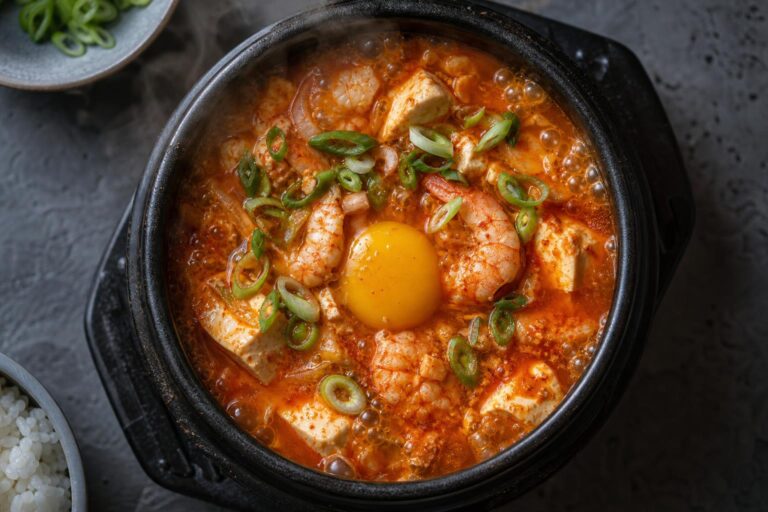
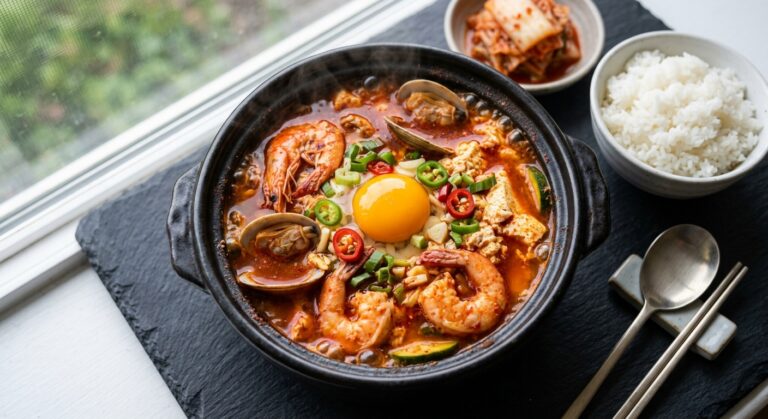
Yukgaejang (Korean Spicy Beef Soup, 39g Protein)
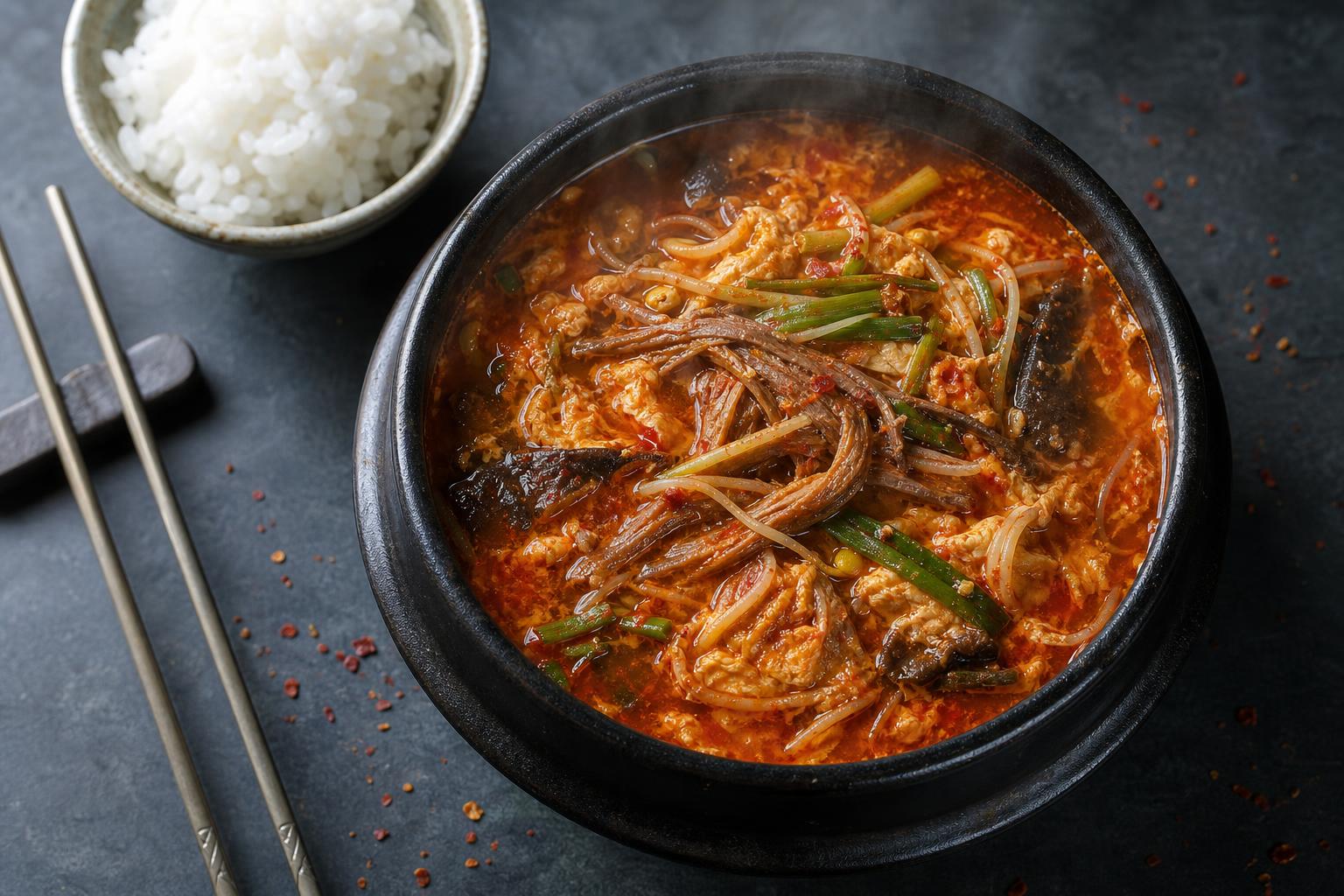
Yukgaejang is the Korean spicy beef soup that eats like a full meal, and this lean version lands about 39 grams of protein in a bowl for roughly 450 calories. The protein comes from flank steak that you simmer until it shreds, plus a swirl of egg at the end. It is the kind of soup that tastes like it took all day but really just asks you to leave a pot alone for an hour.
The broth is the point. Beef simmered slowly gives you a clean, savory base, and then a paste of gochugaru and sesame oil turns it deep red and warming without a lot of added fat. If you have had a good bowl at a Korean restaurant, you know the pull of shredded beef and soft scallions in a broth that actually has some heat behind it. This is that, scaled for people who care about the protein number.
Why this works
Two things do the heavy lifting. First, simmering a whole piece of flank low and slow breaks down the connective tissue so the meat shreds into those signature strands, and it seasons the broth at the same time. Boiling it hard instead of simmering will only make the beef tight and dry, so keep the surface at a lazy bubble. Second, blooming the gochugaru in sesame oil before it hits the broth wakes up the chili and the aroma. Dumping raw pepper flakes straight into water tastes flat and a little dusty by comparison. Mix them into a paste first and the whole pot changes.
Ingredient notes
Flank steak is my default here because it shreds cleanly and stays lean, but lean brisket or beef shank both work if that is what your store carries. Gochugaru is not optional, and there is no real substitute; regular chili flakes are too sharp and will not give you the color. Buy a bag once and it lasts for months. Gosari, the soaked fernbrake, is the traditional vegetable and adds a nice chew, but it is a specialty item, so leave it out if you cannot find it and lean on extra mushrooms and sprouts instead. For the mushrooms, shiitake bring the most depth, though oyster mushrooms are milder and fine. If you want more heat, a teaspoon of gochujang stirred into the chili base rounds it out. This soup is close cousins with Korean spicy pork and dak galbi in the way it uses gochugaru, so if you keep those ingredients around you already have most of this.
Yukgaejang (Korean Spicy Beef Soup)
Ingredients
Method
- Put the flank steak in a pot with the water, onion, 6 whole garlic cloves, and ginger. Bring to a boil, then drop to a low simmer. Skim off any gray foam that rises in the first 10 minutes. Cover partway and simmer 50 to 60 minutes, until the beef pulls apart easily with a fork.
- Lift out the beef and set it on a board to cool. Strain the broth and discard the onion, ginger, and boiled garlic. You want about 6 cups of broth left, so top up with water if it reduced too far. Skim the fat off the top if you like a cleaner soup.
- When the beef is cool enough to handle, shred it along the grain into rough strips with your fingers or two forks.
- In a small bowl, make the chili base: stir together the gochugaru, sesame oil, soy sauce, the 2 minced garlic cloves, and the gochujang if using. It should look like a loose red paste.
- Return the broth to the pot over medium heat. Stir in the chili base until the broth turns deep red. Add the shredded beef, mushrooms, and gosari if using. Simmer 15 minutes so the flavors marry.
- Add the mung bean sprouts and scallions and simmer 5 minutes more, until the sprouts are tender but still have a little bite. Taste and add salt as needed.
- Bring the soup to a gentle boil. Drizzle the beaten eggs in a slow stream around the pot, wait 10 seconds, then stir once so they set in soft ribbons. Serve hot, with steamed rice on the side.
Tips and storage
Yukgaejang is a meal prep friend. It actually tastes better on day two once the chili settles into the broth, and it keeps in the fridge for up to 4 days. Store it without the egg if you can, and stir a fresh beaten egg into your reheated portion for the best texture, though the egg it was cooked with reheats fine too. It also freezes well for up to 2 months; cool it fully, then portion into containers, leaving a little headroom. Reheat gently on the stove rather than blasting it in the microwave so the beef does not seize up. If the broth thickens or reduces in the fridge, just loosen it with a splash of water when you warm it. Serve it with rice for a bigger meal, or on its own if you are keeping carbs down. For another beef soup that reheats just as well, the quick beef pho runs on the same idea of a simmered broth and sliced beef.