Beef Bulgogi Rice Bowls (Korean Marinated Beef, 47g Protein)
Bulgogi is the Korean dish I recommend to people who say they cannot cook beef without overdoing it. Thin sliced flank steak in a soy, garlic and pear marinade, seared hard for two minutes, over rice. One bowl comes in at 47g protein, and about 40g of that is from the beef alone.
The pear is not a gimmick. Grated Asian pear has enzymes that soften the meat, and its sugar is what gives you those dark caramelized edges without the beef tasting like candy. Most Korean home cooks use it, and it is the one thing that separates bulgogi from a generic soy stir fry.
Start to finish is around 30 minutes if you marinate for the minimum. I usually get the beef into the marinade the night before, which turns this into a 12 minute dinner. It is in the same weeknight slot for me as gyudon, and honestly it is the better meal prep option because the beef does not dry out on reheating.
Why this works
Two things decide whether bulgogi is tender or chewy: how thin you slice, and whether you cut across the grain. Flank steak has long, obvious muscle fibers running down its length. Slice across them, 3mm thick, and each bite has short fibers that give way easily. Slice with the grain and no marinade on earth will save it. Half frozen beef is much easier to slice thin, so do not skip the freezer step.
The second thing is heat. Bulgogi marinade is wet and sugary. Dump 800g of it into a pan at once and the liquid pools, the temperature crashes, and the beef boils grey in its own juice. Draining the excess marinade and cooking in three batches keeps the pan hot enough that the sugar caramelizes on the surface of the meat instead. That browning is where most of the flavor comes from. Ninety seconds without touching it is the hardest part of this recipe.
Ingredient notes
Flank steak is my default because it is lean, cheap and slices cleanly. Sirloin works well too. Ribeye is the traditional cut in a lot of Korean restaurants and it tastes great, but it roughly doubles the fat per serving, so I save it for when protein is not the point. If your supermarket sells pre-sliced beef for hot pot or shabu shabu, that is a real shortcut, just cut the marinating time to 15 minutes because it is so thin.
Asian pear (also sold as Korean pear or nashi) is in most Asian grocers and a lot of regular supermarkets now. A Bosc pear is the closest substitute. A grated kiwi works as a tenderizer but is much stronger, so use a quarter of one and marinate no more than an hour or the beef goes mushy. If you have none of these, leave it out and add 1 extra teaspoon of brown sugar. You lose some tenderness but it is still good.
Soy sauce: Kikkoman or any regular Japanese or Korean soy sauce. Do not use dark soy, it is too sweet and heavy here. Tamari works if you need gluten free.
Rice: short-grain or medium-grain (calrose) is right for this. Jasmine is fine if that is what you have. The nutrition below includes 200g cooked rice per bowl. Drop to 150g and each bowl is about 630 calories and 45g protein.
Beef Bulgogi Rice Bowls
Ingredients
Method
- Put the beef in the freezer for 20 to 30 minutes so it firms up, then slice it 3mm thick across the grain. Thin slices matter more than anything else in this recipe.
- In a large bowl, mix the soy sauce, grated pear, brown sugar, sesame oil, garlic, ginger and black pepper. Add the beef and the sliced onion and mix with your hands until every slice is coated. Cover and marinate 30 minutes at room temperature, or up to 24 hours in the fridge.
- Lift the beef and onion out of the bowl and let the excess marinade drain off. Wet beef steams instead of searing. Discard the leftover marinade.
- Heat a large cast iron skillet or wok over high heat until it just starts to smoke. Add the neutral oil, then a third of the beef and onion in a single layer. Leave it alone for 60 to 90 seconds until the underside browns and the sugar starts to caramelize, then toss and cook 1 minute more. Transfer to a plate.
- Repeat with the remaining beef in two more batches, letting the pan get hot again between each one. Add the scallion pieces with the last batch.
- Return everything to the pan for 30 seconds to warm through and pick up any caramelized bits stuck to the bottom. Turn off the heat.
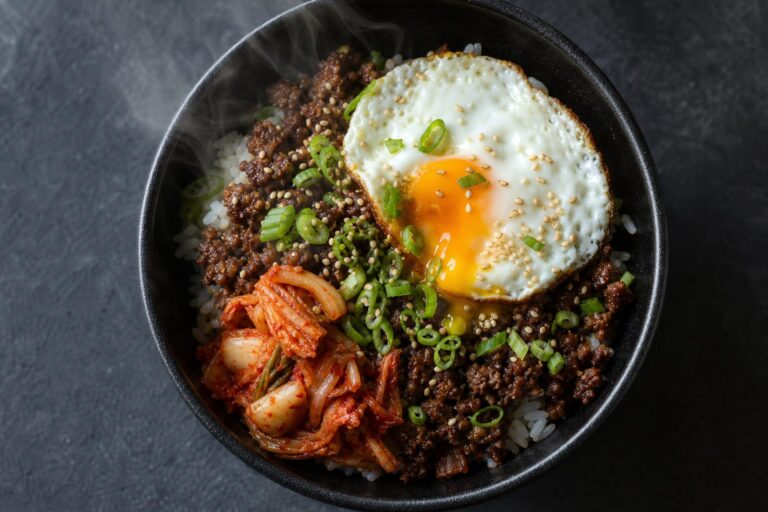
- Divide the hot rice between four bowls. Top with the beef and onion, then the sliced scallion and sesame seeds. Serve with kimchi on the side if you have it.
Tips and storage
For meal prep, this is one of the best beef recipes on the site. Portion the beef and rice into four containers and it keeps 4 days in the fridge. The marinade keeps the beef moist on reheating, which is not true of most stir fried beef. Microwave with the lid cracked for about 2 minutes. Do not freeze the assembled bowls, but the cooked beef alone freezes fine for 2 months.
You can also freeze the raw beef in its marinade. Bag it flat, freeze, then thaw overnight in the fridge and cook straight from the bag. The extra marinating time as it thaws does no harm.
To turn it into more of a full bowl, add a fried egg on top, or a handful of blanched spinach dressed with a little sesame oil and salt. Both go well and the egg adds another 6g protein.
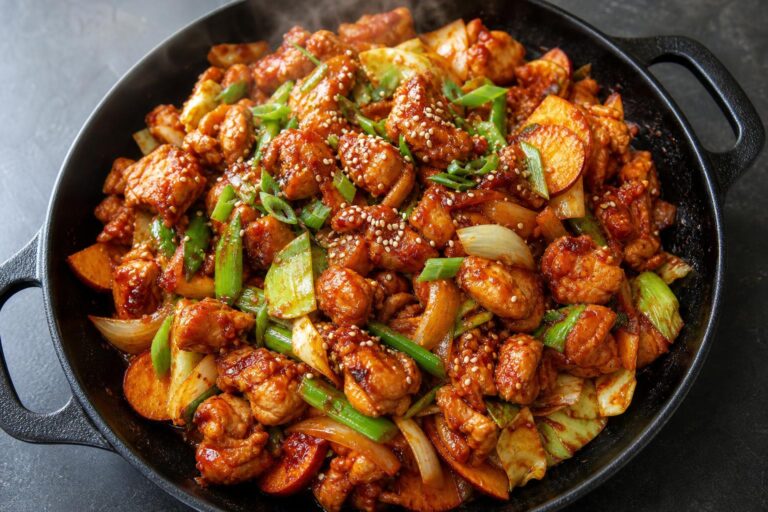
If you like the flavor profile, dak bulgogi is the chicken version with the same marinade logic, and Korean beef bibimbap uses this exact bulgogi as its base if you want to build the full vegetable bowl.